
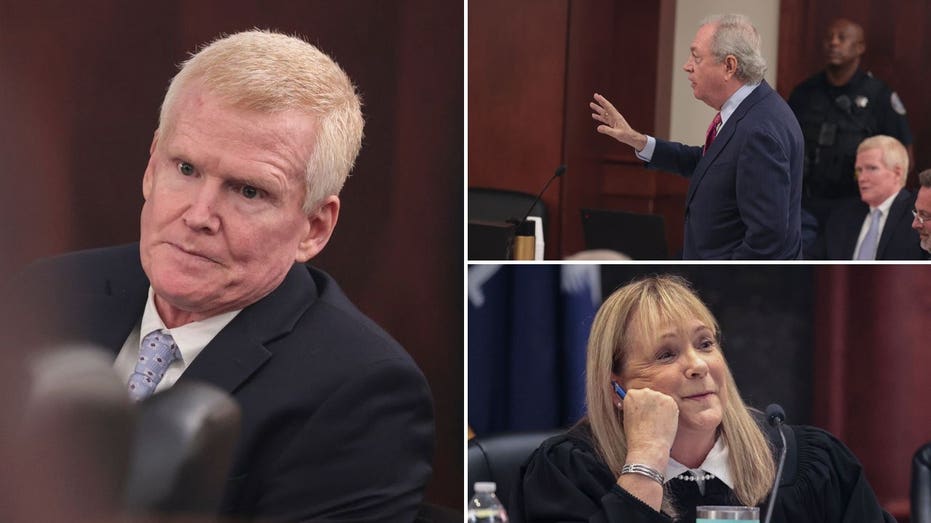
Alex Murdaugh’s defense has received permission to conduct new DNA testing that could support its theory that another man was involved in the killings of his wife and son. The testing will examine material from Maggie Murdaugh’s cellphone and clippings taken from beneath her fingernails. Prosecutors opposed the request, warning that the process is unlikely to produce useful evidence and could consume the remaining testable samples. Murdaugh’s retrial is scheduled to begin on April 5, 2027.
A judge ruled that due process gives Murdaugh a meaningful opportunity to present a complete defense, allowing the testing to proceed through the laboratory Othram. The decision came during a pretrial hearing in Lexington, South Carolina, on October 16, 2026.
| 1) | Judge authorizes final DNA testing |
| 2) | Defense focuses on unidentified male DNA |
| 3) | Prosecutor warns testing could backfire |
| 4) | Murdaugh accepts loss of remaining samples |
| 5) | Retrial timeline and legal stakes |
Judge authorizes final DNA testing
Judge Debra McCaslin approved the defense request over prosecutorial objections at the Lexington hearing. Othram will conduct Y-STR testing on samples connected to Maggie Murdaugh’s phone and fingernail clippings. The method examines DNA from the Y chromosome, which can help identify a male contributor when female DNA is more prevalent. The defense said the work is expected to take about 90 days.
The ruling was based on the court’s conclusion that a criminal defendant must have a meaningful chance to develop and present a full defense. The evidence is tied to the June 7, 2021, shootings at the Murdaugh family’s Moselle property in Colleton County, South Carolina.
Defense focuses on unidentified male DNA
Defense attorney Phil Barber said testing could determine whether the male DNA found in the three samples came from one person. He argued that the results might exclude certain individuals and could provide ancestry information, although Y-STR testing cannot distinguish between men who share the same paternal line.
The defense has acknowledged that the DNA could have an innocent explanation. Barber nevertheless said the appearance of unidentified male material in multiple locations was becoming increasingly significant to the defense theory. He contended that a male profile beneath Maggie Murdaugh’s fingernails and on a phone discarded near the crime scene could help create reasonable doubt if it does not belong to Murdaugh.
“Maybe it’s different male DNA. Maybe it’s the same. Maybe it’s red herrings,” Barber said, while arguing that the pattern warranted further examination.
Prosecutor warns testing could backfire
Lead prosecutor Creighton Waters described the decision as a high-risk strategy. He said the defense’s own expert had characterized the material as essentially a sole-source sample, and he questioned whether the remaining DNA would produce a meaningful Y-chromosome profile.
Waters told the court that preliminary quantification from Othram showed no detectable Y-chromosome material. A former prosecutor, Joshua Ritter, separately said the defense might have been better served by leaving the DNA unresolved and using the unknown profile to argue that another person could be connected to the killings.
“Sometimes it’s better left unknown for the defense,” Ritter said, warning that a test result pointing to someone with an innocent explanation or a reliable alibi could weaken the defense position.
Murdaugh accepts loss of remaining samples
Both sides agreed that the testing could use virtually all of the remaining material. If the examination proceeds as planned, there would not be enough sample left for another test in later post-conviction proceedings.
Barber told the court that Murdaugh had been informed of the consequence and would waive any future retesting of the consumed material. The decision gives the defense access to a potentially important avenue of investigation, but it also removes the possibility of independently repeating the analysis if the result becomes disputed.
Retrial timeline and legal stakes
Murdaugh was convicted in 2023 of murdering Maggie and their son, Paul Murdaugh. The South Carolina Supreme Court later overturned those convictions after finding that former Colleton County Clerk of Court Becky Hill improperly influenced the jury.
Murdaugh has maintained his innocence. He is due back in court on November 13, 2026, while the retrial is set for April 5, 2027. The DNA decision does not establish that another person committed the killings, but it permits the defense to investigate whether the evidence can support that argument before the new trial.
| 1 | A judge approved Y-STR testing of samples from Maggie Murdaugh’s phone and fingernail clippings. |
|---|---|
| 2 | The defense is examining whether unidentified male DNA came from one person. |
| 3 | Prosecutors said the testing is high risk and may produce little usable evidence. |
| 4 | The examination may consume the remaining material, preventing later retesting. |
| 5 | Murdaugh’s retrial is scheduled for April 5, 2027, after his convictions were overturned. |
Summary
The court has allowed Murdaugh’s defense to pursue a final round of DNA testing before his retrial. The results could help the defense argue that an unidentified man was involved, but prosecutors and legal analysts have warned that the testing could yield no useful profile or undermine the defense if it identifies an innocent contributor. The decision places significant weight on an examination that may exhaust the available samples.
Frequently Asked Questions
What DNA evidence will be tested?
Othram will test samples from Maggie Murdaugh’s cellphone and clippings taken from beneath her fingernails using a Y-STR method focused on male-line DNA.
Why does the defense want the testing?
The defense wants to determine whether male DNA in the samples came from one unidentified person and whether the results could support an argument that someone else was involved.
What is the main risk of the testing?
The testing may use the remaining samples, leaving insufficient material for another examination. It could also produce little evidence or identify a person whose DNA has an innocent explanation.
When is the retrial scheduled?
Murdaugh’s retrial is scheduled to begin on April 5, 2027, in South Carolina.