
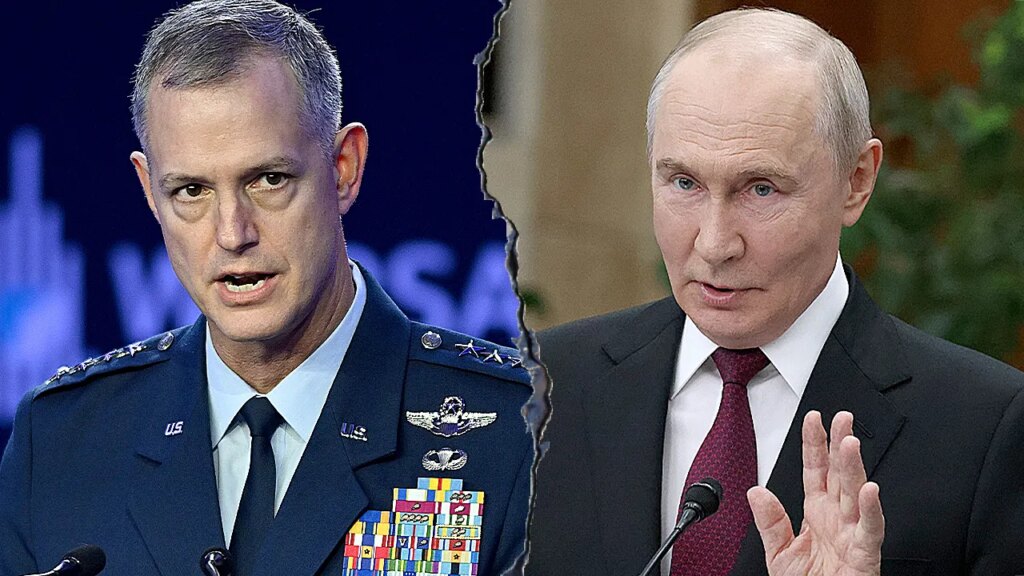
NATO’s supreme military commander, U.S. Air Force General Alexus Grynkewich, issued a strong warning to Russia during a panel discussion at the Warsaw Security Forum on Monday. He emphasized the alliance’s readiness to dismantle enemy warfighting systems and target anything supporting an attack on NATO territory. The declaration underscores NATO’s commitment to protecting its members amid escalating tensions between Russia and Western nations, particularly following a series of drone incursions attributed to Moscow.
| Article Subheadings |
|---|
| 1) NATO’s Stance on Military Preparedness |
| 2) The Context of Rising Tensions |
| 3) The Three-Pronged Strategy Explained |
| 4) Response to Drone Incursions |
| 5) Future Implications for NATO and Russia Relations |
NATO’s Stance on Military Preparedness
General Grynkewich highlighted NATO’s commitment to defending its 32 member countries in the wake of increasing threats. He outlined how the alliance is united and prepared to respond effectively to any aggression. “If someone is foolish enough to attack us, we will fight,” Grynkewich stated decisively, setting a clear tone that emphasizes NATO’s readiness to counter any attack. His comments reflect the collective security principle of NATO, which binds member nations to mutual defense. This principle holds that an attack on one is an attack on all, ensuring that NATO allies act as a cohesive unit against external threats.
The Context of Rising Tensions
The comments from Grynkewich come against a backdrop of heightened tensions between Russia and Western nations, particularly related to Ukraine. A series of drone incursions and militarized activities near NATO borders have raised alarms. As military activities intensify, European officials have accused Russia of engaging in hybrid warfare, which includes cyberattacks and sabotage on critical infrastructure. The interconnected web of events indicates that the threat is not only conventional but also encompasses asymmetric warfare tactics that challenge NATO’s defensive posture.
The Three-Pronged Strategy Explained
General Grynkewich outlined a strategic framework involving three key components: blocking, blunting, and breaking enemy forces. This comprehensive strategy aims to create multiple layers of defense against potential aggressors. The blocking phase focuses on intercepting initial threats before they materialize; if the conflict persists, the alliance will shift to blunting, which entails mitigating enemy advances. Should these efforts prove insufficient, the strategy culminates in the breaking phase, where NATO intends to dismantle the operational capabilities of any aggressor. Grynkewich asserted, “We will ensure any attack, against any ally, proves utterly futile,” underscoring NATO’s readiness to respond aggressively if provoked.
Response to Drone Incursions
Recent months have seen numerous instances of Russian drones entering Polish airspace amid the ongoing conflict in Ukraine, prompting swift responses from allied aircraft. NATO has initiated Operation Eastern Sentry, a specific air defense strategy aimed at fortifying the eastern flank of NATO against such incursions. Countries like Romania and Estonia have also reported incidents of Russian drones and military aircraft violating their airspace, sparking concerns about regional security. These developments reflect a clear and present danger that NATO is prepared to address through heightened alertness and readiness measures.
Future Implications for NATO and Russia Relations
The increasingly provocative military actions by Russia pose significant implications for the future of NATO-Russia relations. General Grynkewich’s uncompromising stance reinforces the alliance’s commitment to deterrence amid a landscape fraught with uncertainty. While NATO maintains a defensive posture, the readiness to engage in military action signifies a departure from previous diplomatic strategies that sought to avoid confrontation. As the dialogue between NATO and Russia further deteriorates, especially with recent nuclear threats from Moscow, the atmosphere of mistrust may continue to escalate, potentially leading to a wider conflict if not carefully managed.
| No. | Key Points |
|---|---|
| 1 | NATO’s supreme military commander warns of severe repercussions for any aggression against alliance territories. |
| 2 | Heightened tensions between Russia and NATO member states have been marked by drone incursions and military provocations. |
| 3 | The three-pronged defensive strategy consists of blocking, blunting, and breaking enemy forces effectively. |
| 4 | NATO has launched Operation Eastern Sentry to bolster defenses in response to recent Russian incursions. |
| 5 | Future relations between NATO and Russia hinge on the ability to manage rising tensions and prevent escalation into conflict. |
Summary
In conclusion, General Grynkewich has articulated NATO’s unwavering resolve to protect its members amid growing threats from Russia. With a clear strategy in place and an emphasis on military preparedness, NATO is poised to respond decisively should aggression occur. The intersection of military strategy, regional security dynamics, and geopolitical tensions presents both challenges and imperatives for the alliance as it navigates an increasingly complex global landscape.
Frequently Asked Questions
Question: What is NATO’s primary mission?
NATO’s primary mission is to ensure the collective defense of its member countries, maintaining peace and security in the North Atlantic region.
Question: What recent actions have raised tensions between Russia and NATO?
Recent tensions have escalated due to a series of Russian drone incursions and military activities near NATO borders, prompting NATO’s heightened alert and military readiness.
Question: How does NATO plan to respond to potential Russian aggression?
NATO’s strategy involves a three-pronged approach of blocking, blunting, and breaking enemy forces to ensure that any act of aggression is met with a decisive response.