
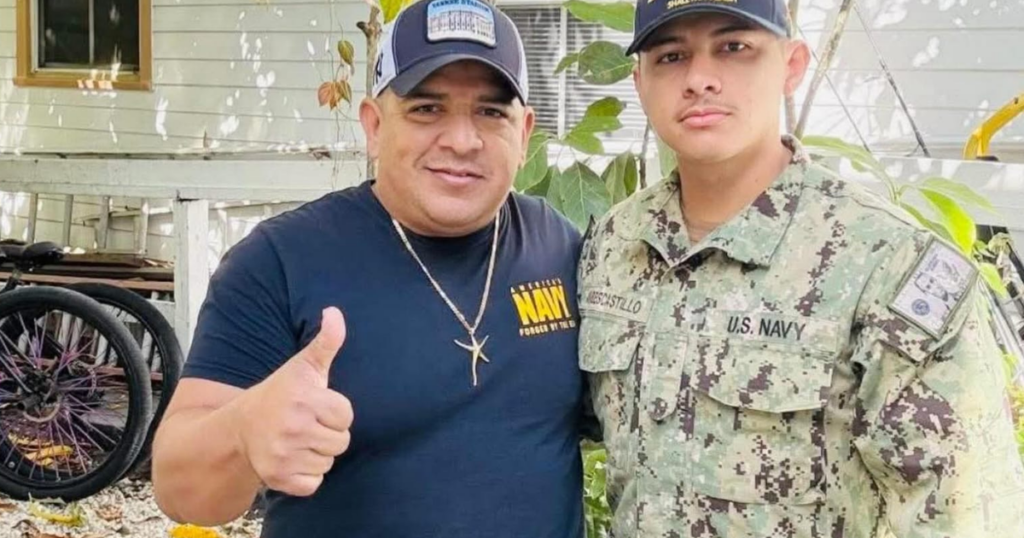
In a poignant and distressing turn of events, active-duty U.S. Navy sailor Joshua Aviles recently learned that his father, Luis Manuel Aviles Roa, was arrested by federal immigration officials while he was deployed aboard the USS Abraham Lincoln. The arrest has raised significant discussions about immigration enforcement and its impact on military families. As Aviles continues his service with the Navy, his family grapples with the possible deportation of a beloved parent, shedding light on deeper issues concerning immigration policy, mental health challenges, and the strain on service members’ well-being.
| Article Subheadings |
|---|
| 1) The Arrest: What Happened |
| 2) Joshua’s Emotional Turmoil |
| 3) Immigration Enforcement and Military Families |
| 4) The Broader Implications on Mental Health |
| 5) The Path Ahead for the Aviles Family |
The Arrest: What Happened
On a seemingly ordinary day in Key West, Florida, federal immigration officials arrested Luis Manuel Aviles Roa during a routine traffic stop, asserting that he had entered the United States illegally. Confirming the details, the Department of Homeland Security noted that the arrest occurred on a Saturday and that Aviles Roa faced deportation proceedings while remaining in the custody of Immigration and Customs Enforcement (ICE). This incident is particularly alarming for his son, Joshua, who is currently serving on the USS Abraham Lincoln, a vessel consistently in the spotlight due to reports of less-than-ideal conditions and mental health challenges faced by its crew.
The Department of Homeland Security’s statements highlighted a firm approach to immigration enforcement, emphasizing that being part of a military family does not exempt individuals from enforcement actions. Officials maintained that they were simply upholding laws enacted by Congress, signaling no selective leniency would be provided based on familial ties to military personnel. Although DHS acknowledged that Aviles Roa lacks a criminal record, the agency remains steadfast in its mission to regulate unauthorized immigration comprehensively.
Joshua’s Emotional Turmoil
The emotional toll on Joshua Aviles has been profound. The sailor’s revelation came through a heartfelt Facebook post where he expressed his heartbreak over his father’s arrest. “I just got a call that my dad was taken by ICE,” he shared, depicting his father as a humble and hardworking man. The distress of knowing his father might be treated like a criminal adds to the harsh realities of Aviles‘ occupancy aboard the aircraft carrier, where extended hours and demands of military life compound his concerns over family welfare.
The situation has created a mental burden for Aviles, who is now tasked with focusing on his military responsibilities while grappling with worry over his father’s well-being. His sister, Katty Delgado, corroborated Joshua‘s struggles, noting difficulty in staying in touch given the deployment circumstances. The sustained pressure of such mental health challenges, coupled with the uncertainties surrounding his father’s immigration case, places immense strain on the mental wellness of Aviles.
Immigration Enforcement and Military Families
The arrest of Luis Aviles Roa is not an isolated incident but part of a growing trend regarding the enforcement of immigration laws on military families. Historically, immigration arrests involving military personnel’s family members have been rare; however, a shift in policy during the recent administrations has led to increased enforcement actions. The second Trump administration notably rescinded restrictions previously placed on ICE and U.S. Border Patrol, expanding the scope of deportation activities.
DHS officials have repeatedly affirmed that any individual residing in the United States without authorization remains vulnerable to arrest, irrespective of familial connections to the military. This may not only affect the families of service members but also serve to discourage individuals from seeking assistance or reporting crimes out of fear of deportation. With such policies potentially chilling community relations, the implications resonate beyond just the military family, affecting the broader societal fabric of support and security for all immigrants.
The Broader Implications on Mental Health
The impact of immigration enforcement on mental health cannot be overstated, particularly for those in high-stress professions such as the military. Joshua Aviles’s experiences highlight a concerning trend where service members must balance their duty to their country with the anxieties surrounding their family members’ safety and legal status. Added pressures during a deployment, combined with personal family crises, can catalyze feelings of helplessness and stress that adversely affect mental health.
As Aviles noted in his posts, the worry about a loved one’s predicament while maintaining a rigorous military routine could lead to anxiety, disruption in sleep patterns, and the inability to concentrate on operational tasks. This raises essential questions about the support systems available for military personnel in similar situations, as increased scrutiny and stress have prompted advocates to call for enhanced mental health resources for those serving and their families.
The Path Ahead for the Aviles Family
As the situation develops for Luis Manuel Aviles Roa, the future remains uncertain. With his ongoing deportation case and pending immigration application for legal status, both his legal counsel and family members are navigating the complexities of U.S. immigration law amidst the broader enforcement landscape. Coordination between family and legal support is crucial as they seek clarity on the status of Aviles Roa and explore potential avenues for relief.
Meanwhile, Joshua continues to serve aboard the USS Abraham Lincoln, a vessel now reportedly on its way back to the United States after an extended deployment in the Middle East. The family must endure the emotional strain of separation and uncertainty while they await further developments. The realities they face underscore the urgent need for discussions around immigration policies affecting military families, serving as a reminder that behind these enforcement actions are individuals with lives, families, and dreams.
| No. | Key Points |
|---|---|
| 1 | Sailor Joshua Aviles learned of his father’s arrest by ICE while deployed on the USS Abraham Lincoln. |
| 2 | The arrest of Luis Manuel Aviles Roa during a traffic stop raises concerns about immigration enforcement policies affecting military families. |
| 3 | DHS asserts that military family ties do not exempt individuals from immigration laws. |
| 4 | Mental health challenges are heightened for military personnel dealing with familial crises while on duty. |
| 5 | The Aviles family’s struggle reflects broader implications of immigration enforcement policy changes. |
Summary
The emotional and practical challenges faced by Joshua Aviles amid his father’s arrest serve as a stark reminder of the complexities surrounding immigration enforcement in the United States, particularly as they impact military families. As the situation continues to evolve, it emphasizes the broader themes of mental health, family welfare, and the urgent need for discourse on immigration policies that can adversely affect vulnerable populations. The struggle of the Aviles family highlights the personal experiences intertwined within national immigration narratives.
Frequently Asked Questions
Question: What are the implications of ICE arrests for military families?
ICE arrests can create significant emotional and legal challenges for military families, often impacting the mental health and stability of service members as they navigate both their duties and family crises.
Question: How does immigration enforcement affect military personnel?
Military personnel can experience heightened stress and anxiety due to immigration enforcement actions affecting their family members, which can impair their focus and mental health during service.
Question: What measures are in place to support military families facing immigration issues?
While some resources exist for military families in distress due to immigration issues, there is ongoing advocacy for more comprehensive mental health support and legal assistance tailored specifically for these circumstances.