
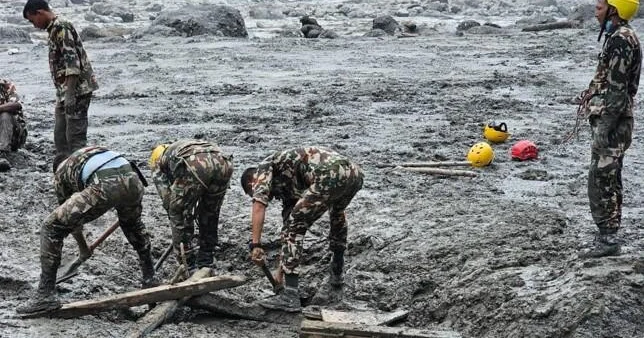
Kathmandu, Nepal — In the aftermath of a devastating glacial collapse near the Nepal-Tibet border, rescue efforts continue amid overwhelming loss and uncertainty. With the death toll surpassing 1,000, nearly 4,000 individuals remain missing, revitalizing despair and hope in equal measure. As search teams battle against heavy monsoon rains, stories of miraculous rescues fuel the faint glimmer of hope for families anxiously waiting for news about their loved ones.
| Article Subheadings |
|---|
| 1) The Catastrophic Collapse and Its Aftermath |
| 2) The Role of Emergency Services in Search and Recovery |
| 3) Personal Stories of Grief and Resilience |
| 4) International Response and Aid Challenges |
| 5) The Ongoing Impact and Future Outlook |
The Catastrophic Collapse and Its Aftermath
The incident occurred five days ago when a rocky mountainside and the glacier it supported collapsed, unleashing torrents of flash floodwater, mud, and debris into the valleys below. Located in the Rasuwa district, this catastrophic event has reshaped not only the landscape but also the lives of thousands. The immediate aftermath was devastating, as recovery teams began combing through the wreckage in hopes of rescuing survivors amid the chaotic scenes of destruction.
As search efforts progressed, the situation worsened with the death toll rapidly rising. Current reports indicate that at least 1,000 individuals have been confirmed dead across Nepal and neighboring China. Tragically, nearly 4,000 remain unaccounted for, prompting fears that the numbers could escalate significantly. The extreme weather conditions continue to pose challenges, with the sacred Trishuli River surging from heavy monsoon rains, endangering rescue operations.
The Role of Emergency Services in Search and Recovery
Emergency response teams are at the forefront of the recovery efforts, battling time and nature in a race to locate any potential survivors. These dedicated crews include local firefighters, army personnel, and volunteers who have mobilized from various regions. Their tasks involve clearing debris, sifting through rubble, and searching areas heavily impacted by the floods.
Each member of the rescue teams carries the weight of responsibility for the families of the missing, fostering a sense of urgency that drives their work. Many brave individuals have reported harrowing conditions, noting the difficulties they face as flash floods continue to threaten their safety. The commitment shown by these teams is commendable, as their efforts also prioritize the protection of the community, ensuring that all necessary precautions are taken as they engage in recovery efforts.
Personal Stories of Grief and Resilience
Among the missing is Vivek Srivastav, whose son, Samarth, has been clinging to hope since the disaster struck. The last time Samarth spoke with his father, they shared a lighthearted exchange, unaware of the impending catastrophe. Since then, the anxiety has permeated their family life, with Samarth expressing how difficult it has been to cope with the uncertainty.
“We’re just trying to hope for good news now,” Samarth reflected on the situation.
His family’s experiences highlight the emotional toll the disaster has wrought. Families are poring over grim images of recovered bodies displayed in hospitals, searching desperately for familiar faces amidst photos posted on walls of identification, in the hopes that they may recognize their loved ones. This ordeal illustrates the painful intersection of hope and despair faced by many individuals impacted by the tragedy.
International Response and Aid Challenges
As the situation develops, international authorities are being called to provide assistance in search and rescue operations. Families of missing individuals with foreign connections have reached out for help from their respective governments. While some responses have materialized, many individuals have reported a sense of disappointment regarding the speed and effectiveness of the aid being offered. Agencies have indicated that terrain difficulties and ongoing safety concerns hinder their ability to provide immediate support.
Recent developments have seen families calling for more streamlined communication between the U.S., Chinese, and Nepalese governments. Families, like that of a couple last believed to be in Tibet, have expressed frustration about conflicting information surrounding survivor status, creating an emotional rollercoaster that is preventing them from finding closure.
The Ongoing Impact and Future Outlook
In the wake of such a disaster, the long-term implications for affected regions are vast and complex. Beyond the immediate need for rescue and recovery, communities will face critical decisions regarding rebuilding and rehabilitation. It is anticipated that rebuilding efforts will take substantial time and resources, requiring collaboration between governmental and non-governmental organizations to restore the impacted infrastructure and support systems.
With the specter of climate change looming, many experts warn that such disasters may become more frequent and severe, underscoring the urgent need for improved preparedness measures. As communication lines remain strained, the hopes of families for a positive outcome weigh heavily, waiting for any shred of information that may signal the survival of their loved ones, even as the harsh realities continue to unfold.
| No. | Key Points |
|---|---|
| 1 | The death toll has surpassed 1,000, with nearly 4,000 individuals still missing after the disaster. |
| 2 | Emergency response teams are working tirelessly despite ongoing threats from surging floodwaters. |
| 3 | Families of missing individuals are experiencing heightened anxiety as they await news amidst harsh uncertainty. |
| 4 | International appeals for aid are underway, but families are frustrated with the slow responses from their governments. |
| 5 | The long-term impacts of this disaster include significant challenges in rebuilding and coping with potential future disasters. |
Summary
The glacial collapse near the Nepal-Tibet border has resulted in unprecedented loss and displacement in affected communities. As rescue efforts grind on amidst mounting concerns, families are haunted by uncertainty and grief. The emotional repercussions of the tragedy extend beyond immediate recovery needs, leading communities to confront complex decisions about future preparedness and resilience. This situation serves as a reminder of the urgency for disaster management and cooperation among nations in the face of climate challenges.
Frequently Asked Questions
Question: What led to the collapse near the Nepal-Tibet border?
The collapse was triggered by a combination of geological instability and heavy rainfall, leading to a torrent of flash floods, mudslides, and debris that devastated the valleys below.
Question: How are rescue operations currently being conducted?
Rescue operations involve a coordinated effort by emergency services, including local fire departments, the military, and volunteers, who are working tirelessly to clear debris and search for survivors.
Question: What support is being provided to affected families?
Families are receiving limited support primarily from local government authorities and NGOs, but many have expressed dissatisfaction with the speed and effectiveness of the responses, particularly from international entities.