
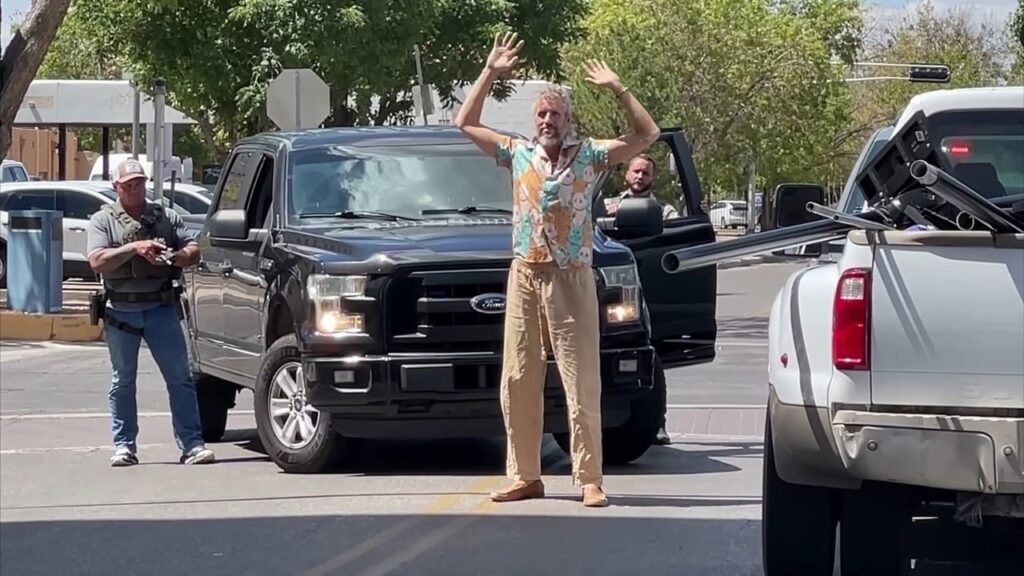
In a recent incident that highlights rising tensions over surveillance technology, a 44-year-old man named Jevon Martinez filmed himself dismantling Flock Safety camera systems in New Mexico. His actions, streamed live on social media, sparked a criminal investigation that ultimately led to his arrest. This event follows the Bernalillo County Sheriff’s decision to end the department’s contracts with Flock Safety due to privacy concerns, revealing broader societal debates surrounding surveillance, law enforcement, and individual rights.
| Article Subheadings |
|---|
| 1) The Incident: Dismantling Surveillance Cameras |
| 2) Martinez’s Perspective: A Personal Crusade |
| 3) Legal Implications: Arrest and Charges |
| 4) The Sheriff’s Dilemma: Consequences of Surveillance |
| 5) Privacy Concerns: The Debate on Surveillance Technology |
The Incident: Dismantling Surveillance Cameras
On September 2, 2023, Jevon Martinez recorded himself removing Flock Safety surveillance cameras from various locations across Bernalillo County, New Mexico. This act of defiance unfolded in front of a live audience online, as Martinez actively showcased his efforts to dismantle the devices. Contributing to the spectacle was the fact that only days prior, Bernalillo County Sheriff John Allen had announced the discontinuation of the sheriff’s office contracts with Flock Safety, citing serious concerns regarding privacy, data sharing, and overall trust in the company.
During the live stream, Martinez articulated his reasoning for the removal of the cameras, which he claimed were previously left unattended by law enforcement. While addressing an online audience, he expressed his intention to return the equipment back to the sheriff’s office, as he believed it had become his civic responsibility, considering that the law enforcement agency had ended its partnership with the surveillance company. Nevertheless, the legality of his actions was soon called into question as investigations surfaced surrounding the ownership of the equipment and the true authority he had to remove it.
Martinez’s Perspective: A Personal Crusade
Martinez presented his actions as a personal crusade against what he described as the “tyranny” of surveillance, labeling the cameras as “tyranny trees” in his live videos. His social media posts not only documented his activities, but also tried to position them as justified in the face of what he perceived as an overreach into people’s privacy. Throughout these posts, Martinez claimed he was neither stealing nor vandalizing the equipment; rather, he framed his actions as a form of public service, stepping in where he believed law enforcement was failing to uphold their responsibility to the community.
The motivations behind Martinez’s actions were further elaborated in his video commentary, where he encouraged viewers to consider the implications of having automated surveillance in their neighborhoods. He stated, “Not in my city, not in my state,” underscoring his disdain for the presence of surveillance technologies that he argued were intrusive and posed a threat to civil liberties. Martinez’ self-documenting approach resulted in a compelling narrative that resonated with those who shared similar sentiments towards the abolition of automated surveillance systems.
Legal Implications: Arrest and Charges
Despite Martinez’s assertions of lawful ownership and intent to return the Flock camera systems, the legal perspective differed significantly. Following his public dismantling spree, law enforcement officials confronted Martinez as he drove near the sheriff’s office. Reports indicate that he passed the office multiple times before deputies stopped him outside the facility. Video evidence captured the moment, with deputies approaching his vehicle with drawn weapons, a stark illustration of how quickly the situation escalated from civic protest to criminal arrest.
Martinez was arrested on charges related to the alleged removal of property valued at over $2,500. A criminal complaint described the charge as either attempted larceny or grand theft, depending on the report, as well as an interference with communications charge. Though he appeared virtually in court shortly after his arrest, he remained in custody due to an ongoing legal matter related to a previous incident involving license plate reader removal in a separate case. The complexity of the legal landscape surrounding surveillance, ownership rights, and public sentiment raises many questions about accountability and the consequences of civil disobedience in the age of technology.
The Sheriff’s Dilemma: Consequences of Surveillance
The decision by Sheriff John Allen to terminate contracts with Flock Safety illustrates broader concerns about how surveillance technology is implemented in communities. Specifically, Allen highlighted his lack of confidence in Flock’s ability to maintain privacy safeguards and protect sensitive data. This turn of events reflects a growing skepticism about the effectiveness of surveillance systems and raises crucial questions about the responsibility of technology companies and law enforcement agencies in handling citizen data.
While incidents like Martinez’s demonstrate the public’s growing restlessness with surveillance systems, Allen’s statement emphasizes a need for reform rather than outright removal of surveillance technology. The sheriff maintains that automated license plate readers can be useful tools for law enforcement, but the controversy around the vendor means that local agencies must tread carefully in their partnerships. The dichotomy between Martinez’s methods and Allen’s official position mirrors a larger societal debate on establishing a balance between public safety and respect for civil liberties.
Privacy Concerns: The Debate on Surveillance Technology
Flock Safety’s automated license plate reader technology has become the subject of intense scrutiny, especially as concerns mount regarding privacy violations and data misuse. Automatic license plate readers compile extensive data, documenting vehicle locations, characteristics, and timestamps. While Flock asserts that the system does not capture driver identities, the accumulation of such data poses nagging queries about the implications of extensive monitoring.
Cases have arisen where individuals faced baseless accusations or legal trouble due to data collected by license plate readers. In Colorado, a woman was mistakenly identified in connection with a porch theft due to Flock’s network, which recorded her vehicle without her knowledge. Such incidents exemplify the potential pitfalls of automated documentation in a society where the right to privacy is increasingly debated.
The overarching concern is how extensive data tracking can lead to a slippery slope of mass surveillance, where innocent citizens may be unjustly profiled or scrutinized. As municipalities adopt such technologies, discussions on regulatory measures, transparency, and accountability become paramount in ensuring the lawful and ethical use of surveillance systems.
| No. | Key Points |
|---|---|
| 1 | Jevon Martinez filmed himself removing surveillance cameras in New Mexico. |
| 2 | Sheriff John Allen terminated contracts with Flock Safety amid privacy concerns. |
| 3 | Martinez faces criminal charges for the unauthorized removal of the cameras. |
| 4 | Concerns over mass surveillance and the ethical use of surveillance technology are increasing. |
| 5 | The incident reflects a broader societal debate about privacy and law enforcement technologies. |
Summary
The circumstances surrounding Jevon Martinez and his confrontation with surveillance technologies illustrate the growing complexities of privacy rights in an era of increased monitoring. Sheriff John Allen‘s concerns about Flock Safety indicate that even law enforcement professionals are cautious about how such technologies impact civil liberties. As the legal ramifications of Martinez’s actions unfold, the public discourse on the necessity and ethical implications of surveillance systems continues to escalate. The intersection of public safety and privacy rights remains a critical conversation, demanding community involvement and legislative scrutiny.
Frequently Asked Questions
Question: What prompted Jevon Martinez to remove the surveillance cameras?
Martinez was motivated by a belief that the cameras represented an overreach into personal privacy, especially following the Bernalillo County Sheriff’s decision to end contracts with Flock Safety due to privacy concerns.
Question: What charges is Martinez facing following his actions?
Martinez is charged with attempted larceny over $2,500 and interference with communications due to his unauthorized removal of surveillance equipment.
Question: What are the broader implications of the Flock Safety surveillance technology?
The technology raises significant questions about privacy violations, data security, and the ethical use of surveillance, especially as it collects extensive information about individuals without their consent.