
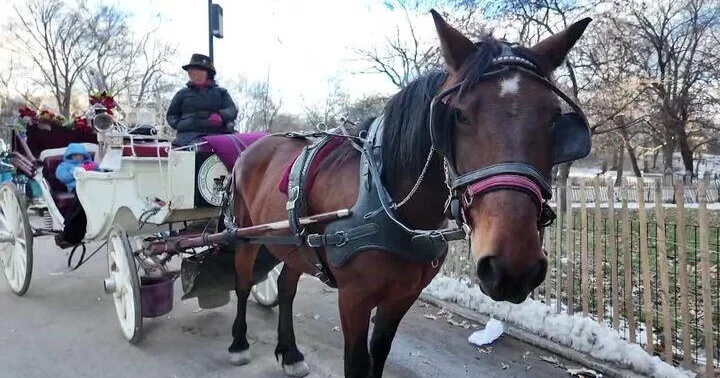
The New York City Council has passed a significant bill that mandates the phasing out of horse-drawn carriage rides in the city by 2028. This legislation, known as Romanch’s Law, is a response to a tragic incident that resulted in the death of Romanch Mahajan, an 18-year-old who lost his life in a carriage accident in Central Park. With the bill now on its way to Mayor Zohran Mamdani for approval, it aims to prioritize public safety and animal welfare despite controversy from carriage owners.
| Article Subheadings |
|---|
| 1) The Tragic Incident Leading to Legislative Change |
| 2) Support for Romanch’s Law |
| 3) Opposition from Carriage Owners |
| 4) Public Safety and Animal Welfare Concerns |
| 5) The Future of the Horse-Drawn Carriage Industry |
The Tragic Incident Leading to Legislative Change
The enactment of Romanch’s Law follows a tragic event that caught the city’s attention in June. Romanch Mahajan, an 18-year-old high school graduate, died in an accident involving a horse-drawn carriage in Central Park. This incident ignited a passionate response from lawmakers and advocates for animal rights and public safety, pushing for reform in a long-standing practice within the Park.
Lawmakers decided to take action following pressure from safety advocates and community members to address the dangers associated with horse-drawn carriages operating in a busy area frequented by millions annually. The legislative body aimed to ensure that such incidents would not be repeated, stating,
“We want to make sure Romanch’s death was not in vain,”
expressed Saggar Chadha, attorney for Romanch’s family.
The New York City Council passed the bill with substantial backing, sending it to Mayor Zohran Mamdani for signing. The tragic circumstances surrounding Mahajan’s death propelled the issue into the spotlight, underscoring the need for legislative reform in the animal carriage industry.
Support for Romanch’s Law
The passage of Romanch’s Law was met with celebration from various advocacy groups and city officials. Council member Christopher Marte highlighted the historical context, expressing that the Council had a once-in-a-generation opportunity to make a decisive change for the safety of New Yorkers and visitors alike. He stated,
“With a majority of the Council behind us, we have a historic opportunity to protect New Yorkers, visitors, workers, and animals, and we intend to finish the job.”
Various organizations, including the Central Park Conservancy and the Animal Legal Defense Fund, lauded the bill’s passage. Betsy Smith, CEO of the Central Park Conservancy, pointed out the risks posed by carriage rides, stating that they often put both patrons and horses in perilous situations. She remarked that the tragic loss of Romanch Mahajan illustrates the urgent need for change, as mentioned in her statement:
“Our hearts break for the family of Romanch Mahajan, who stepped into a carriage earlier this summer and never thought he might lose his life.”
This sentiment reverberated through the advocacy community, indicating a unified front in favor of relocating New York’s carriage industry.
Opposition from Carriage Owners
Despite overwhelming support for the new law, opposition continues from carriage owners and their advocates. Families that have dedicated generations to this industry expressed disappointment and fear regarding their livelihoods. On the steps outside City Hall, car owners rallied against the legislation, claiming it unjustly targeted their long-standing businesses.
One owner, Francesco Riccobono, who has invested significant resources in his business, stated,
“I invested $400,000 two years ago to expand my father’s dream, and you’re coming here to steal it,”
echoing the concerns of many in the industry. These carriage owners are seeking fairness and a space to voice their concerns, as noted by Natalie Riccobono when she remarked,
“We are asking for fairness. We are asking for compassion. We are asking for a seat at the table.”
The ongoing dialogue suggests significant contention surrounding the bill’s implications.
Public Safety and Animal Welfare Concerns
City officials have repeatedly emphasized the importance of public safety and animal welfare as driving factors behind the legislation. City Council Speaker Julie Menin noted that the crowded conditions of Central Park make it a hazardous area for horse-drawn carriages. With around 42 million people visiting Central Park annually, the potential for accidents was deemed too great to overlook.
Menin reiterated the history of legislative efforts to address this problem, mentioning that similar bills have been introduced over the past two decades without success. This wave of new recognition rejuvenates the longtime crusade for animal welfare in urban areas, and advocates believe that it sets a new precedent.
President Donald Trump also voiced his opinion on the unfolding situation, reportedly labeling the end of the horse-drawn carriage industry as “sad.” He argued that halting the carriage rides over one tragic incident would not similarly affect other forms of transportation, indicating a belief that the tradition of horses in the park should continue.
The Future of the Horse-Drawn Carriage Industry
As the new law prepares to take effect in 2028, the carriage industry faces an uncertain future. The legislation mandates a transition plan for workers and owners, aimed at ensuring that livelihoods are considered while phasing out the traditional carriage rides. Advocates suggest that this plan might involve providing support for displaced workers, including retraining opportunities and assistance in finding new employment.
However, the Transport Workers Union announced plans to challenge the ban in federal court, asserting that the city did not engage in adequate economic impact assessments. Ben Kallos, an attorney representing the union, expressed skepticism about the bill’s passage, questioning the legal ramifications it may encounter.
The horse-drawn carriage rides have been a fixture in Central Park for over 160 years, and their impending termination signifies a shift in how society views animal rights and urban tourism. As the transition unfolds, stakeholders from both sides of the argument will continue to negotiate and advocate for their positions.
| No. | Key Points |
|---|---|
| 1 | The New York City Council passed Romanch’s Law, which requires a phase-out of horse-drawn carriages by 2028. |
| 2 | The law is named in memory of Romanch Mahajan, who tragically died in a carriage-related accident. |
| 3 | Opposition to the law has emerged from carriage owners who fear for their livelihoods and question the legislation’s impact. |
| 4 | Proponents of the bill emphasize public safety and animal welfare as key motivations for the legislation. |
| 5 | The future of the horse-drawn carriage industry remains uncertain as discussions of economic impacts and legal challenges unfold. |
Summary
The passage of Romanch’s Law marks a pivotal moment for New York City, as it shifts toward prioritizing safety and animal welfare over a long-standing tourism practice. The legislative discussion highlights the community’s response to tragedy and sparks dialogue about the responsibilities associated with animal carriage rides in congested urban areas. As discussions move forward, the outcomes will determine not only the fate of a century-old tradition but also how New York reconciles animal welfare with its rich cultural heritage.
Frequently Asked Questions
Question: What is Romanch’s Law?
Romanch’s Law is legislation passed by the New York City Council that mandates the phase-out of horse-drawn carriage rides in Central Park by 2028, following public safety and animal welfare concerns.
Question: Why was Romanch’s Law introduced?
The law was introduced in memory of Romanch Mahajan, an 18-year-old who died in a carriage accident, prompting community and legislative action to prevent similar tragedies.
Question: What will happen to carriage workers affected by the new law?
The legislation requires a transition plan for displaced workers, which aims to provide support, including retraining and finding new employment opportunities as the industry phases out.