
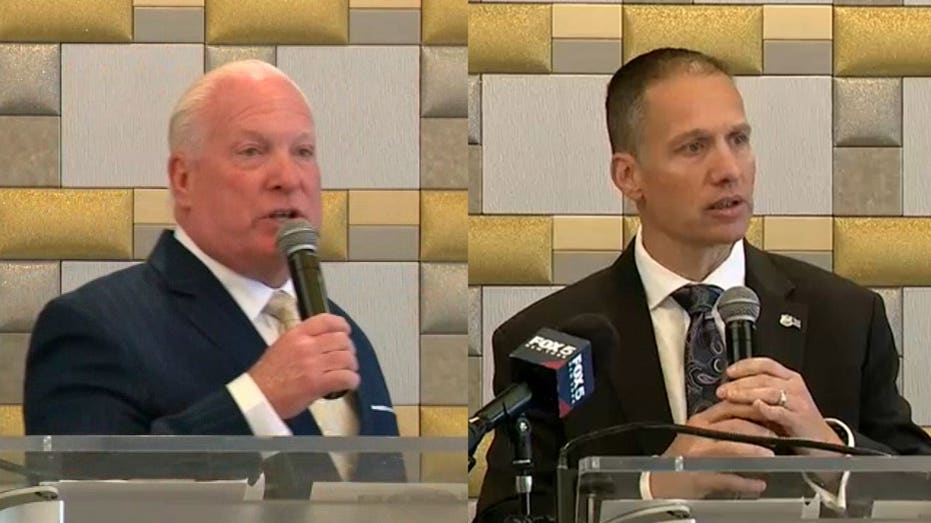
A Suffolk County police officer and union leader says a protester he arrested tracked down his home and harassed his family. Louis Civello described the incident at a New York State Public Safety Alliance event on October 20, 2026. He used the episode to call for stronger privacy protections, including an anti-doxxing law and a Florida-style “Halo Law” in New York. Other public safety unions also urged lawmakers to establish a 15-foot safety buffer around officers and public employees facing harassment.
| 1) | Incident at a Suffolk County officer’s home |
| 2) | Why Civello says New York law is inadequate |
| 3) | Calls for anti-doxxing and “Halo” protections |
| 4) | Public safety unions seek a 15-foot buffer |
| 5) | Broader concerns about harassment of public workers |
Incident at a Suffolk County officer’s home
Civello, who serves as president of the Suffolk County Police Benevolent Association, said the incident occurred in early 2026 after he arrested a protester for trespassing at his office. According to Civello, the individual later located his home and waited outside with a billboard truck. He said the person’s purpose was not to engage him at a police facility or public workplace, but to reach him through his wife and children.
“You only come to my home to terrorize my family, to get at me via my wife and my children,” Civello said.
Civello said officers in Suffolk County have designated public locations where protests can occur, including areas outside any of the county’s seven police precincts. He argued that targeting a private residence creates a different safety concern because family members can be confronted away from an officer’s official duties.
Why Civello says New York law is inadequate
Speaking at the public safety alliance event in New York on October 20, Civello said the incident reflected a wider problem rather than an isolated dispute. He maintained that current New York law does not adequately address people publishing an officer’s home address or remaining near an officer’s residence to intimidate or harass family members.
Civello said personal information about police officers can be found online with only a few clicks. He warned that the absence of specific protections could leave officers and their families exposed even after an arrest has been completed. He also said the pressures facing law enforcement had reached an “inflection point,” making privacy and household security increasingly important.
“The laws are woefully inadequate, and they’re gonna get worse if we don’t work to fix them,” Civello said.
Calls for anti-doxxing and “Halo” protections
Civello called on New York lawmakers to pass an anti-doxxing measure that would restrict the public disclosure of officers’ private identifying information. He also questioned why the state does not have protections modeled on Florida’s recently enacted law, commonly called the “Halo Law.”
The proposed approach, as described at the event, would establish a 15-foot buffer intended to protect first responders from harassment after they issue a warning or take official action. Civello framed both measures as ways to protect officers without preventing lawful criticism or protest at appropriate public locations. He asked why people who seek to confront public officials could not do so away from their homes.
Public safety unions seek a 15-foot buffer
Scott Munro, president of the Detectives’ Endowment Association, also spoke at the event. He said the request from public safety unions was limited to a 15-foot distance, which he described as a basic safety measure for officers and other public employees.
“All we’re asking for is fifteen foot,” Munro said. “Fifteen foot, that’s all we’re asking for, for safety reasons.”
Munro said the alliance includes 99 unions representing workers such as firefighters, traffic agents, sanitation enforcement agents, environmental police and bus drivers. The coalition is seeking protections for employees who interact with the public and may face confrontations while carrying out their jobs.
Broader concerns about harassment of public workers
Munro said transit workers and other public employees are regularly confronted or assaulted while working. He cited nearly 2,500 felony assaults against police officers and public servants in New York City during the year, while describing assaults on Metropolitan Transportation Authority workers as a continuing concern.
The alliance’s position is that a narrowly defined buffer and restrictions on exposing private addresses could help reduce threats without eliminating lawful demonstrations. The event brought together police representatives and unions seeking legislative action on privacy, harassment and physical safety. Further comment was sought from the organizations representing Civello and Munro.
| Number | Key Point |
|---|---|
| 1 | A Suffolk County police leader said a protester came to his home after an arrest. |
| 2 | Civello called for anti-doxxing legislation in New York. |
| 3 | Police unions want a 15-foot buffer modeled partly on Florida’s “Halo Law.” |
| 4 | The alliance represents 99 unions and multiple categories of public workers. |
Summary
New York police and public safety union leaders are pressing for legislation to protect officers and other public employees from doxxing, harassment and confrontations at their homes. Civello’s account of a protester appearing outside his residence has become a central example in the campaign. The proposed measures include limits on publishing private addresses and a 15-foot buffer around workers carrying out their duties.
Frequently Asked Questions
What happened to Louis Civello?
Civello said a protester he arrested for trespassing at his office later located his home and appeared outside with a billboard truck, which he described as harassment of his family.
What laws are public safety leaders seeking?
They are seeking an anti-doxxing law and protections modeled on Florida’s “Halo Law,” including a 15-foot buffer for safety.
Who is included in the public safety alliance?
Munro said the alliance includes 99 unions representing police, firefighters, traffic agents, sanitation enforcement agents, environmental police, bus drivers and other public employees.