
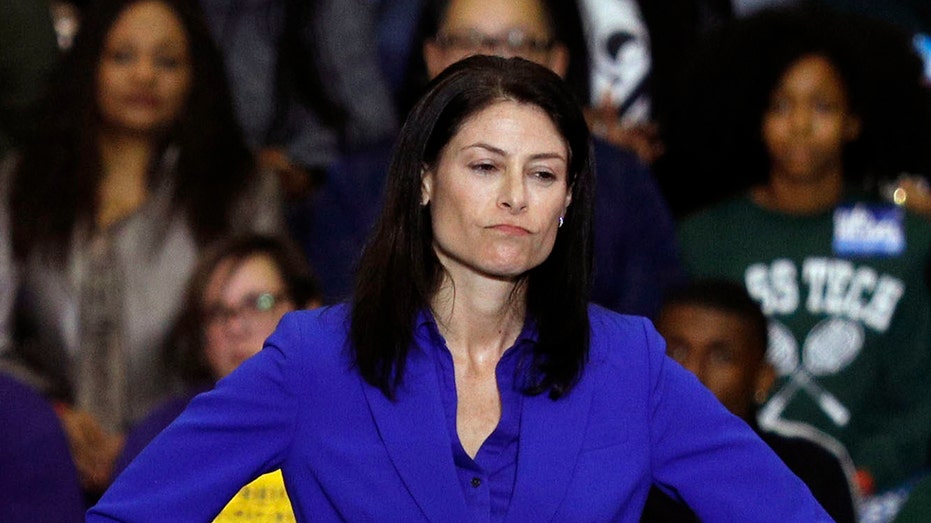
A newsletter focused on antisemitism highlighted political disputes involving Michigan Attorney General Dana Nessel, a proposed U.S. refuge pathway for Canadian Jews and controversy surrounding actor Mark Ruffalo. The edition also examined donor connections between two political candidates and criticized competing narratives about violence in the West Bank. The developments reflect broader tensions over how political parties, governments and media organizations respond to anti-Jewish prejudice.
Nessel, a Jewish Democrat, warned in a podcast interview that dismissing Jewish voters’ concerns could push them away from the Democratic Party. Separately, Christian lawmakers asked President Donald Trump to support emergency immigration measures for Canadian Jews facing antisemitism. The newsletter presented the issues as part of a wider debate over security, political loyalty, Israel and the limits of public criticism.
| 1) | Dana Nessel’s warning to Jewish Democrats |
| 2) | A proposed refuge pathway for Canadian Jews |
| 3) | The dispute involving Mark Ruffalo |
| 4) | Political donors and anti-Israel activism |
| 5) | Debate over coverage of West Bank violence |
Dana Nessel’s warning to Jewish Democrats
Michigan Attorney General Dana Nessel became the central focus of the newsletter after comments she made during a closed-door event and in a podcast interview. She reportedly invoked the biblical figure Queen Esther while urging Jewish Democrats to consider the needs of humanity beyond the immediate security concerns of their own community. The account characterized her remarks as a call to support Democratic candidates even when voters believe the party is failing to confront antisemitism.
Nessel has also accused the Democratic Party of allowing people facing allegations of antisemitic conduct to attend an upcoming convention. Her broader warning was that dismissing Jewish voters’ concerns could drive them out of the party. Critics interpreted her remarks as asking Jews to subordinate their own safety, while supporters may view them as an argument for balancing communal security with broader humanitarian responsibilities.
A proposed refuge pathway for Canadian Jews
The newsletter reported that a coalition of Christian lawmakers asked President Donald Trump to create an emergency refuge option for Canadian Jews experiencing antisemitism. The proposal would accelerate lawful U.S. immigration for families described as being persecuted, subject to federal law and national security requirements.
The account said more than 2,000 Jewish Canadians were seeking to leave Canada, while Trump was signaling support for the plan. The lawmakers framed the request within the United States’ historical role as a refuge for people facing religious persecution.
“For generations, America has served as a refuge for people fleeing religious persecution. We urge you to ensure that, consistent with federal law and the security interests of the United States, that door remains open to our Jewish brothers and sisters in Canada who need it today.”
The dispute involving Mark Ruffalo
Actor Mark Ruffalo faced criticism from entertainment industry figures after objecting to a reported $111 billion Paramount merger. Ruffalo accused executives of supporting genocide through technology connected to Israel, according to the newsletter’s account.
Producers and studio executives responded by accusing him of using antisemitic ideas and stereotypes about Jewish wealth. Ruffalo rejected those claims as appalling. The dispute illustrates how criticism involving Israel, corporate power and alleged complicity in violence can quickly become a debate over whether political statements cross into antisemitism.
Political donors and anti-Israel activism
Progressive Democrat Abdul El-Sayed faced renewed scrutiny after campaign records showed that he and former Republican candidate Dan Bilzerian shared more than 20 donors. Bilzerian had attracted national attention for AI-generated antisemitic attacks against a Republican primary opponent.
The newsletter said both candidates received tens of thousands of dollars from donors opposed to Israel and seeking to reduce U.S. aid. Shared donors do not by themselves establish that candidates share the same views or that contributions were coordinated, but the overlap was presented as politically significant because of the donors’ positions and Bilzerian’s prior conduct.
Debate over coverage of West Bank violence
Veteran diplomat Shahar Azani argued that an attack by Israeli settlers on an NBC News crew should be condemned. He also criticized what he described as excessive media attention to violence in the West Bank.
Azani contended that a news approach focused almost exclusively on incidents involving Jews and Israel can create a misleading public narrative and contribute to anti-Israel activism. His comments reflect a continuing dispute over how journalists should cover violence, accountability and the wider Israeli-Palestinian conflict without minimizing attacks or reinforcing collective stereotypes.
| No. | Key Point | |
|---|---|---|
| 1 | Dana Nessel warned that dismissing Jewish voters’ concerns could harm Democrats. | |
| 2 | Christian lawmakers sought emergency immigration measures for Canadian Jews. | |
| 3 | 4 | Shared donors linked Abdul El-Sayed and Dan Bilzerian in campaign records. |
Summary
The newsletter brought together political, immigration, entertainment and media disputes connected to antisemitism and Israel. Its central themes were the need to address Jewish voters’ security concerns, the legal and humanitarian questions surrounding refuge for Canadian Jews, and the challenge of distinguishing criticism of Israeli policy from antisemitic rhetoric. The claims and characterizations remain politically contested, making attribution and careful context important.
Frequently Asked Questions
What did Dana Nessel warn Democrats about?
She warned that dismissing Jewish voters’ concerns about antisemitism could drive them away from the Democratic Party.
What immigration proposal was discussed?
Christian lawmakers asked President Donald Trump to support an emergency pathway for Canadian Jews facing persecution, subject to federal law and U.S. security interests.
Why was Mark Ruffalo criticized?
He was criticized after objecting to a reported Paramount merger and making allegations involving Israel and technology. Industry figures called the remarks antisemitic, while Ruffalo rejected that characterization.