
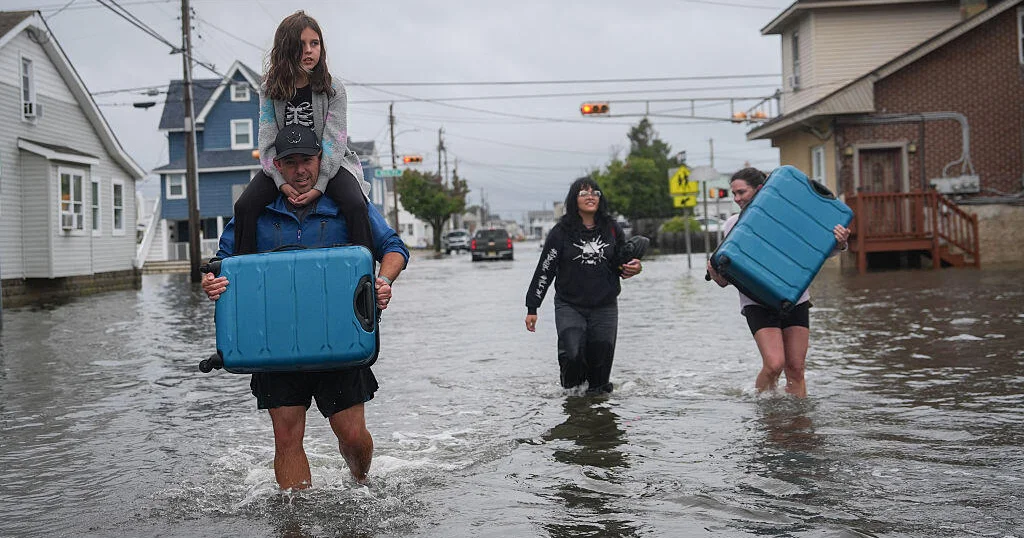
A powerful nor’easter has swept through the Northeast of the United States, unleashing severe winds, heavy rainfall, and coastal flooding. The storm left tens of thousands without power and has been linked to at least one fatality in New York City. As the storm continues to affect millions, officials warn of lingering high winds and rain that could lead to further damage in the coming days.
| Article Subheadings |
|---|
| 1) Storm Overview and Impact |
| 2) Fatalities and Rescues |
| 3) Coastal and Urban Flooding |
| 4) Wind Threats and Damage Potential |
| 5) Cancellations and Public Safety Measures |
Storm Overview and Impact
The nor’easter, characterized by its slow movement and powerful winds, has brought significant changes to the weather patterns throughout the Northeast. On Saturday, the storm made its way along the U.S. Atlantic coast, impacting areas from New Jersey to New England. High winds have not only disrupted daily routines but have also knocked out power for approximately 100,000 customers across the region. The storm has been designated as particularly dangerous due to the combination of strong winds, heavy rainfall, and rapidly rising tides.
Meteorologists expect that the worst effects of the storm will continue through the weekend, with potential for heavy rain amounts of 1 to 3 inches in urban areas and even higher totals in coastal regions. Average wind gusts are projected to reach 60 mph along the coasts, with even stronger gusts expected at times.
Fatalities and Rescues
Tragically, the storm has been linked to at least one fatality; a 56-year-old man, identified as Leighton Brown, died after being struck by a falling tree in Brooklyn, New York. This incident marks the first confirmed death associated with the storm, as reported by the New York City Police Department. In addition to this tragedy, emergency services responded to various incidents, including rescuing nine adults and a dog who had become trapped in flooded motel rooms in Egg Harbor Township, New Jersey.
Eyewitness accounts from across the affected regions reflect a broad range of emergency situations. People reported trees being uprooted, flooding extending into homes, and widespread property damage. As emergency responders remain engaged, additional rescues are ongoing as conditions continue to affect residents and visitors alike.
Coastal and Urban Flooding
Coastal towns are bearing the brunt of the storm’s impact, with flooding reported throughout Long Island and various New Jersey communities. In some areas, residents have taken to kayaks to navigate flooded roads. The borough of Surf City in New Jersey saw notable flooding, as local business owner Kenny Formica reported water rising inside his marina for the first time since Hurricane Sandy. Flooding led to the loss of personal property, with reports of boats and jet skis being damaged or missing.
In Ocean City, Maryland, the heavy surf caused considerable beach erosion and flooding. Local residents expressed concern about the rising water levels in canals that were reaching people’s backyards. Communities further south, like Norfolk, Virginia, experienced flooding at residential streets, with vehicles getting stuck as water levels rose dangerously high.
Wind Threats and Damage Potential
As the storm continues to develop, meteorologists predict increasingly gusty winds that could exacerbate both flooding and property damage. Winds along the New Jersey and Delaware coasts are expected to reach gusts of up to 60 mph, with instances of stronger gusts already reported. Eastern Long Island and southeastern New England may experience gusts between 45 to 65 mph. Such fierce winds pose severe risks, particularly in areas where trees remain leafed out, increasing the likelihood of downed limbs and power outages.
The National Weather Service has cautioned residents that these winds will push ocean waves over existing seawalls, leading to flooding in homes adjacent to the shore. Furthermore, the storm’s early presence in the season heightens the potential for damage, especially given saturated soils from preceding rainfalls.
Cancellations and Public Safety Measures
In light of the dangerous weather conditions, various public events have been canceled or postponed. Major League Baseball teams, including the Boston Red Sox and the Chicago Cubs, altered their schedules to avoid the storm’s impact, with the last game rescheduled to take place in Florida. High-profile concerts, such as those by artist Ed Sheeran, have also been canceled as safety measures were put in place.
State officials are urging the public to remain vigilant during the storm’s assault. New York Governor Kathy Hochul acknowledged coastal flooding as a looming threat and has encouraged residents to stay informed and take necessary precautions. Meanwhile, local ferry services have paused operations, and measures are being initiated to ensure the safety of both residents and visitors along the coast.
| No. | Key Points |
|---|---|
| 1 | The nor’easter is impacting the Northeast with high winds and heavy rainfall. |
| 2 | At least one fatality has been reported in New York City from the storm. |
| 3 | Significant flooding has been experienced in various coastal and urban areas. |
| 4 | Wind gusts could reach up to 70 mph, increasing the risk of downed trees and power outages. |
| 5 | Public events are being canceled while authorities urge residents to stay safe. |
Summary
The ongoing nor’easter poses significant challenges to the Northeast, impacting lives and property through high winds, flooding, and hazardous weather conditions. The storm has already resulted in tragic loss of life, extensive flooding, and disrupted travel and public events. As residents brace for potential further impacts, officials continue to work diligently to ensure safety and provide assistance where necessary. The situation remains fluid, requiring ongoing monitoring and preparation by both residents and local authorities alike.
Frequently Asked Questions
Question: What areas are most affected by the storm?
The storm currently affects a wide range of locations in the Northeast, particularly in coastal regions from New Jersey through New England.
Question: What measures should residents take during severe weather events?
Residents should remain informed about weather conditions, secure property, avoid travel when hazardous conditions persist, and follow local authorities’ guidance.
Question: How long is the storm expected to last?
The nor’easter is predicted to impact the region through Tuesday, with fluctuating conditions likely continuing into that day.