
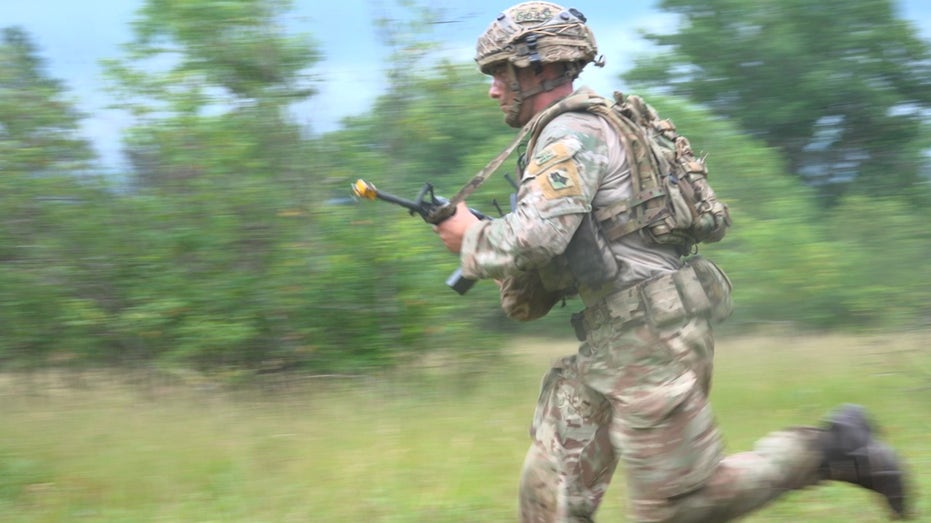
More than 9,000 service members from across the United States and five international participants are taking part in Northern Strike 26-2 in northern Michigan. The exercise is designed to prepare reserve-component forces and allied personnel for a battlefield shaped by rapid technological and operational change. Training includes live-fire missions, coordinated attacks, logistics support, cyber and space capabilities, and emerging drone systems. The exercise continues through Aug. 14, 2026.
Held at a large military training area near Grayling, Michigan, Northern Strike gives troops an opportunity to test lessons drawn from conflicts around the world while practicing how different branches and partner nations would operate together.
| 1) | Who is participating in Northern Strike 26-2 |
| 2) | How Michigan supports complex combat training |
| 3) | Why allies and support units train together |
| 4) | How technology is changing military readiness |
| 5) | What the exercise is intended to achieve |
Who is participating in Northern Strike 26-2
Northern Strike 26-2 includes more than 9,000 service members representing 36 states and territories, along with personnel from five international participants. The exercise brings together reserve-component forces from multiple military branches and partner nations for a shared readiness event in August 2026.
The exercise began in 2012 and is held twice each year. Michigan National Guard public affairs officer David Kennedy said this summer’s event is the largest since the exercise was established. Its size allows units with different missions and levels of specialization to rehearse operations in a common training environment.
How Michigan supports complex combat training
The training area in northern Michigan provides more than 200,000 acres of land, access to the Great Lakes, and air, space and cyber capabilities. That combination enables forces to conduct exercises that extend beyond traditional ground combat and require coordination across several operational domains.
Tanks, Paladin howitzers and infantry units are practicing combat scenarios, including attacks and fire missions. A United Kingdom contingent took part in a practice attack, while artillery crews rehearsed procedures inside a Paladin howitzer before moving to live-fire training.
Why allies and support units train together
Brig. Gen. Ravindra Wagh of the Michigan National Guard said the exercise is intended to help U.S. forces learn alongside the allies and partners with whom they could operate in a conflict. Training together allows participants to identify practical challenges and resolve them before a real deployment.
“We want to train with the allies and partners we’re going to go to war with. We want our soldiers, sailors, airmen, marines to see it here. Figure it out here.”
The exercise also includes units responsible for sustaining troops in the field. The 445th Quartermaster Company operates shower and laundry services, demonstrating how logistical support contributes to morale and combat effectiveness away from the front line.
How technology is changing military readiness
Nearly 90 industry partners are participating, giving military units access to developing capabilities and allowing them to assess how those systems might be used in conflict. Technologies being tested include autonomous resupply, drones that deliver blood by air, and systems that monitor casualties and relay information to medical personnel.
Three-dimensional printing is also part of the exercise. It can help units produce replacement parts and adapt equipment closer to the point of use. Wagh said the speed of change in modern conflict is requiring the military to test new ideas more quickly rather than waiting for them to be encountered during combat.
What the exercise is intended to achieve
Northern Strike is designed to turn battlefield observations into practical training improvements. The exercise gives troops a controlled setting in which to practice combat tasks, coordinate with foreign forces, sustain operations and evaluate new equipment.
For Pfc. William Flores, whose unit is from Trenton, New Jersey, the event serves as a rehearsal for a possible deployment. The training is intended to help soldiers respond with greater confidence and capability if they are later called to operate overseas.
“This is like a practice run. So when we do get deployed, if we do get deployed, we are ready.”
| 1 | More than 9,000 service members are participating. |
| 2 | Participants represent 36 states and territories and five international participants. |
| 3 | Training covers live-fire combat, allied coordination and battlefield logistics. |
| 4 | Nearly 90 industry partners are supporting tests of emerging capabilities. |
| 5 | Northern Strike 26-2 continues through Aug. 14, 2026. |
Summary
Northern Strike 26-2 is using Michigan’s extensive training environment to prepare U.S. reserve-component forces and international partners for an increasingly complex battlefield. By combining live-fire missions, sustainment operations, multinational coordination and technology testing, the exercise aims to raise the readiness and adaptability of participating units.
Frequently Asked Questions
What is Northern Strike 26-2?
It is a large reserve-component military readiness exercise held in northern Michigan and conducted twice each year.
How many people are participating?
More than 9,000 service members from 36 states and territories and five international participants are taking part.
What capabilities are being tested?
The exercise includes live-fire systems, autonomous resupply, medical drones, casualty assessment systems, three-dimensional printing, and air, space and cyber capabilities.