
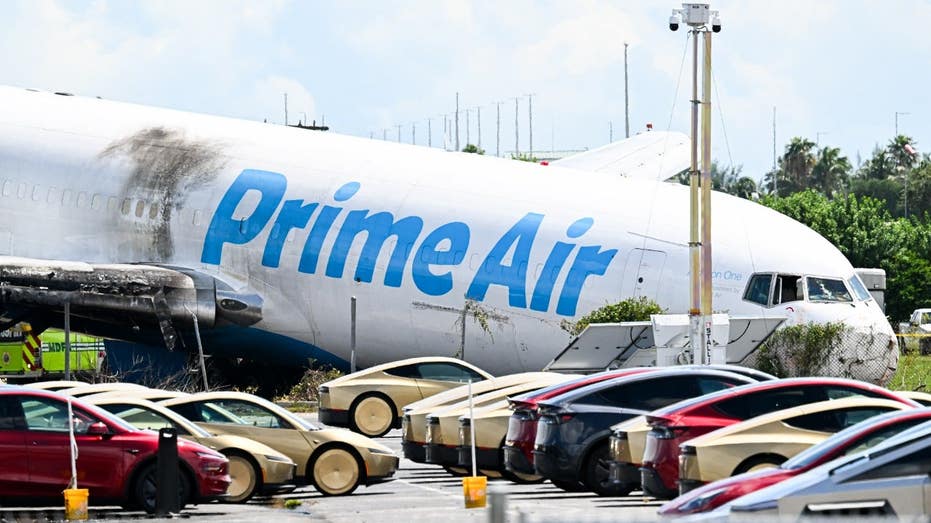
A pilot repeatedly warned that an Amazon cargo aircraft was traveling too fast during its approach to Miami International Airport and after touchdown, according to newly released National Transportation Safety Board information. The Boeing 767 overran the runway on September 6, killing five people in a van and injuring five others. Cockpit recorder data also showed that the other pilot did not provide a consistent verbal response to the warnings.
Investigators said the aircraft made an unstable approach in strong winds, touched down nearly 5,000 feet into the 9,360-foot runway and briefly attempted to take off again before the pilots resumed braking.
| 1) | Cockpit warnings about excessive speed |
|---|---|
| 2) | Unstable approach and runway position |
| 3) | Attempted go-around after touchdown |
| 4) | Crash casualties and investigation |
| 5) | Aircraft braking system findings |
Cockpit warnings about excessive speed
The NTSB said one of the two pilots repeatedly warned that the aircraft was “too fast” during the final approach to Miami International Airport and for a period after landing on September 6. The warnings continued for nearly two minutes, but investigators said the pilot receiving them never gave a consistent verbal response.
The agency has not said which pilot issued the warnings or which pilot received them. The flight crew members were identified as Capt. Joseph Carroll, 55, and First Officer Jaime Felipe Silva Molina, 37, both of cargo carrier 21 Air. The complete cockpit voice recorder transcript has not been released while the investigation continues.
“Too fast.”
Unstable approach and runway position
Flight data showed that the Boeing 767 made an unstable approach in strong winds before reaching the runway. Automated cockpit alerts included repeated “sink rate” and “too low terrain” warnings as the aircraft descended toward the airport.
Available flight-tracking data indicated that the plane first touched down nearly 5,000 feet into Runway 30, which is 9,360 feet long. That left less than half of the runway available for the aircraft to slow and stop. The landing position and approach conditions are among the issues being examined by federal investigators.
Attempted go-around after touchdown
After touchdown, the pilots briefly advanced the throttles and released the brakes in an apparent attempt to take off again. The maneuver was abandoned about four seconds later, after which the aircraft resumed braking.
The aircraft then continued beyond the end of the runway for about 1,300 feet. It struck a van outside the runway area, causing the deaths of all five people inside. The sequence of touchdown, attempted go-around and renewed braking is being reconstructed from the flight data and cockpit voice recorders.
Crash casualties and investigation
The five people killed in the van were members of a crew that cleaned aircraft at the airport, according to NTSB Chair Jennifer Homendy. Five other people were injured, including two who were in critical condition as of September 8. The two pilots were also injured, treated and released before speaking with investigators on September 9.
The aircraft crash occurred at Miami International Airport in Miami, Florida. Investigators have released preliminary recorder and flight data, but they have not issued a final determination of the cause. The continuing review is expected to consider crew communications, weather, approach stability, aircraft systems and the decisions made after touchdown.
Aircraft braking system findings
Data available to investigators indicated that the aircraft’s thrust reversers and speed brakes did not deploy when the cargo jet overran the runway. These systems are designed to help reduce an aircraft’s speed after landing, making their status a significant part of the examination.
The released information does not establish why those systems did not deploy or whether their nondeployment directly caused the overrun. Investigators must compare the system data with the crew’s actions, the aircraft’s landing speed, wind conditions and the runway position at touchdown before reaching conclusions.
| Number | Key Point |
|---|---|
| 1 | A pilot repeatedly warned that the aircraft was too fast. |
| 2 | The jet touched down nearly 5,000 feet into Runway 30. |
| 3 | The pilots briefly attempted to take off again after touchdown. |
| 4 | Five people on the ground were killed and five others were injured. |
| 5 | Data indicated that the thrust reversers and speed brakes did not deploy. |
Summary
The preliminary NTSB findings describe a fast, unstable approach, delayed or inconsistent cockpit communication and a late attempt to continue the landing sequence after touchdown. The aircraft’s touchdown position left limited runway remaining, while data indicated that key deceleration systems did not deploy. The investigation remains open, and the released information does not yet assign a definitive cause or responsibility.
Frequently Asked Questions
What happened to the Amazon cargo aircraft?
The Boeing 767 overran Runway 30 at Miami International Airport on September 6 after landing and struck a van about 1,300 feet beyond the runway end.
How many people were killed?
Five people in the van were killed. They were members of an aircraft-cleaning crew at the airport.
What did the cockpit recorder reveal?
The recorder captured repeated warnings that the aircraft was too fast, along with automated “sink rate” and “too low terrain” alerts. The pilot receiving the warnings did not provide a consistent verbal response.
What systems did not deploy?
Available flight data indicated that the thrust reversers and speed brakes did not deploy during the runway overrun. Investigators have not yet determined why.