
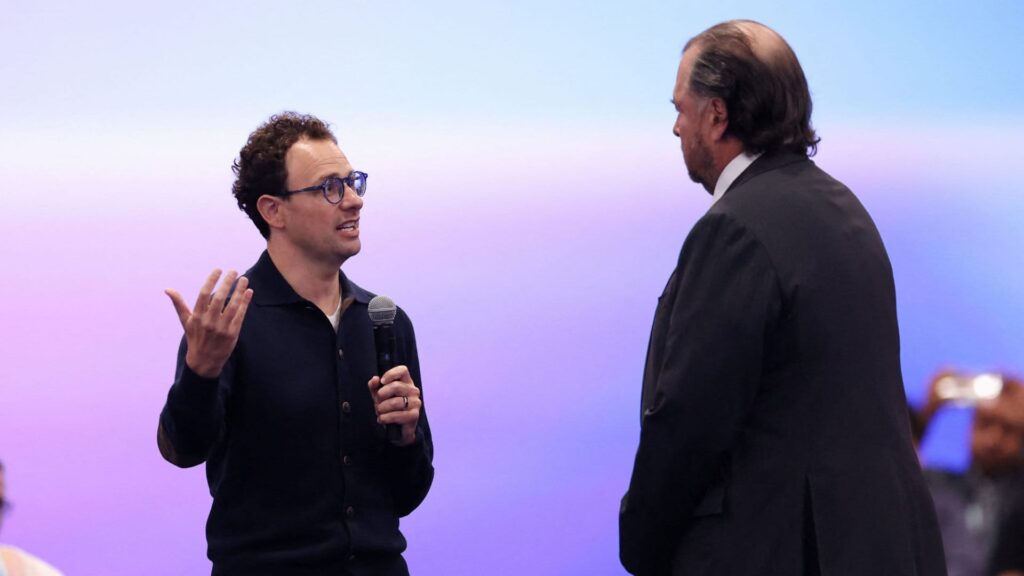
At the recent Dreamforce 2026 summit in San Francisco, notable leaders in the artificial intelligence industry expressed their divergent views on AI safety and development pace. Dario Amodei, CEO of Anthropic, advocated for a cautious approach to AI model development, urging the industry to slow down to prioritize safety, while Jensen Huang, CEO of Nvidia, argued that current market forces are sufficient to guide AI development without the need for stringent regulations. The discussions, which unfolded on September 15, 2026, in front of approximately 12,000 attendees, served as a focal point for ongoing debates about the future of AI.
| Article Subheadings |
|---|
| 1) Divergent Perspectives on AI Safety |
| 2) The Keynote Address and its Implications |
| 3) Industry Leaders Respond |
| 4) Strategic Partnerships and Developments |
| 5) The Future of AI Development |
Divergent Perspectives on AI Safety
The discourse on AI safety has become increasingly prominent as technology firms like Anthropic and Nvidia grapple with the ethical implications of rapid AI development. During the Dreamforce conference, Dario Amodei, the CEO of Anthropic, highlighted his concerns about the potentially catastrophic consequences of unregulated AI advancements. Amodei, whose company focuses on creating safe AI systems, suggested that the industry should adopt a more tempered approach, asking technology companies to consider the societal impacts of their innovations.
With an annual conference attracting thousands of industry professionals, the Dreamforce platform provided a unique opportunity for high-profile figures to showcase their visions for the future of AI. Amodei’s main message urged his peers to create an environment where safety takes precedence over speed, as he stated, “I think that’s the way to lead the industry forward.” His proposals come at a time when the potential for AI to cause harm has been underscored by various researchers and commentators.
Contrastly, Jensen Huang, the CEO of Nvidia, presented a counterargument, asserting that the market already includes sufficient self-regulation. Huang’s stance reflects a belief that economic forces will compel companies to act responsibly without the imposition of government laws or regulations. His comments sparked discussions among the audience regarding the balance between innovation and oversight, a core issue in the evolving narrative of artificial intelligence.
The Keynote Address and its Implications
Amodei’s keynote address occurred as a part of a larger agenda at Dreamforce, a notable event that marks a key moment in the tech industry calendar. The conference attracts prominent figures, allowing them to present their insights to a broad audience. During his speech, Amodei outlined three crucial steps to temper the pace of AI model improvements without sacrificing innovation or market competitiveness. In his view, this balanced approach could strengthen the industry’s reputation while safeguarding against potential dangers.
The remarks were made during an engaging session with Salesforce CEO Marc Benioff, who echoed Amodei’s call for a balanced perspective. Benioff remarked on the necessity for companies to evaluate their development pace critically, indicating a growing recognition within the industry of the responsibility that comes with rapid technological progress. This highlights an important moment in corporate governance, as leaders are increasingly called upon to establish ethical frameworks for their companies amidst the rapid pace of AI advancements.
In a world where technology moves fast, Amodei’s suggestions could impact the industry’s trajectory profoundly. The responses from others present at the summit, including high-profile executives from companies such as OpenAI and SpaceX, underscored the need for a collective approach to addressing safety concerns, with many endorsing Amodei’s vision for a cautious advancement in AI development.
Industry Leaders Respond
Following Amodei’s keynote, several industry leaders expressed their support for his cautious approach. Sam Altman, CEO of OpenAI, participated in a fireside chat with Benioff later that day, articulating his belief in the necessity of prioritizing safety over capabilities. He emphasized that monitoring and accountability should come first, asserting that ethical considerations are paramount in the context of current AI capabilities. “You have companies saying things like, ‘We will only be responsible if other companies are responsible,'” Altman noted, criticizing the tendency of firms to defer their accountability to others.
The sentiments expressed by Altman indicate an important shift in the industry narrative, where leaders are increasingly vocal about the ethical implications of their technologies. This perspective counters the arguments made by leaders like Huang, who deemphasize regulatory frameworks, advocating instead for self-regulation primarily driven by market dynamics. Altman’s advocacy for proactive safety measures aligns with a growing recognition among tech leaders that the societal ramifications of their technologies must be managed responsibly.
As discussions continue following the summit, the divergent views between Amodei and Huang not only reflect existing tensions in the tech community but also raise critical questions about the future of AI—posing challenges regarding the need for speed versus the importance of safety. These distinct perspectives highlight the complexity of navigating AI’s development landscape, underscoring the responsibility technology leaders bear to align their growth strategies with ethical considerations.
Strategic Partnerships and Developments
At Dreamforce, major developments involving strategic partnerships were also announced. Notably, Salesforce and Nvidia introduced a new reasoning model designed for the Agentforce platform, integrating technology from one of Nvidia’s leading models. This partnership illustrates the collaborative efforts among tech giants to enhance functionalities within software applications. Such innovations underscore the vitality of partnerships in propelling the AI narrative forward while also emphasizing the importance of responsible development.
Prior to the conference, Salesforce and Anthropic expanded their collaboration, launching “Claudeforce,” a system designed to streamline sales activities by accessing critical data directly through Anthropic’s Claude chatbot. This launch exemplifies the significant potential for AI to improve productivity in business environments while also indicating an integrative approach among companies seeking to harness AI’s capabilities responsibly.
The conference exemplified how collaborative endeavors and innovations can shape the landscape of artificial intelligence, providing tools that can address both operational efficiencies and the ever-pressing ethical challenges of AI deployment. With partnerships becoming increasingly critical in technology development, the implications of these associations will likely inform future strategies and standards within the AI sector.
The Future of AI Development
As the conversations at Dreamforce drew to a close, the broader implications of the discussions regarding AI development emerged prominently. Industry leaders find themselves at a crucial crossroads where the pace of advancements must be weighed against potential ethical dilemmas. The ongoing debates between key figures like Amodei and Huang reflect a sector in transition—not merely focused on innovation metrics but also increasingly concerned with corporate ethics and societal impacts.
The emphasis on responsible AI development will likely dictate how businesses pivot in coming months, especially as consumers and policymakers become more aware of technological implications. Companies may find it increasingly essential to articulate their strategies concerning safety and accountability in AI advancements. Amodei’s and Altman’s advocacy for safety-first development protocols may set a new standard within the industry, one that balances innovation with responsible oversight.
As technologists, regulators, and consumers continue to engage with these pressing issues, the narrative around AI development will be shaped by those who are willing to prioritize the principles of safety and accountability over rapid advancements. The outcome of this dialog will not only redefine the future of AI but may also be pivotal in securing or jeopardizing public trust in technology as AI becomes even more deeply integrated into daily life.
| No. | Key Points |
|---|---|
| 1 | Dario Amodei advocates for slowing AI development to ensure safety and mitigate risks. |
| 2 | Jensen Huang argues that market forces can guide responsible AI development without new regulations. |
| 3 | Key technology leaders express divergent views on AI safety, highlighting ethical considerations. |
| 4 | Strategic partnerships between tech companies continue to evolve, enhancing AI applications while emphasizing responsibility. |
| 5 | The future of AI development will balance rapid advancement with ethical considerations and safety protocols. |
Summary
The discussions at Dreamforce 2026 highlighted a pivotal moment in the AI industry, where leaders are grappling with how to balance rapid technological advancements with the necessity of ethical responsibility. Divergent perspectives from key figures like Dario Amodei and Jensen Huang illustrate the complexities of shaping a safe and innovative future for AI. As partnerships among tech firms continue to flourish and as the industry further engages with ethical considerations, the path forward will likely emphasize the importance of collective responsibility and proactive safety measures.
Frequently Asked Questions
Question: Why is there a call to slow down AI development?
There is a growing concern that rapid advancements in AI could lead to unintended consequences, including potential harm. Leaders like Dario Amodei are advocating for a cautious approach to ensure safety and accountability in AI deployment.
Question: What is Jensen Huang’s perspective on AI safety?
Jensen Huang believes that the market can regulate itself and that the industry does not require new laws or regulations to ensure safety. He advocates for responsible development, suggesting that companies should proceed at a pace that ensures safety without stifling innovation.
Question: How have strategic partnerships influenced AI development?
Strategic partnerships among major tech firms, such as Salesforce and Nvidia, have led to advancements in AI capabilities while emphasizing the importance of responsible development. These collaborations reflect a shared commitment to harnessing AI technology effectively and ethically.