
Nvidia is making significant strides in transforming its artificial intelligence (AI) chips into a new asset class that could reshape the financial landscape. By collaborating with six major asset management firms, Nvidia aims to mobilize $500 billion in funding for hyperscalers and enterprises focused on AI infrastructure. This groundbreaking initiative seeks to redefine how financial markets view technology assets, proposing that the computational capacity of GPUs may serve as long-term, revenue-generating investments.
| Article Subheadings |
|---|
| 1) Nvidia’s Bold Initiative |
| 2) The Financing Framework |
| 3) Insights from CEO Jensen Huang |
| 4) Wall Street Perspectives |
| 5) Economic Implications of AI Investments |
Nvidia’s Bold Initiative
Nvidia has taken a significant step in the realm of financial investments by entering into partnerships with six well-known asset management firms. This endeavor seeks to garner over $500 billion in financing aimed at creating a groundbreaking asset class around AI infrastructure. The participating firms include Apollo Global Management, Blackstone, BlackRock, Brookfield Asset Management, Goldman Sachs, and KKR.
The announcement signifies a shift not only in how AI technologies are financed but also in the perception of technology itself. Traditionally, technology assets like GPUs were seen as rapidly depreciating machinery. However, Nvidia aims to reform this notion by positioning its products as long-term, income-generating investments.
This initiative was outlined in a recent statement that emphasized how Nvidia intends to leverage institutional credit and insurance funds to support hyperscalers and AI startups. The unique financing structure aims to relieve companies from utilizing their own balance sheets and mitigate the financial risks generally involved in heavy investments.
The Financing Framework
The financing initiative is designed to facilitate substantial investment into AI technologies and infrastructures. By configuring a structure where Nvidia customers can access third-party capital, the framework seeks to redefine how these investments are financed. It aims to attract large sums of external funding, critical for companies that need to build data centers or acquire Nvidia hardware.
The financing model operates similarly to commercial real estate financing, where projects are evaluated based on the expected economic returns they will generate. This innovative way of thinking about technology as a financeable asset class has the potential to attract a wide range of investors who are eager to jump into digital infrastructure.
Additionally, firms like Apollo and Blackstone have previously structured financial deals to support AI ventures. Their established presence in alternative asset management combined with Nvidia’s innovative technology could create a lucrative market for financing AI investments. This collaboration explicitly aims to mobilize institutional investors, thereby marking a pivotal moment in the evolving landscape of technology financing.
Insights from CEO Jensen Huang
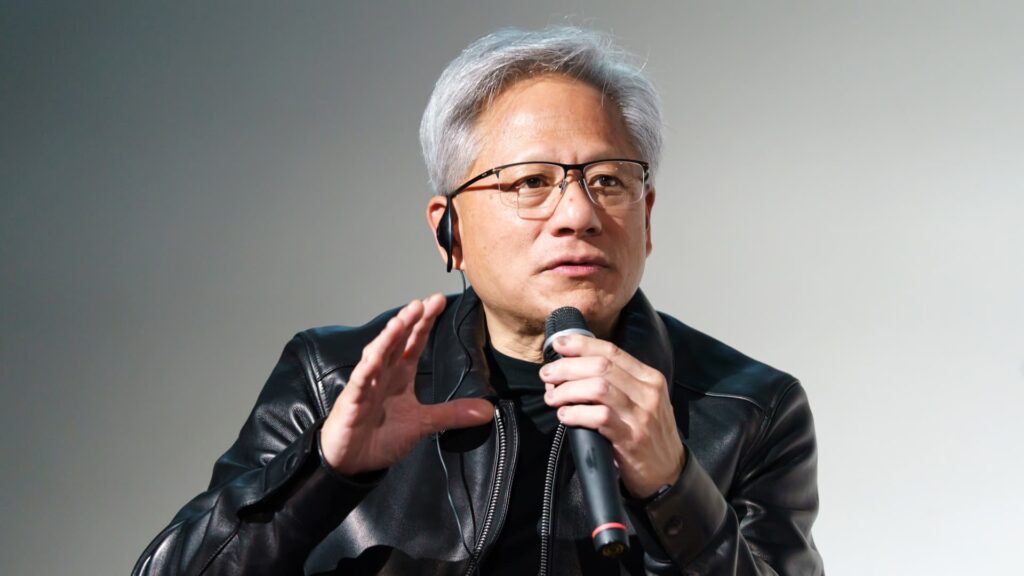
In a live interview featuring key executives from the participating firms, Nvidia’s founder and CEO, Jensen Huang, outlined his vision for the initiative. Huang stated, “
This is really the first time that technology chips have become an investable asset class.
” He emphasized that Nvidia’s chips are not only widely adopted but also flexible, fungible, and capable of generating ongoing revenue.
Huang’s perspective pushes against the grain of the traditional view of GPUs as depreciating assets. Instead, he posited that AI-powered compute resources should be considered akin to critical infrastructure such as electricity or the internet. Such a viewpoint not only challenges existing conventions but also aims to stimulate investor interest in these technologies.
Moreover, Huang noted that as AI applications rapidly expand, the demand for GPUs and data centers will far exceed current supply. The transformative potential of AI technology, according to Huang, can turn once transitory assets into permanent fixtures within financial portfolios.
Wall Street Perspectives
The collaborative effort has garnered attention from influential figures within the financial sector. CEOs and executives like Larry Fink from BlackRock and David Solomon from Goldman Sachs have conveyed their enthusiasm for the initiative. Solomon remarked, “
We’re in a pivotal moment of a historic AI investment cycle.
” His comments reflect the belief that this initiative is not merely a financial experiment but a significant step towards integrating AI and finance.
Blackstone President Jon Gray also pointed out that the urgency for integrating compute resources into the financial architecture cannot be overstated. Citing a sevenfold increase in demand for AI among Blackstone’s portfolio companies, Gray’s insights highlight the competitive landscape and the immediate need for innovative investment approaches.
Furthermore, Fink projected that this initiative could signify a new era of financial engineering, reminiscent of the mortgage-backed securities concept that revolutionized finance in the 1970s. With such ambitions, the firms involved are racing to mobilize capital as quickly as possible to establish a strong foothold in the burgeoning AI market.
Economic Implications of AI Investments
The introduction of Nvidia’s novel financing approach comes at a time when market dynamics are undergoing significant changes. After a notable downturn in global markets in July, investors have been increasingly scrutinizing whether the massive investments in AI by leading tech companies will yield adequate returns. Rating agencies like Moody’s have cautioned that escalating capital expenditures may strain the financial health of tech giants, leading to larger debt burdens.
It is within this volatile market environment that Nvidia’s financial model aims to reposition technology investments in a more sustainable framework. The traditional financial metrics may no longer apply as AI transformations become more pervasive. Instead, this initiative highlights the potential for AI infrastructure to drive economic growth and redefine the parameters of financial viability.
As the AI sector expands, the implications of such financing opportunities will resonate beyond immediate profits. They may alter the way technological advancements are perceived, ultimately pushing for comprehensive integration between technological evolution and capital markets.
| No. | Key Points |
|---|---|
| 1 | Nvidia is collaborating with six major asset management firms to mobilize $500 billion for AI infrastructure financing. |
| 2 | The initiative aims to redefine technology chips as long-term, revenue-generating assets. |
| 3 | Nvidia’s CEO, Jensen Huang, emphasizes viewing compute resources as critical infrastructure. |
| 4 | Financial executives from Wall Street express confidence in AI’s potential to drive economic growth. |
| 5 | The market is undergoing shifts as investors reassess the viability of tech investments amidst increased capital expenditures. |
Summary
Nvidia’s initiative to secure financing for AI infrastructure represents a potentially transformative moment in the relationship between technology and finance. With backing from major asset management firms, this model could shift perceptions of technology from rapidly depreciating assets to valuable, long-term investments. As the demand for AI continues to surge, the implications of such a financing framework could pave the way for new opportunities and challenges in both sectors.
Frequently Asked Questions
Question: How does Nvidia plan to mobilize the $500 billion?
Nvidia aims to collaborate with major asset management firms to attract investments through innovative financing structures, allowing businesses to secure capital for AI technologies without jeopardizing their balance sheets.
Question: What is the significance of GPUs in this financing model?
GPUs are positioned as long-term, revenue-generating assets rather than depreciating hardware, which can attract institutional investors and redefine the value of technology investments.
Question: How do financial executives view the future of AI investments?
Wall Street executives believe we are entering a pivotal moment in AI investment, viewing AI infrastructure as critical to future economic growth and necessitating innovative financial solutions.