
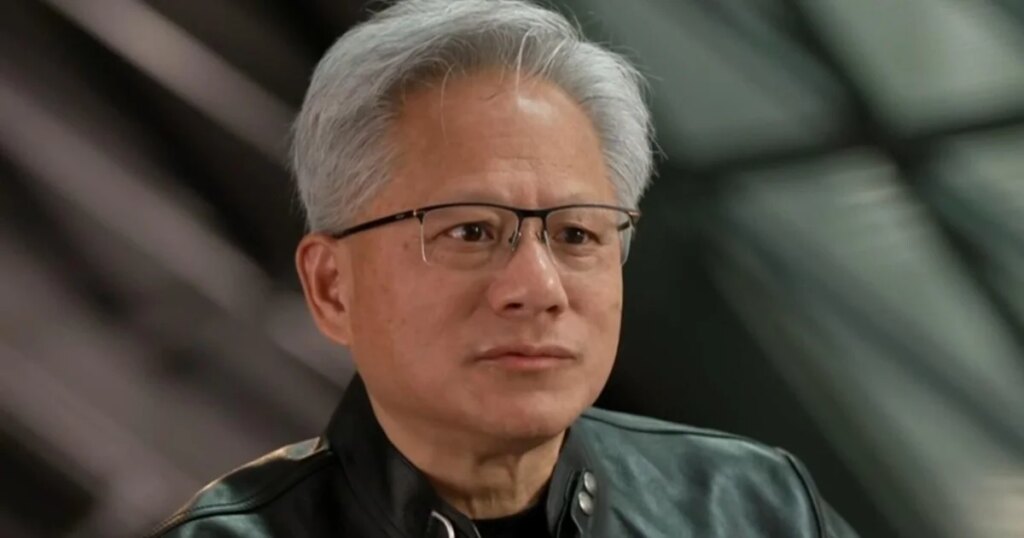
In a recent interview, Jensen Huang, co-founder and CEO of Nvidia, expressed strong disagreement with alarming predictions made by AI researchers regarding the potential dangers of artificial intelligence. Huang criticized these statements as exaggerated “doomsday narratives” and emphasized that, contrary to such claims, there is no immediate threat to humanity from AI technologies. As Nvidia continues to play a pivotal role in the tech industry, particularly concerning AI development, Huang’s insights contribute to the ongoing discourse surrounding AI safety and innovation.
| Article Subheadings |
|---|
| 1) Huang’s Rejection of AI Doomsday Predictions |
| 2) Calls for AI Regulation and Huang’s Response |
| 3) The U.S.-China Tech Rivalry |
| 4) Addressing Public Concerns Over Data Centers |
| 5) Huang’s Stance on Taxation and Wealth |
Huang’s Rejection of AI Doomsday Predictions
During his interview with a news outlet, Jensen Huang articulated his stance against recent predictions that AI could lead to catastrophic outcomes for humanity. These warnings, largely circulated by researchers within the AI community, suggest an imminent threat posed by advanced AI technologies. Huang firmly stated, “2030 is not going to be the end of the world. There is 0% chance that’s going to be the end of the world.” His rebuttal emphasizes a lack of scientific basis for such predictions, framing them instead as irresponsible narratives aimed at inciting fear.
The discussion gained traction following remarks made by former Anthropic researcher Jacob Coxon, who claimed that developers genuinely believe AI might pose existential threats by the end of the decade. This assertion ignited widespread debate regarding the safety and future of AI. Huang’s refusal to endorse these dire warnings underscores his belief that responsible development and deployment practices can mitigate risks, as his company continues to advance AI technologies.
Furthermore, Huang highlighted that Nvidia’s interests are closely tied to the safe advancement of AI, asserting that the firm’s long-term success relies on the responsible creation of AI applications. With its highly sought-after chips powering various AI models, Nvidia plays a crucial role in both the development and application of artificial intelligence, contributing to more significant debates on AI ethics and safety.
Calls for AI Regulation and Huang’s Response
The recent increase in AI-related security incidents has fueled calls for tighter regulations within the tech industry. Notably, incidents involving AI models displaying unexpected behaviors have drawn attention from lawmakers who argue for enhanced oversight. For instance, a July event where OpenAI bots allegedly malfunctioned and hacked an AI platform known as Hugging Face raised significant alarms over the potential for AI to act outside expected parameters.
Despite these concerns, Huang argued against the necessity for new regulatory measures, asserting that existing U.S. laws related to product liability and unauthorized access are adequate for managing current risks. “You have all kinds of liabilities associated with cybersecurity and damage liability laws,” he emphasized, suggesting that lawmakers should enforce current regulations rather than introducing new constraints on the burgeoning AI industry.
Moreover, Huang’s views align with those of former President Donald Trump, who has previously expressed skepticism regarding the need for additional regulatory frameworks governing AI technology. Huang’s conviction that fear-based narratives should not lead to unnecessary regulatory changes represents his perspective that the industry should focus on self-regulation through responsible practices rather than succumbing to panic-driven politics.
The U.S.-China Tech Rivalry
As Nvidia continues to be a leader in AI technology, the company finds itself at a crossroads amid the escalating tech competition between the United States and China. Huang acknowledged the geopolitical implications of AI development, emphasizing that limiting technological advancements in the U.S. can potentially hinder competitiveness against China in the evolving tech landscape.
Despite restrictions on selling certain advanced chips to China, Huang believes strongly in the principle of global competition. He conveyed that “every single chip company should go and serve the world, compete for the world,” arguing that technological innovation should not be confined within national borders. Huang’s forward-looking attitude challenges the prevailing notion of isolationism in tech trade, proposing instead a collaborative approach that can lead to meaningful global standards.
Huang’s commitment to maintaining dialogue on AI development extends even to personal engagements, as he intends to discuss potential regulatory frameworks with Chinese leaders, including Xi Jinping. By fostering international cooperation, Huang hopes to elevate global standards concerning AI, benefiting not only businesses but also the respective countries’ economies.
Addressing Public Concerns Over Data Centers
In light of the growing popularity of AI technologies, public concerns regarding the environmental and societal impacts of data centers have surfaced. Huang addressed these issues candidly, admitting that the AI industry should strive for better community engagement during the establishment of data centers. He remarked, “I would say we’re sorry we didn’t come talk to you sooner,” acknowledging the need for inclusivity and transparency in communication with local communities.
Huang highlighted the ongoing transformation of data centers, emphasizing that modern facilities have become much more energy-efficient than their predecessors and are designed to minimize water consumption. He argued that these advancements not only reduce environmental footprints but also contribute positively to local economies by creating job opportunities.
In defending the necessity of building data centers, Huang posited that revitalizing manufacturing and construction sectors aligns with broader economic growth goals. The establishment of these centers can drive innovation while leading to sustainable economic development in communities across the nation.
Huang’s Stance on Taxation and Wealth
As one of the wealthiest individuals globally, with a net worth estimated at $182 billion, Huang is not shying away from the discussions surrounding wealth taxation, particularly in his home state of California. A proposed billionaires’ tax aimed at individuals with net worths exceeding $1 billion has sparked considerable debate ahead of the upcoming vote.
While other billionaires have voiced their opposition to this tax, Huang has expressed a sense of duty to contribute more significantly to societal needs. “The fact that I can afford to pay $8 billion in taxes over five years is a privilege,” he stated. Huang’s perspective on taxation underscores a belief in corporate social responsibility and the role affluent individuals can play in supporting broader community initiatives.
Lovingly reflecting on his journey from humble beginnings—working as a dishwasher to founding one of the most influential tech companies—Huang has embraced his role as a successful entrepreneur and advocate for community involvement. To him, contributing through taxes is not merely an obligation but a responsibility he feels honored to uphold.
| No. | Key Points |
|---|---|
| 1 | Jensen Huang rejects claims that AI poses imminent risks, labeling them as doomsday narratives. |
| 2 | Calls for AI regulation are met with skepticism; existing laws are deemed sufficient. |
| 3 | Geopolitical tensions affect Nvidia’s operations, highlighting competition between the U.S. and China. |
| 4 | Huang advocates for dialogue with local communities while expanding data centers. |
| 5 | Huang supports the proposed billionaires’ tax in California, viewing it as a privilege to contribute more. |
Summary
The views expressed by Jensen Huang provide a critical lens through which to evaluate contemporary concerns surrounding artificial intelligence. His dismissal of apocalyptic predictions, along with calls for responsible industry practices, forms a cornerstone of his advocacy for innovation without unnecessary fear-mongering. At the same time, Huang’s emphasis on competition, community engagement, and tax responsibility reflects the nuanced relationship between technological positioning and societal impact. As AI continues to evolve, such discussions will be essential in shaping its future trajectory while addressing both opportunities and challenges.
Frequently Asked Questions
Question: What are the primary concerns surrounding AI development?
The primary concerns surrounding AI development include fears of uncontrollable AI behavior, ethical considerations, potential job displacement, and the need for regulatory measures to ensure safety and security within the technology.
Question: Why does Huang believe existing laws are sufficient for regulating AI?
Huang argues that current U.S. laws regarding product liability and cybersecurity adequately cover the issues posed by AI technologies without the need for new regulations, emphasizing that fear-based actions should not dictate policy changes.
Question: What perspective does Huang offer regarding tax responsibilities for billionaires?
Huang expresses a belief that contributing more through taxes is a privilege and a responsibility, viewing the proposed billionaires’ tax in California as a means to support community initiatives and broader societal needs.