
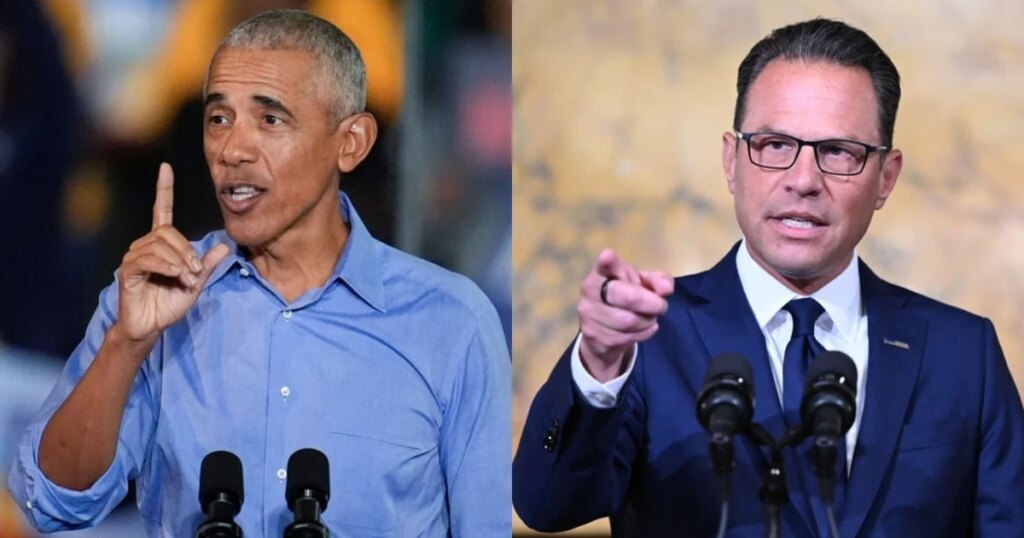
Former President Barack Obama has endorsed Pennsylvania Democratic Governor Josh Shapiro in his bid for reelection, utilizing a video announcement to rally support in the lead-up to the midterm elections. This endorsement marks a significant effort by Obama as he actively engages in various races across the country, aiming to bolster Democratic candidates amid a politically charged environment. Obama highlights Shapiro’s leadership qualities, calling for voters to support him against the backdrop of crucial upcoming elections.
| Article Subheadings |
|---|
| 1) Obama’s Endorsement Strategy |
| 2) Current Polling Data |
| 3) Shapiro’s Political Legacy |
| 4) Significance of the 2022 Election |
| 5) Future Outlook for Shapiro |
Obama’s Endorsement Strategy
In a move unmistakably aimed at energizing the Democratic base, former President Barack Obama has thrown his weight behind the reelection campaign of Josh Shapiro, Pennsylvania’s Democratic governor. This endorsement was communicated through a video released on Friday, marking a crescendo of activity from Obama, who is known for his pivotal role in national elections since leaving office. His strategic endorsement comes in a critical period as Democratic candidates brace themselves for the midterms, which are set for November 3.
In the video, Obama stated, “Pennsylvania, Governor Shapiro has your back — and in this election, I’m asking you to have his.” By invoking themes of integrity and decency, Obama seeks to contrast Shapiro’s leadership qualities with what he describes as the current chaos within Washington politics. His message aims to resonate specifically with Pennsylvania voters, reminding them of the stakes involved in this election.
Obama’s engagement goes beyond Pennsylvania; he has endorsed approximately two dozen other Democratic candidates nationwide, demonstrating a party-wide strategy to mobilize support among diverse voter demographics. This effort involves not just young voters but also middle-aged and senior voters who are keen on safeguarding progressive policies at the state and national levels. By redistributing his popularity across several candidates, Obama is acting as a critical asset for Democrats aiming to retain control of the Senate and other key local offices.
Current Polling Data
Evidence of Josh Shapiro‘s strong standing among Pennsylvania voters is clearly reflected in recent polls that indicate a significant lead over his Republican opponent, state Treasurer Stacy Garrity. A Quinnipiac University poll released just days ago found Shapiro leading Garrity by a striking 25 percentage points among likely voters in Pennsylvania. The survey’s insights underscore Shapiro’s high job approval rating of 63%, reflecting his effectiveness in office and popularity among the electorate.
A different poll conducted by the New York Times in conjunction with the Philadelphia Inquirer and Siena showed Shapiro ahead by 20 points. Such commanding margins not only bolster Shapiro’s chances for reelection but also serve to affirm the effectiveness of Obama’s endorsement as a rallying cry for Democratic support. These favorable polling results provide a strong foundation for Shapiro’s campaign, as he continues to push forth with initiatives aimed at addressing key state issues.
Polls like these are not merely numerical reflections; they also spark discussions about the broader implications for the Democratic Party in Pennsylvania and possibly nationwide. Shapiro’s success could indicate a statewide appetite for Democratic policies while challenging the conventional wisdom that often prevails in election cycles. In a battleground state like Pennsylvania, these numbers carry weight and could influence voter turnout come November.
Shapiro’s Political Legacy
Josh Shapiro‘s political journey has been one marked by significant milestones and contributions to Pennsylvania’s political landscape. His alignment with Barack Obama dates back almost two decades, contributing to the rich history they share as allies in the political arena. This connection was solidified when Shapiro, then a state legislator, publicly endorsed Obama during his 2008 presidential campaign. Such alignment has evolved into a fruitful political relationship that has become a focal point in Shapiro’s current campaign.
During his tenure as governor, Shapiro has positioned himself as a leader focused on the welfare of Pennsylvanians, implementing numerous initiatives aimed at enhancing regional economic opportunities, healthcare, and community safety. His approach demonstrates a commitment to progressive values while addressing concerns that resonate with a broad swath of voters. Shapiro’s pragmatic policies have made a significant impact, bolstered by his communication style, which often draws comparisons to Obama himself.
This political legacy underlines Shapiro’s capability to stand out as a viable candidate for higher offices in the future, given his rising profile and national recognition in Democratic circles. As he navigates the reelection campaign, there’s considerable speculation around what lies ahead for him in terms of potential future endeavors in politics. While he emphasizes focusing on the upcoming election, the buzz surrounding his political aspirations remains a substantial narrative in Pennsylvania.
Significance of the 2022 Election
The importance of the 2022 midterm elections cannot be overstated, especially in light of the current political climate. With the Democrats seeking to maintain control of Congress, pivotal gubernatorial races such as that of Josh Shapiro in Pennsylvania are seen as critical. The elections could serve as a barometer for national sentiments and trends within the electorate, potentially influencing the direction of upcoming political strategies for both major parties.
Pennsylvania, often viewed as a swing state, holds immense significance in national elections. Democratic success in this state could lead to a resurgence in party morale, encouraging grassroots mobilization, particularly among disenfranchised voters who feel their interests are underrepresented. The dynamics of this election will resonate far beyond state lines, shaping narratives around voter engagement, candidate viability, and policy concerns that are paramount to residents.
In the larger picture, the outcome of Shapiro’s race against Stacy Garrity will offer clues to the Democratic Party’s approach leading into future elections, especially as they strive to counterbalance Republican narratives that dominate much of the media. Political analysts are closely watching this race, highlighting its potential to either affirm or undermine the Democratic agenda depending on the election results.
Future Outlook for Shapiro
Looking ahead, Josh Shapiro is not just focused on the immediate goal of winning reelection; he is also seemingly preparing for a broader political future. Given his impressive polling numbers and the visible support from former President Barack Obama, Shapiro’s trajectory appears set against a backdrop of increasing endorsements and heightened media attention.
Speculation around Shapiro’s candidacy for the 2028 Democratic presidential nomination is rife, with political commentators suggesting that his solid foundation in Pennsylvania could pave the way for a larger role on the national stage. Such considerations, while still premature, are indicative of the rising star that Shapiro has become within Democratic ranks. His political ambitions have the potential to significantly shape the party’s future given the evolving landscape of American politics.
However, Shapiro remains keen to emphasize his commitment to Pennsylvania’s governorship first and foremost. His immediate focus is to secure a second term that will allow him to further his agenda domestically while elevating issues that matter to local constituents. Should Shapiro successfully navigate the complexities of his campaign, the coming months may well reveal his future ambitions more clearly as he balances the expectations of voters and party leaders alike.
| No. | Key Points |
|---|---|
| 1 | Former President Barack Obama endorses Josh Shapiro for reelection in Pennsylvania. |
| 2 | Shapiro leads current Republican opponent Stacy Garrity by significant margins in multiple polls. |
| 3 | Shapiro’s political history is closely tied to Obama, with shared endorsements dating back to 2008. |
| 4 | The 2022 midterms are crucial for Democratic control of Congress. |
| 5 | Future conversations suggest Shapiro may be a contender for the 2028 presidential nomination. |
Summary
In summary, the endorsement of Josh Shapiro by former President Barack Obama signals an important moment in the upcoming Pennsylvania gubernatorial election. As Shapiro maintains a commanding lead in the polls, the impact of Obama’s support could prove vital in mobilizing voters. Meanwhile, both Shapiro and Obama’s political trajectories may play a significant role in shaping the future landscape of the Democratic Party as they navigate the challenges of upcoming elections.
Frequently Asked Questions
Question: What is the significance of Obama’s endorsement for Shapiro?
Obama’s endorsement serves to galvanize support among Democratic voters, leveraging the former president’s popularity to bolster Shapiro’s reelection campaign.
Question: How are the current polled numbers affecting Shapiro’s campaign?
Current polling numbers indicate a strong lead for Shapiro over Garrity, providing confidence and momentum for his campaign as Election Day approaches.
Question: What future aspirations might Shapiro have beyond his governorship?
There is speculation that Shapiro could be a contender for the Democratic presidential nomination in 2028, although he currently emphasizes his focus on winning reelection.