
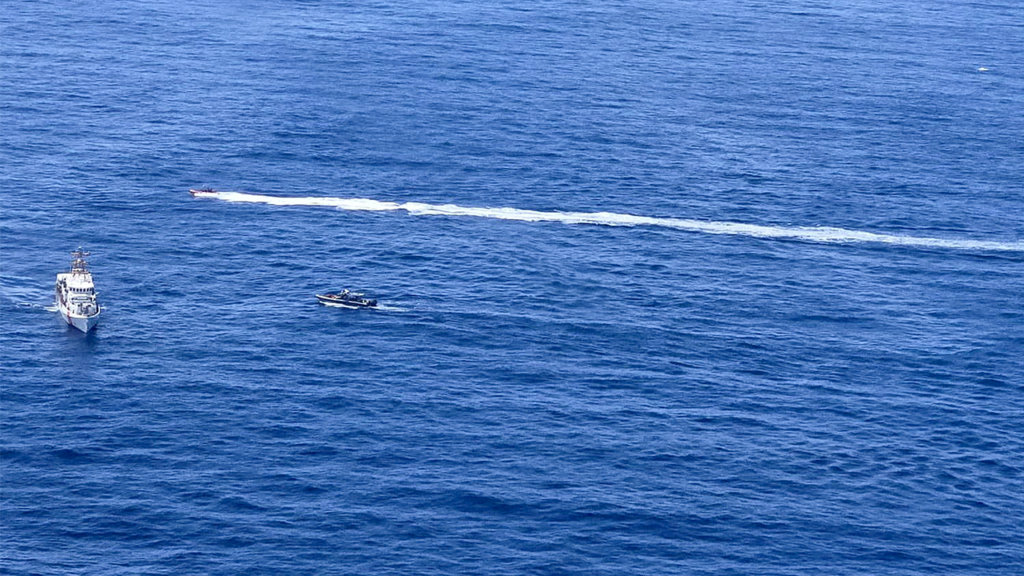
In a tragic incident off the coast of Puerto Rico, at least 40 individuals were rescued by the U.S. Coast Guard after a boat carrying migrants capsized following a violent altercation. Two people were confirmed dead as a result of the incident, highlighting the dangers faced by those attempting to escape violence and poverty from Caribbean regions. The capsizing occurred several miles from an uninhabited island, and survivors revealed that approximately 60 people had been on board at the time of the mishap.
| Article Subheadings |
|---|
| 1) Details of the Capsizing Incident |
| 2) The Rescue Efforts by the Coast Guard |
| 3) Context of Migration in the Region |
| 4) Impact of Gang Violence in Haiti |
| 5) Previous Incidents Reflecting the Crisis |
Details of the Capsizing Incident
The U.S. Coast Guard reported that the tragic capsizing incident took place late Sunday near Mona Island, a small, uninhabited island off the west coast of Puerto Rico. Survivors stated that an estimated 60 individuals were aboard a makeshift vessel when a violent conflict erupted, reportedly involving a machete. This confrontation led to severe injuries for some passengers and ultimately forced the group to abandon ship, plunging into the turbulent waters without life vests.
The conflict on the boat was exacerbated by the overcrowding and perilous conditions of the craft, which is typical of many migrant journeys across the Mona Passage. After spending over 12 hours in the water, only to be spotted at midday the following day, the survivors faced dire conditions, a testament to the risks taken in pursuit of a better life.
The Rescue Efforts by the Coast Guard
Rescue operations were launched promptly after a nearby boat noted the struggling individuals in the water and alerted the authorities. The Coast Guard was able to rescue 40 people in the operation that ensued and continued working on recovering additional survivors. A spokesperson for the Coast Guard indicated that two individuals were confirmed dead, but details regarding the identities or origins of the victims remain unknown at this time.
The Coast Guard confirmed that rescue efforts were still ongoing as of Monday evening, amidst challenging conditions. Crews are routinely tasked with navigating dangerous waters in hopes of saving lives from such perilous situations, with this incident representing just one of many in a broader context of maritime migration.
Context of Migration in the Region
Many migrants, particularly from Haiti, continue to traverse dangerous waters in search of refuge from violence, poverty, and political instability. The Mona Passage has witnessed an increase in crossings due to the increasingly dire situation in Haiti, where gang violence reigns. Historically, the region has seen waves of migrants risking their lives to escape catastrophic conditions at home.
Migrants often embark on journeys aboard makeshift vessels that are ill-equipped to handle the turbulent waters of the Mona Passage. These crossings not only reflect the desperation of individuals caught in crises but also raise concerns about humanitarian responses and safety measures in place for these individuals seeking asylum.
Impact of Gang Violence in Haiti
The worsening gang violence in Haiti contributes significantly to the migration crisis. Recent reports suggest that approximately 1.5 million people have been displaced due to ongoing violence, while the U.N. documented over 3,000 deaths linked to gang-related activities in the first half of the year. Armed groups reportedly control approximately 70% of Port-au-Prince, displacing countless families and making daily life increasingly untenable.
As the control of these gangs extends into various regions, everyday Haitians have little choice but to flee, seeking safety in neighboring nations. The migration patterns can be traced back decades, but the recent spike illustrates the urgency and desperation underpinning these dangerous maritime voyages.
Previous Incidents Reflecting the Crisis
This incident is not isolated; it is part of a troubling trend in maritime crossings involving Haitian migrants. In June 2022, a tragic event unfolded when an overloaded boat capsized, resulting in the loss of 11 women and girls’ lives off Puerto Rico’s coast. The increased frequency of these incidents highlights both the immediate risks of maritime voyages and the broader humanitarian crisis stemming from conditions in Haiti.
Additionally, recent reports from the nearby Turks and Caicos Islands have revealed similar situations involving Haitian migrants. Authorities there detained a vessel carrying 60 Haitian individuals, underscoring that desperate attempts to flee Haiti are not confined to any single maritime route.
| No. | Key Points |
|---|---|
| 1 | The U.S. Coast Guard rescued 40 migrants after a boat capsized off Puerto Rico. |
| 2 | Two individuals confirmed dead following the incident; approximately 60 people were on board the vessel. |
| 3 | Survivors were in the water for over 12 hours before being rescued. |
| 4 | Increasing gang violence in Haiti is a major driver of recent migrant crossings. |
| 5 | The incident reflects a troubling trend in maritime migration from the Caribbean region. |
Summary
The capsizing incident involving Haitian migrants off the coast of Puerto Rico brings to light the persistent crisis faced by individuals fleeing violence and poverty in their home country. As rescue operations continue amidst the aftermath of this tragedy, the incident underscores the increasing dangers associated with migration across precarious maritime routes. The humanitarian implications of this ongoing crisis emphasize the need for comprehensive responses to support displaced individuals and address the underlying issues driving such desperate measures.
Frequently Asked Questions
Question: What led to the capsizing of the boat off Puerto Rico?
The capsizing occurred following a violent altercation among passengers, which reportedly involved a machete. The situation escalated to the point where individuals were forced to jump into the water without life jackets.
Question: How many people were on board the boat?
Survivors indicated that there were approximately 60 people aboard the makeshift vessel at the time it capsized.
Question: What factors are contributing to the rise in maritime migration from Haiti?
Gang violence, political instability, and extreme poverty in Haiti have led many individuals to seek refuge in neighboring countries, prompting perilous journeys across the Mona Passage.