
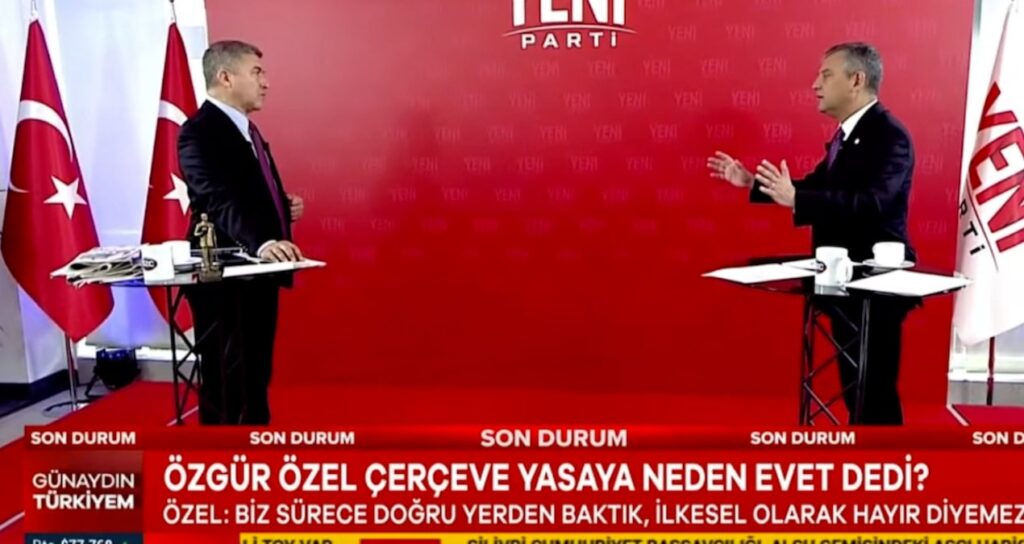
In a recent interview, NEW Party leader Özgür Özel addressed various topics surrounding his political stance and recent interactions with other political figures, particularly Kemal Kılıçdaroğlu, the leader of the Republican People’s Party (CHP). Openly critiquing the political dynamics within the country, Özel defended his actions during recent handshakes at significant events, emphasizing that they were motivated by humanitarian sentiments rather than political implications. He also discussed offers he received regarding his political role and the internal challenges within his party.
| Article Subheadings |
|---|
| 1) Clarifying Handshakes: Humanitarian or Political? |
| 2) Funeral Etiquette and Political Tension |
| 3) Navigating Internal Party Challenges |
| 4) The Impact of Political Decisions on Public Perception |
| 5) Future Political Directions for the NEW Party |
Clarifying Handshakes: Humanitarian or Political?
In the recent episode on the SÖZCÜ TV program “Günaydın Türkiyem,” Özgür Özel confronted inquiries about his recent handshakes with Kemal Kılıçdaroğlu. He clarified that the handshakes did not carry a political connotation. The initial handshake occurred at the funeral of the late Cevdet Selvi, while the second was during the opening ceremony of the judicial year. Özel emphasized that these gestures were rooted in compassion rather than political strategy, viewing them as human interactions in significant moments rather than as signals of alliance or endorsement.
Özel’s declarations signify a strive to redefine political gestures within a humanitarian framework. During the funeral, he noted, “Not shaking hands at a funeral… while our sister, the wife of Cevdet Selvi, is standing there crying… is disrespectful.” This sentiment reflects a broader perception regarding the need for compassion in political discourse, particularly in times of grief where humanity should prevail over rivalry.
Funeral Etiquette and Political Tension
During the interview, Özel discussed the implications of political interactions during sensitive events such as funerals. He stated that allowing political tension to seep into such contexts tarnishes the respect owed to those grieving. “Reflecting political tension at a funeral… is disrespectful to the owners of the funeral,” he insisted. Özel’s comments resonate with the idea that political figures, while engaging in public duties, must also honor the societal and cultural norms surrounding personal tragedies.
The role of public figures extends beyond political discourse; it encompasses the responsibilities of maintaining decorum and empathy. Özel’s perspectives underscore a call for political leaders to prioritize humanity—a lesson applicable beyond the immediate context of Turkish politics.
Navigating Internal Party Challenges
Özel elaborated on the internal dynamics of the NEW Party, where he confronted several challenges following the “absolute nullity” decision regarding CHP’s legitimacy. He revealed that various proposals were directed at him post-decision, illustrating the contentious environment within the party. Özel conveyed that he received offers to remain at the helm of the party in exchange for sidelining support for transformative actions, particularly concerning Ekrem İmamoğlu and the detained mayors.
He stated, “I was told to get off the bus… stay at the head of the party and forget about Ekrem.” His rejection of these suggestions highlighted his commitment to ethical values over party politics, depicting the sacrifices public figures may encounter while pursuing their principles. This illustrates the difficult balance leaders must strike between party loyalty and their moral obligations.
Özel’s stance demonstrates not only his personal integrity but also the broader ideological challenges faced by political parties trying to navigate between entrenched political cultures and emerging democratic ideals.
The Impact of Political Decisions on Public Perception
Özel also explained how political strategies and decisions could adversely shape public perception. He commented on the notion that his friendly interactions with Kılıçdaroğlu contributed to legitimizing notions that he supported controversial decisions, such as the “absolute nullity” decision on party legitimacy. Özel countered these claims, saying, “Claiming that Özgür Özel gave legitimacy to the nullity is the same as claiming that İsmet Pasha was a deserter.” This remark illustrates the sensitivity surrounding the reputation and perception of political leaders.
The backlash against Özel highlights the hyper-aware context in which Turkish politicians operate, where even casual gestures can be misconstrued as political endorsements. The repercussions of these interpretations weigh heavily on leaders, impacting their reputation and voter perceptions. The challenges faced by Özel reflect broader narratives where political nuance can lead to significant ramifications in personal and party image.
Future Political Directions for the NEW Party
Looking ahead, Özel expressed his vision for the NEW Party and its role in the evolving political landscape. He stated that while his gestures toward Kılıçdaroğlu were not indicative of political allegiance, they served a purpose in maintaining the unity and integrity of his party. “There is no place left in my heart,” he asserted, underscoring his commitment to steer the party through complex times. His vision reflects a desire for growth and commitment—both to party principles and to public accountability.
He articulated concerns about internal divisions within the party, asserting that “you came and divided the party.” This reflects deep-rooted conflicts that threaten the cohesiveness of political factions in Turkey. As Özel contemplates the path forward, he aims to consolidate his party’s stance while countering internal dissension. The challenge of maintaining unity while navigating political complexities is crucial for the survival and success of the NEW Party and its broader implications for Turkish democracy.
| No. | Key Points |
|---|---|
| 1 | Özgür Özel responded to questions regarding handshakes with Kemal Kılıçdaroğlu, underlining a humanitarian approach. |
| 2 | He highlighted the importance of maintaining decorum during funerals amidst political tensions. |
| 3 | Özel rejected offers to neglect support for detained mayors to secure his position within the party. |
| 4 | Concerns about public perceptions and the potential implications of political decisions were emphasized. |
| 5 | Özel conveyed a vision for the future of the NEW Party amidst internal divisions and challenges. |
Summary
The recent interview with Özgür Özel reflects the intricate dynamics within Turkish politics, particularly highlighting the tension between humanitarian gestures and political strategy. His interactions with Kemal Kılıçdaroğlu were framed within a broader context of political ethics and integrity amidst a challenging internal landscape. As he navigates through these complexities, Özel’s leadership approach showcases a commitment to upholding humanitarian values while addressing the pressing challenges facing his party and the political landscape in Turkey.
Frequently Asked Questions
Question: What prompted Özgür Özel’s remarks about handshakes with Kemal Kılıçdaroğlu?
Özgür Özel responded to criticism regarding the political implications of his handshakes with Kılıçdaroğlu, asserting they were humanitarian gestures rather than political endorsements.
Question: How did Özel justify his actions at the funeral of Cevdet Selvi?
Özel emphasized the need for respect during sensitive times, stating that leaving a handshake unreciprocated would be disrespectful to those grieving.
Question: What challenges does Özgür Özel foresee for the NEW Party?
He expressed concerns over internal divisions within the party and the need to unify while addressing the political complexities affecting the party’s future.