
In a bid to manage heightened tensions and prevent further violence, major museums in Paris shut their doors as a substantial police force prepared for anticipated demonstrations. France’s Interior Minister stated that nearly 70,000 police officers would be mobilized across the nation, with additional support from helicopters and armored vehicles to maintain order. This comes after previous protests drew over half a million participants who expressed their frustrations over rising living costs and other societal grievances.
| Article Subheadings |
|---|
| 1) Impact of Recent Protests on Paris |
| 2) Government Response to the Unrest |
| 3) The Involvement of Local Businesses |
| 4) Upcoming Events and Security Measures |
| 5) Broader Implications for French Society |
Impact of Recent Protests on Paris
The recent wave of protests in Paris has had a profound impact on the city’s cultural and economic landscape. Major institutions, such as the Louvre, Orsay Museum, and the Picasso Museum, announced closures in anticipation of the protests, citing concerns over potential vandalism and violence. This decision, which affected a significant influx of tourists, underscores the palpable unease gripping the city. The protests, which began as a grassroots movement among high school students in southeast Paris, have rapidly evolved into a nationwide demonstration against rising living costs, reflecting a broader discontent among various demographics.
Last week, demonstrations spiraled into violence, resulting in injuries and extensive property damage. The responses from the public have varied widely, with some citizens expressing solidarity with the protesters while others have criticized the unrest for disrupting daily life and safety in the city. The ongoing discord raises questions about the social fabric of France’s capital, as residents grapple with feelings of helplessness and anger amidst the political and economic upheaval.
Government Response to the Unrest
In response to the escalating protests, French officials have taken unprecedented measures to restore order and ensure the safety of both citizens and visitors. According to France’s Interior Minister Laurent Nuñez, approximately 70,000 police officers have been strategically deployed across the nation. This includes not only ground forces but also the use of helicopters, armored vehicles, and water cannons to discourage violent behavior.
The heavy police presence aims to strike a balance between allowing citizens the right to protest while preventing potential looting and violence. The government has expressed its commitment to addressing the underlying issues prompting these protests, emphasizing the need for dialogue with community leaders and protesters alike. However, concerns persist over the effectiveness of such a response and if it genuinely addresses the citizens’ grievances regarding the cost of living.
The Involvement of Local Businesses
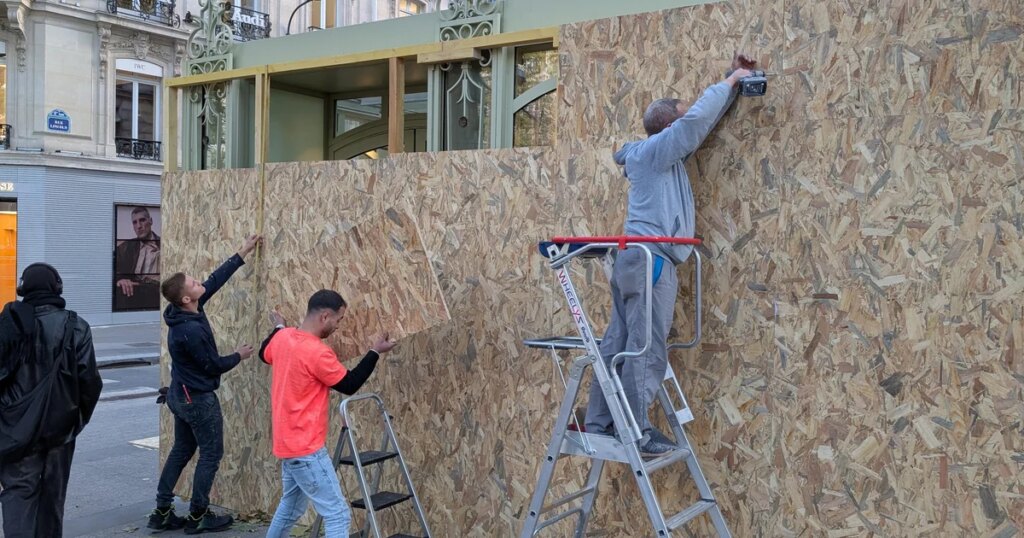
Local businesses are feeling the brunt of the unrest as many have resorted to barricading their storefronts in preparation for the protests. In neighborhoods particularly affected by last weekend’s violence, shopkeepers have taken significant precautions to protect their investments, indicating a widespread fear over potential looting and vandalism. Reports suggest that around 3,000 shops across France sustained damage or were looted during the previous weekend’s protests.
Storeowners, many of whom are typically supportive of social movements, have found themselves conflicted between advocating for social change and the need to protect their livelihoods. Such actions have not only affected local commerce but have also contributed to the changing ambiance of Paris, making the once vibrant shopping districts feel more like fortified zones. This tension adds another layer to the complexity of the ongoing protests and the resultant economic ramifications.
Upcoming Events and Security Measures
As protests are scheduled to continue in Paris and Marseille, local authorities have banned certain demonstrations in cities like Lyon, Nice, and Montpellier to prevent a repeat of last week’s violence. The government is closely monitoring the planned events, particularly those surrounding the two-day congress of the far-right party led by Marine Le Pen. This event is expected to draw significant protests, as various organizations have called for action against the political stance of the party regarding immigration and national identity.
The government’s preventive measures also include heightened surveillance and crowd control tactics, implemented to manage the protests and ensure public safety. However, the delicate balance between maintaining order and upholding the right to protest remains a contentious issue. Critics argue that excessive force could further inflame tensions and undermine trust in government institutions.
Broader Implications for French Society
The ongoing protests highlight a significant fracture in French society, reflecting deep-rooted issues pertaining to economic inequality and social injustice. The demonstrations, initially sparked by a movement among youth for better educational and economic conditions, have grown to encompass wider frustrations with an escalating cost of living and perceived government inaction.
France has long been known for its rich history of activism; however, these events signal a potential shift in public sentiment. As citizens grapple with rising prices and stagnant wages, there is a growing urgency for the government to foster meaningful dialogue and reform. If left unaddressed, the underlying issues may breed further unrest and dissatisfaction among the populace, demanding the country’s leaders to take constructive action.
| No. | Key Points |
|---|---|
| 1 | Major museums in Paris closed as protests escalated nationwide. |
| 2 | Over 70,000 police officers were deployed across France to manage situations. |
| 3 | Local businesses have barricaded their storefronts in response to potential violence. |
| 4 | Certain demonstrations have been banned to prevent further unrest in major cities. |
| 5 | The protests indicate significant social and economic issues affecting the French population. |
Summary
The recent protests across France, particularly in Paris, reflect a growing discontent among the populace regarding living conditions and socio-economic disparities. With major cultural sites closing and significant police mobilization in response, the climate remains tense. The involvement of local businesses and the public’s diverse reactions to the unrest highlight the complexity of the situation. As the government grapples with these challenges, the future of peaceful protest and social dialogue in France hangs in the balance, necessitating thoughtful action and response from those in power.
Frequently Asked Questions
Question: What sparked the recent protests in France?
The protests began when high school students in southeast Paris protested for better conditions, which quickly evolved into nationwide demonstrations against rising living costs.
Question: What security measures have been implemented for the protests?
Authorities have dispatched around 70,000 police officers nationwide, along with helicopters and armored vehicles, to maintain public order and prevent violence during the protests.
Question: How have local businesses responded to the protests?
Many local businesses have taken defensive measures by barricading their shops in an effort to protect themselves from potential looting and vandalism due to the unrest.