
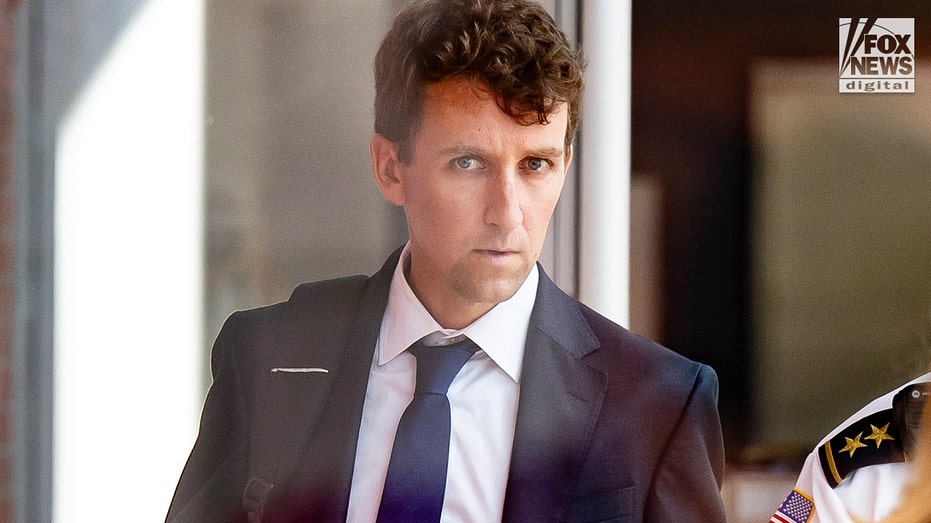
Patrick Clancy has remarried and established a new life in New York while his former wife, Lindsay Clancy, faces trial over the deaths of their three children. Clancy and Dr. Rachel Danis married in a Central Park ceremony in spring 2026 after beginning their relationship in New York. The trial, taking place in Plymouth, Massachusetts, centers on whether Lindsay Clancy was responsible for the children’s deaths or was experiencing postpartum psychosis. Patrick Clancy has also helped create a foundation in memory of the children.
| 1) | Patrick Clancy begins a new chapter |
| 2) | The criminal case in Plymouth |
| 3) | A foundation honoring the children |
| 4) | Patrick Clancy’s testimony and family support |
| 5) | The competing accounts before jurors |
Patrick Clancy begins a new chapter
Patrick Clancy, a business applications sales executive, moved from Massachusetts to New York City in spring 2023, several months after the deaths of his children. Public records indicate that he filed for divorce from Lindsay Clancy in February 2024. Rachel Danis reportedly moved into his Upper East Side apartment in 2025, and the couple married in Central Park in spring 2026.
The marriage and relocation occurred while the criminal case remained pending in Massachusetts. Defense attorney Kevin Reddington described Patrick Clancy as someone who had endured an extraordinary tragedy and was attempting to move forward. Danis and Patrick Clancy do not have children together. Danis has spoken publicly about fertility, career pressures and her decision to freeze her eggs.
The criminal case in Plymouth
Lindsay Clancy, 36, is charged with three counts of first-degree murder in the deaths of Cora, Dawson and Callan Clancy. The children, who were all younger than 6, were found at the family’s home in Duxbury, Massachusetts, in January 2023. The case is being heard at Plymouth Superior Court.
Prosecutors concluded their case on Monday, after presenting evidence about the events at the home and questioning Patrick Clancy about the timeline. The defense then began presenting its arguments. Its central position is that Lindsay Clancy was experiencing postpartum psychosis when the children died, an issue that may determine whether jurors view the case as murder or as the result of severe mental illness.
A foundation honoring the children
Patrick Clancy and family members founded the Heard Foundation in memory of Cora, Dawson and Callan. The organization says it aims to improve care for parents experiencing perinatal mental illness and to encourage families to seek support rather than suffer in silence.
The foundation connects the family’s loss with a broader focus on parental mental health. Its stated purpose is to promote care and awareness so that parents facing perinatal illness can receive help and families are not left without support. The organization does not alter the criminal allegations against Lindsay Clancy, but reflects one way Patrick Clancy and relatives have responded to the deaths.
Patrick Clancy’s testimony and family support
Patrick Clancy testified during the trial about the day he found his wife after she said she had tried to kill herself. He told jurors that Lindsay Clancy said the three children were in the basement, without telling him that they were injured or needed immediate help. While discussing the children, he remained composed but struggled to hold back tears.
He described Cora as a child who enjoyed princesses and caring for other people, Dawson as a fan of the television program Paw Patrol who liked firefighters and trucks, and Callan as a happy baby.
“I want to ask all of you that you find it deep within yourselves to forgive Lindsay, as I have,” Patrick Clancy wrote shortly after the deaths. “The very fibers of her soul are loving. All I wish for her now is that she can somehow find peace.”
The competing accounts before jurors
The prosecution’s account focuses on the circumstances surrounding the children’s deaths and the sequence of events described by witnesses, including Patrick Clancy. The defense is seeking to show that Lindsay Clancy’s mental state was severely impaired by postpartum psychosis and that her actions should be understood through that condition.
Other testimony has addressed the family’s response and Lindsay Clancy’s condition after the deaths. Susan Clancy, Patrick Clancy’s mother, testified for the defense and has expressed sympathy for what Lindsay Clancy may have been experiencing. Sheila Cavanaugh, a board-certified chaplain, testified that during a visit on January 31, 2023, Lindsay Clancy said she was glad her children were safe. The judge ended court early after one witness testified on Thursday, with jurors scheduled to return Friday.
| No. | Key Point |
|---|---|
| 1 | Patrick Clancy moved to New York, divorced Lindsay Clancy and married Rachel Danis in spring 2026. |
| 2 | Lindsay Clancy faces three first-degree murder charges in the deaths of her children. |
| 3 | The defense argues that postpartum psychosis affected Lindsay Clancy’s actions. |
| 4 | The Heard Foundation was established in memory of Cora, Dawson and Callan. |
| 5 | Witness testimony has addressed the timeline, the children’s lives and Lindsay Clancy’s mental state. |
Summary
Patrick Clancy has rebuilt his personal life in New York while participating in a trial that examines the deaths of his three children. His remarriage and foundation work have taken place alongside testimony about the family’s final days and the defense’s claim of postpartum psychosis. The jury must weigh the evidence and competing explanations before reaching a verdict.
Frequently Asked Questions
Who is on trial?
Lindsay Clancy is on trial in Massachusetts on three counts of first-degree murder in the deaths of her children.
What is the defense arguing?
The defense argues that Lindsay Clancy was experiencing postpartum psychosis when the children died and that her mental condition is central to the case.
What is the Heard Foundation?
The Heard Foundation was founded by Patrick Clancy and family members in memory of Cora, Dawson and Callan, with a focus on perinatal mental health support.