
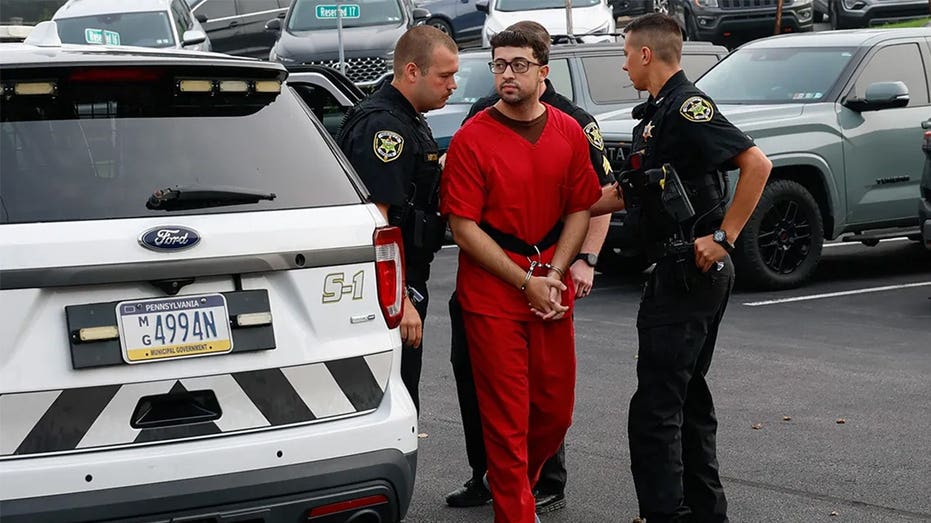
Witnesses testified Wednesday that an alleged cocaine operation linked to Penn State fraternities expanded from 100-gram purchases to kilogram loads. The testimony was presented during preliminary hearings at the Centre County Courthouse in Bellefonte, Pennsylvania. Prosecutors allege that cocaine was brought to State College from Philadelphia, New York and Long Island before being distributed to students. Fourteen people have been charged in the alleged operation, including five defendants addressed during the hearings.
The allegations have not been proven at trial, and all defendants are presumed innocent unless proven guilty.
| 1) | Witness describes the alleged supply chain |
| 2) | Fraternity rooms and pledges enter the testimony |
| 3) | Alleged transportation and storage network |
| 4) | Safe evidence and disputed witness accounts |
| 5) | Charges, bail and the next legal stage |
Witness describes the alleged supply chain
Thomas Robinson, a former Delta Upsilon member, testified that he and Mohammed Huraibi began purchasing cocaine from Agostino Abbatiello in 2023. Robinson said their first purchase was about 100 grams for roughly $4,000. He testified that the quantities later increased to 250 grams, 500 grams and approximately one kilogram.
Robinson said he eventually bought directly from Abbatiello through Snapchat after Huraibi stopped selling. He described a March 2024 purchase of about 500 grams for approximately $22,000, followed by alleged one-kilogram purchases in July, September and November 2024. Robinson testified that the cocaine was sold primarily to fraternity members near Penn State.
Fraternity rooms and pledges enter the testimony
Robinson testified that cocaine was stored in his fraternity room, where it was divided into half-gram bags and sold for about $80 each. Huraibi separately testified that he and Robinson discussed buying cocaine in bulk for resale and purchased 100 grams for about $4,000 in August 2023 and 250 grams for approximately $10,000 in November.
Huraibi said he and Robinson initially packaged the cocaine themselves, but that fraternity pledges later helped with the work. He testified that he stopped participating after pledges became involved. Prosecutors also accuse other fraternity members of assisting with packaging, deliveries, purchases or the use of a digital scale.
Alleged transportation and storage network
Lars Zeepvat, a former Sigma Chi member, testified that Abbatiello’s alleged sales developed from personal cocaine use and later became focused on money and popularity. Zeepvat said cocaine was sometimes kept in fraternity houses and apartments where students gathered.
Zeepvat described an alleged November 2024 delivery to Delta Upsilon involving a large brown bag that Abbatiello said contained about 400 grams of cocaine. Complaints also accuse Zeepvat and Robert Zanolla of traveling to New York to obtain cocaine for Abbatiello, with Zanolla allegedly helping transport it back to the State College area.
Safe evidence and disputed witness accounts
Ryan Matson testified that Paul Robinson helped retrieve a safe hidden in the woods after Thomas Robinson’s arrest. Matson said Thomas wanted to prevent drugs and money from being found during a possible raid. He acknowledged that he never opened the safe and initially withheld information from investigators to protect Thomas.
Detective Donald Paul testified that investigators seized a safe from Thomas Robinson’s fraternity room on December 13, 2024. It contained cocaine, marijuana, a handgun and Adderall pills, according to the detective. Paul also said Thomas later told investigators that a safe moved to Matson’s apartment held about 100 grams of cocaine and between $5,000 and $10,000 in cash. Paul Robinson’s defense disputed whether the safe contained drugs when recovered and whether he knew what it held.
Charges, bail and the next legal stage
The hearings involved Abbatiello, Huraibi, Paul Robinson, Thomas Robinson and Zanolla, who are among 14 people charged in the alleged operation. Prosecutors describe Abbatiello as a top-level supplier and the largest alleged dealer. Defense lawyers challenged witness credibility, including Robinson’s memory, because he used cocaine while selling it. Robinson acknowledged that his drug use could have affected his recollection and said he was arrested in December 2024 before being removed from his fraternity.
A judge ruled that charges against Paul Robinson involving alleged concealment or destruction of evidence, evidence tampering and interference with a police investigation could proceed. Abbatiello was granted $250,000 secured bail after previously being held without bail.
“I’m happy with the way things went today. My client’s going to be posting bail soon. And I think we saw the real, true Centre County justice at work,” attorney Philip Masorti said outside the courthouse.
| 1 | Witnesses described alleged cocaine purchases increasing from 100 grams to one-kilogram loads. |
|---|---|
| 2 | Cocaine was allegedly packaged and sold through fraternity connections near Penn State. |
| 3 | Prosecutors allege drugs came to State College from several locations, including New York and Philadelphia. |
| 4 | A safe allegedly contained cocaine, marijuana, a handgun and Adderall pills when seized from a fraternity room. |
| 5 | The case remains in the preliminary hearing stage, and the allegations remain unproven. |
Summary
Testimony in Centre County outlined an alleged drug network that prosecutors say used fraternity relationships to move cocaine to Penn State-area customers. The defense has challenged the reliability of key witnesses and disputed aspects of the evidence. Further proceedings will determine whether the charges advance, while the defendants retain the presumption of innocence.
Frequently Asked Questions
What is the Penn State cocaine case about?
Prosecutors allege that cocaine was transported to State College and distributed through a network involving fraternity members and other defendants.
How large were the alleged purchases?
Witnesses testified that purchases grew from about 100 grams to approximately one-kilogram loads during 2023 and 2024.
Have the defendants been found guilty?
No. The allegations have not been proven at trial, and all defendants are presumed innocent unless proven guilty.