
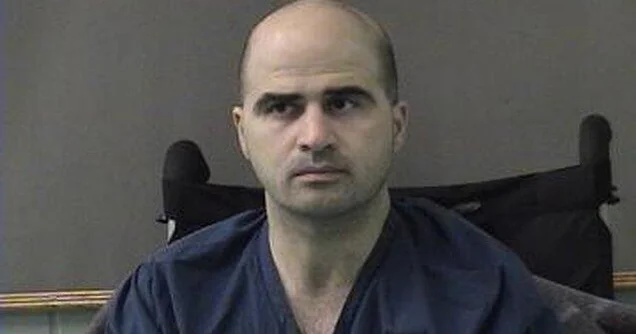
The Pentagon’s decision to livestream the upcoming execution of Nidal Hasan, the former Army major convicted of the 2009 Fort Hood shooting, has ignited a fierce debate. This controversial move will allow the execution to be broadcast publicly on December 3, raising concerns among lawmakers and critics alike about the implications of such a decision. As reaction grows, various political figures and advocacy groups have voiced their opinions, questioning the morality and potential consequences of turning a capital punishment event into a spectacle.
| Article Subheadings |
|---|
| 1) Basis for Livestreaming the Execution |
| 2) Political Backlash |
| 3) Ethical Concerns from Various Groups |
| 4) Historical Context of Public Executions |
| 5) Reactions from Victims and Their Families |
Basis for Livestreaming the Execution
The decision to livestream Nidal Hasan‘s execution arises from a stated intent by officials to underscore the seriousness of crimes committed by military personnel. Pete Hegseth, the Secretary of Defense, has indicated that this approach is meant to reinforce the notion that there are severe consequences for acts of terrorism, especially those leading to loss of life. During an interview with a news outlet, Hegseth remarked that making the execution public would serve as a demonstration of accountability and deterrence against future acts of violence.
The execution is set to take place on December 3, 2023, following years of litigation and appeals since Hasan was convicted for the 2009 attack that left 13 people dead and many others wounded at Fort Hood. The Pentagon’s rationale centers on demonstrating the ultimate punishment in its purest form, suggesting that transparency around such severe consequences is necessary in today’s complex climate of terrorism and violence. Critics, however, question whether the goal of deterrence can truly be realized through broadcasting an execution.
Political Backlash
The announcement has garnered swift condemnation from various legislators across the political spectrum. Senator Thom Tillis, a Republican who is retiring, characterized the decision as “beyond disgusting,” illustrating a growing unease even among supporter’s of capital punishment. He has spoken against public executions, drawing parallels to practices in oppressive regimes and asserting that such actions have no place in the United States. Similarly, Representative Austin Scott expressed his disapproval, arguing that live-streaming an execution is akin to tactics used by extremist groups, further provoking concerns about America’s moral standing.
Other lawmakers, including Senator John Curtis, have joined the chorus of dissent, cautioning against what they see as a dangerous precedent that may erode the moral fabric of society. The critique extends beyond the act of execution itself and speaks to broader implications on civil society and how the government interacts with justice and punishment.
Ethical Concerns from Various Groups
Numerous advocacy groups and religious organizations have spoken out against the Pentagon’s plans, labeling the livestreaming of executions as barbaric. Archbishop Paul S. Coakley of the U.S. Conference of Catholic Bishops urged reconsideration, emphasizing that while Hasan’s actions can never be condoned, public executions only serve to deepen society’s moral decline. His statement highlights a significant ethical debate regarding the promotion of a culture of death through public spectacles.
Critics, including former State Department spokesperson Ned Price, have also cautioned against the potential for creating “radicalized zealots” by glorifying such acts of violence. These concerns reflect a fear that broadcasting Hasan’s execution could inadvertently inspire further acts of terrorism, creating martyrs rather than deterring violence.
Historical Context of Public Executions
The discussion surrounding this planned execution is enriched by historical context regarding public executions in the United States. The last known public execution occurred in 1936 when Rainey Bethea was hanged for rape in Kentucky, drawing a crowd of thousands. Since then, the practice has generally been abandoned in favor of private executions, reflecting evolving societal attitudes toward capital punishment.
Notably, many states have moved toward methods of execution that, while still controversial, prioritize dignity and privacy, both for the condemned and the victims’ families. The potential reversion to public executions signaled by Hegseth’s announcement raises important questions about how far America is willing to regress in its justice practices.
Reactions from Victims and Their Families
Among those affected by the Fort Hood tragedy, reactions are also mixed. While some survivors, like Alonzo Lunsford, support the execution itself, they express discomfort with the concept of viewing it for entertainment or spectacle. Lunsford, a former U.S. Army sergeant who survived the shooting, stated that while he plans to witness the execution firsthand, he rejects the notion of it being turned into a public broadcast.
Lunsford’s perspective illustrates the complexity surrounding issues of justice and closure for victims’ families. Many families seek accountability for heinous crimes but also reject sensationalism that could distract from the serious nature of such an event.
| No. | Key Points |
|---|---|
| 1 | The Pentagon’s execution of Nidal Hasan will be livestreamed on December 3, 2023. |
| 2 | Politicians from both parties have criticized the decision to broadcast the execution publicly. |
| 3 | Critics express ethical concerns, equating public livestreaming with barbaric traditions. |
| 4 | Historical context shows a departure from public executions in the U.S. over the past decades. |
| 5 | Reactions from survivors reflect a desire for justice but aversion to sensationalism. |
Summary
The Pentagon’s announcement to livestream Nidal Hasan‘s execution has ignited significant discussion regarding the ethics and implications surrounding capital punishment. With political pushback from various sectors, concerns regarding the potential consequences of such actions contribute to an increasingly polarized view of justice in America. As public opinion continues to unfold, this situation highlights the delicate balance between accountability and morality in the kingdom of law and order.
Frequently Asked Questions
Question: What is the reason for livestreaming the execution of Nidal Hasan?
The Pentagon has stated that livestreaming the execution is intended to highlight the serious consequences of acts of terrorism, emphasizing accountability and deterrence.
Question: What have lawmakers said about this decision?
Many lawmakers, including both Republicans and Democrats, have criticized the decision, calling it barbaric and likening it to practices of oppressive regimes.
Question: How have survivors of the Fort Hood shooting reacted?
Reactions from survivors have been mixed; some support the execution itself while expressing concerns over the potential for it to be treated as entertainment or spectacle.