
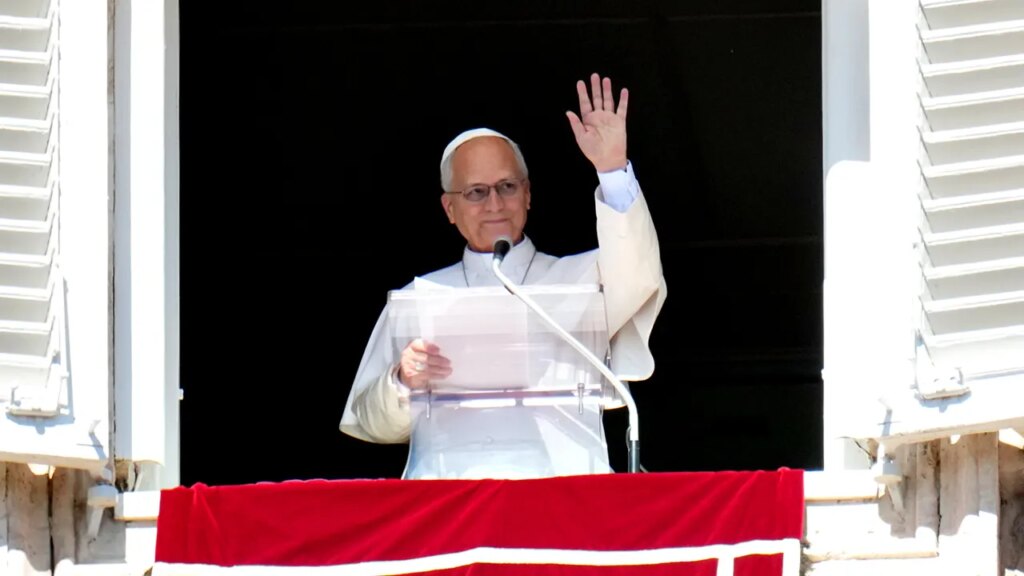
The debate surrounding the death penalty in the United States has intensified recently, particularly after plans were announced to livestream the execution of former Army psychiatrist Nidal Malik Hasan, who was convicted of killing 13 people during the Fort Hood shooting in 2009. Pope Leo XIV has publicly condemned the death penalty as “inadmissible” in light of these developments, adding fuel to the ongoing discourse surrounding capital punishment’s morality and implications. Opposition has emerged from various lawmakers and religious figures, raising ethical questions about the decision to broadcast executions.
| Article Subheadings |
|---|
| 1) Pope Leo XIV’s Condemnation of the Death Penalty |
| 2) Overview of Nidal Malik Hasan’s Case |
| 3) Concerns Over Livestreaming Executions |
| 4) Reactions from Lawmakers and Religious Figures |
| 5) The Broader Implications of Capital Punishment |
Pope Leo XIV’s Condemnation of the Death Penalty
In a strong statement, Pope Leo XIV declared the death penalty “inadmissible,” expressing deep ethical concerns regarding capital punishment. His commentary came on the occasion of World Day Against the Death Penalty, where he reiterated the Catholic Church’s revised stance on this deeply controversial issue. The Pope highlighted that the death penalty is an “attack on the inviolability and dignity of the person,” emphasizing that societal safety and justice can be maintained without resorting to state-sanctioned killing. This view aligns with a significant modification in the Church’s doctrine, initiated by Pope Francis in 2018, which categorically denounced capital punishment under all circumstances.
In his statement, the Pope referenced the need for more effective systems of detention that prioritize human dignity and offer a chance for rehabilitation and redemption. He shared a brief reflection on how the Church’s updated teachings framework articulates a view against the death penalty, marking a significant shift from previous doctrines that permitted capital punishment in specific circumstances. This ongoing evolution in the Catholic Church’s viewpoint on capital punishment sheds light not only on theological interpretations but also on ethical considerations that resonate with fundamental human rights.
Overview of Nidal Malik Hasan’s Case
The case of Nidal Malik Hasan has illuminated complex issues relating to the death penalty, particularly given the context of his conviction for a heinous mass shooting. In 2009, Hasan, a former Army psychiatrist, opened fire at the Fort Hood military base, resulting in the deaths of 13 individuals and injuries to 32 others. Following a military trial, he was found guilty and sentenced to death, making his upcoming execution particularly significant—not only because of the nature of his crime but also due to the historical context of his punishment.
Scheduled for December 3, 2023, Hasan’s execution will utilize a firing squad, marking a historical moment as it would be the first military execution by firing squad since 1945. This choice has reignited debates on the methods of execution and the ethical ramifications tied to different forms of capital punishment. Such discussions bring to light questions of humane treatment within the justice system, especially when state-sanctioned death is involved. The very public spotlight on Hasan’s case has elevated the pressures and discussions around capital punishment in America.
Concerns Over Livestreaming Executions
The controversial plan to livestream Hasan’s execution has sparked widespread concern and outrage. Vice President JD Vance, among others, has expressed skepticism regarding the appropriateness of broadcasting such a grim event. While some argue that transparency and public awareness are crucial in discussions of capital punishment, critics warn that livestreaming an execution could trivialize the sanctity of life and degrade the gravity of such incidents.
Opponents of the livestream proposal have emphasized that public executions have historically been associated with oppressive regimes and that promoting executions as a form of entertainment undermines the moral fabric of society. The Pentagon is yet to finalize the decision to move forward with the livestream, but the potential implications are being critically examined both by lawmakers and the public. Cardinal Pietro Parolin of the Vatican went on record stating such an act would transform death into a spectacle, distancing society from a respectful approach to profound moral issues.
Reactions from Lawmakers and Religious Figures
Reactions to the proposed livestreaming of Hasan’s execution have been varied yet overwhelmingly critical, especially among lawmakers and religious leaders. Several officials, including a number of Republicans, have denounced the idea, asserting that it serves to glamorize state-sanctioned killings and detracts from the seriousness of the capital punishment debate. Senator Thom Tillis of North Carolina articulated the viewpoint that such practices align more with the tactics employed by authoritarian regimes, leading to heightened fears regarding the normalization of violence.
Religious leaders, including Archbishop Paul Coakley, have characterized the execution plan as a “barbaric promotion of a culture of death.” Coakley urged a reconsideration of this decision, emphasizing that although Hasan’s actions are indefensible, turning his execution into a public spectacle further jeopardizes the moral landscape of the nation. These reactions illuminate a growing consensus among diverse groups advocating for a reevaluation of capital punishment, revealing a complexity to the discussions surrounding humanity, justice, and societal values.
The Broader Implications of Capital Punishment
The larger implications of the proposed execution and its potential broadcasting have raised vital questions about the future of capital punishment in the United States. The discourse extends beyond the immediate context of Hasan’s case, touching upon the evolving perspectives within society regarding justice and human rights. Critics argue that capital punishment, particularly as a form of public spectacle, poses substantial risks to the principles of human dignity entrenched within modern legal systems.
Amidst the condemnation from religious leaders and backlash from lawmakers, a broader movement advocating for the abolition of the death penalty is gaining momentum. The discussion highlights significant ethical concerns about a judicial system that employs lethal measures while simultaneously plugging into media spectacles for justification. As society stands at a crossroads regarding capital punishment, the outcome of Hasan’s execution, and the methods employed, could significantly influence public perceptions and policy on this contentious issue.
| No. | Key Points |
|---|---|
| 1 | Pope Leo XIV condemned the death penalty, calling it “inadmissible.” |
| 2 | Nidal Malik Hasan is scheduled for execution on December 3, 2023, marking the first military execution by firing squad since 1945. |
| 3 | Concerns have been raised regarding the livestreaming of the execution and its ethical implications. |
| 4 | Criticism from lawmakers and religious figures underscores the moral complexities surrounding capital punishment. |
| 5 | The discussions have reignited the broader conversation about the future and morality of the death penalty. |
Summary
The ongoing discussions surrounding Nidal Malik Hasan’s impending execution and plans for a livestream have placed the practice of capital punishment under intense scrutiny. With condemnation from religious leaders and skepticism from lawmakers, the significance of human dignity in the context of state-sanctioned death is being challenged. As society grapples with these moral quandaries, the implications of Hasan’s execution could lead to pivotal changes in the dialogue about the future of capital punishment in the United States.
Frequently Asked Questions
Question: What is the significance of Pope Leo XIV’s statement on the death penalty?
Pope Leo XIV’s condemnation of the death penalty emphasizes the Catholic Church’s evolved stance that capital punishment is incompatible with human dignity and should not be practiced under any circumstances. This reflects a significant shift in the Church’s doctrine, advocating for justice without resorting to execution.
Question: Who is Nidal Malik Hasan and why is his execution controversial?
Nidal Malik Hasan is a former Army psychiatrist convicted for the 2009 Fort Hood shooting, where 13 individuals lost their lives. His upcoming execution is controversial due to ethical questions about capital punishment and the decision to potentially livestream the event, raising fears about public executions transforming into spectacles.
Question: What are the broader implications of the capital punishment debate in the United States?
The capital punishment debate in the U.S. raises fundamental questions about justice, morality, and human rights. The discussions surrounding Nidal Malik Hasan’s execution reflect ongoing tensions in how society views the death penalty and its alignment with human dignity, which could influence future legal policies.