
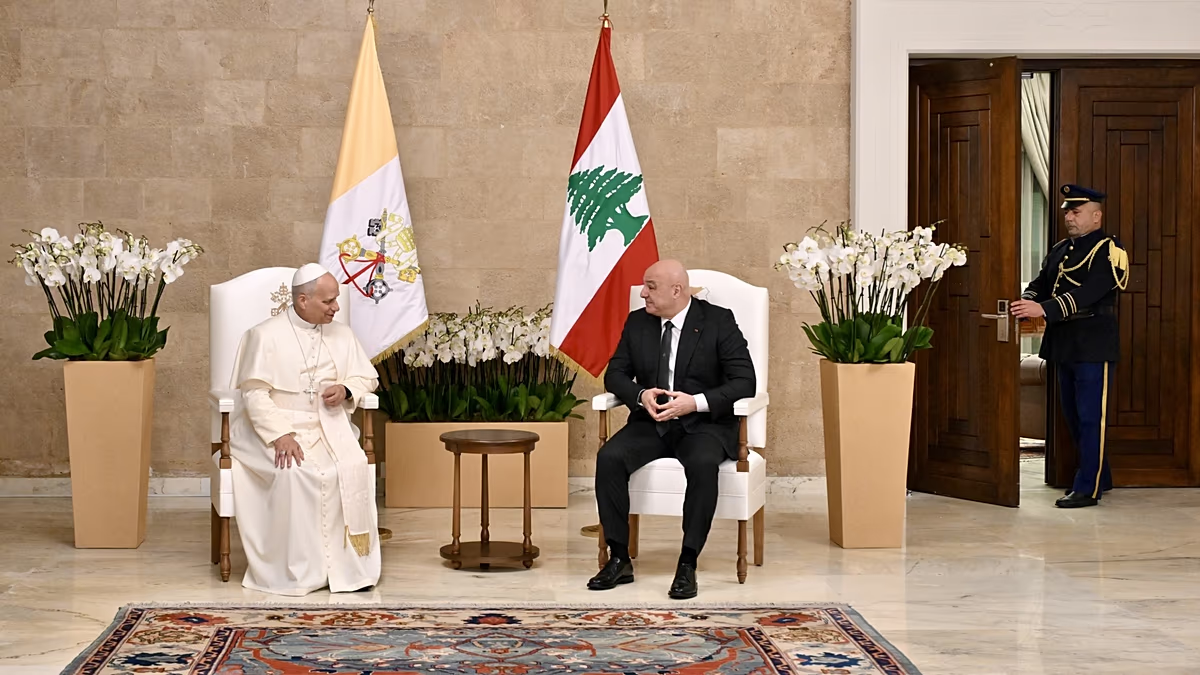
In a crucial diplomatic mission, Pope Leo XIV arrived in Beirut as part of his first foreign trip. His visit aims to instill hope in Lebanon, a nation grappling with severe economic and political challenges amid ongoing regional tensions, including a conflict with Israel. The pontiff calls for unity among Lebanon’s leaders and emphasizes the need for peace as a daily necessity rather than just an aspiration.
| Article Subheadings |
|---|
| 1) Welcoming Ceremony in Beirut |
| 2) Meeting with Lebanese Leaders |
| 3) Advocating for Peace in the Region |
| 4) Insights from Previous Leg of Trip |
| 5) Global Implications of the Visit |
Welcoming Ceremony in Beirut
Pope Leo XIV arrived in Beirut with a sense of urgency as the region faces significant challenges. His journey commenced with a symbolic arrival, escorted by the Lebanese military, underscoring the importance of this visit. Upon landing, he was cordially received by President Joseph Aoun, Parliament Speaker Nabih Berri, and Prime Minister Nawaf Salam. The urban streets were joyously decorated with crowds waving Lebanese and Vatican flags, with performers showcasing traditional Lebanese dances, representing the rich cultural heritage of the country.
The ceremonial welcome not only highlighted the pontiff’s status but also signified a hopeful message to a populace yearning for stability. Children and families gathered, capturing the moment of unity as the Pope traveled in his distinctive popemobile towards the presidential palace. The atmosphere was filled with prayers and cheers, marking a day of rejuvenation for many Lebanese citizens dealing with political disillusionment.
Meeting with Lebanese Leaders
Following the grand welcome, Pope Leo XIV engaged in a brief but significant meeting with high-ranking Lebanese officials. The discussions centered on the country’s fractious politics, with the Pope urging leaders to prioritize national unity over individual differences. During this closed-door meeting, a noteworthy ritual unfolded where the Pope symbolically watered a cedar tree, a national emblem of Lebanon, signifying hope for growth and resilience amid adversity.
Reflecting on the meeting, the Pope expressed his aspirations for Lebanon, penning a message in the Book of Honour where he stated, “On the first day of my visit to Lebanon…I happily wish many blessings on all the people of Lebanon, praying that peace will reign.” His words resonated not just as a religious figure but as a compassionate ally seeking to uplift the spirits of a nation beset with turmoil.
Advocating for Peace in the Region
In his comments during the flight to Beirut, Pope Leo XIV emphasized the pressing need for a two-state solution to resolve the enduring Israel-Palestine conflict. Characterizing this approach as “the only solution” to an ongoing crisis, he reiterated the Holy See’s long-standing position in favor of negotiations aimed at achieving justice and coexistence. The Pope acknowledged the complexities involved, particularly Israel’s ongoing reluctance to accept this pathway for peace.
The pontiff also sought to underscore the Vatican’s role as a mediator, demonstrating a commitment to dialogue. “We are friends of Israel,” he noted, indicating the Holy See’s balanced stance in the region. The Pope’s advocacy aligns with a broader international community’s push for a peaceful resolution, further emphasizing that dialogue remains vital for long-term stability.
Insights from Previous Leg of Trip
Before arriving in Lebanon, Pope Leo XIV’s itinerary included significant engagements in Turkey, where he targeted similar themes of reconciliation and solidarity. His interactions included a visit to the Armenian Apostolic Cathedral and a divine liturgy, which illustrated his dedication to fostering inter-religious dialogue. His involvement with diverse faiths highlights a broader agenda to bridge divides within not just Lebanon, but the wider region.
In Istanbul, the Pope notably participated in a mass at the Volkswagen Arena, showcasing his commitment to connect with the faithful globally. His experience in Turkey served as a prelude to the Lebanon visit, offering insights into the necessity for compassion and dialogue in times of crisis. He voiced hopes for diplomatic solutions in Ukraine as well, drawing parallels between various global conflicts and the urgent need for peace.
Global Implications of the Visit
The implications of Pope Leo XIV’s visit extend beyond Lebanese borders, resonating deeply within the context of regional and international politics. His message advocates for a united front against the forces that fracture communities, promoting stability against a backdrop of economic instability in Lebanon. This visit serves as a reminder that global leaders, religious or otherwise, have a substantial role to play in addressing ongoing crises.
As various stakeholders, including international organizations and governments, observe these developments, the Pope’s actions may stimulate renewed diplomatic conversations. The emphasis on peace and cooperation could encourage nations to reconsider their positions on critical issues, mobilizing collective efforts toward viable solutions. In this vein, the visit represents not merely a religious pilgrimage but a call to arms for global humanitarian efforts.
| No. | Key Points |
|---|---|
| 1 | Pope Leo XIV’s visit aims to foster hope amid Lebanon’s political and economic crises. |
| 2 | The pontiff emphasized the need for unity among Lebanon’s leaders to achieve peace. |
| 3 | The Pope advocates for a two-state solution to resolve the Israel-Palestine conflict. |
| 4 | His previous engagements in Turkey enhanced the call for inter-religious dialogue. |
| 5 | The visit has global implications for ongoing diplomatic efforts in the Middle East. |
Summary
Pope Leo XIV’s visit to Lebanon represents a layered diplomatic endeavor that stretches beyond ceremonial interactions. His calls for unity among leaders, advocates for peace, and significant discussions around pressing international issues reflect a broader commitment to humanitarian causes. As the region continues to navigate complex tensions, the pontiff’s message may act as a crucial catalyst for dialogue and reconciliation among nations, demonstrating the enduring influence of spiritual leadership in global affairs.
Frequently Asked Questions
Question: What are the primary reasons for Pope Leo XIV’s visit to Lebanon?
The visit aims to provide hope to Lebanon amid ongoing economic challenges and to promote unity among its leaders for lasting peace.
Question: What was the significance of the Pope’s message on the Israel-Palestine conflict?
Pope Leo XIV advocates for a two-state solution as the only viable path toward resolving the long-standing conflict, emphasizing the necessity of justice for all parties involved.
Question: How does Pope Leo XIV’s visit relate to his prior engagements in Turkey?
His trip to Turkey was marked by similar themes of diplomacy and inter-religious dialogue, providing a foundation for his appeals for reconciliation in Lebanon.