
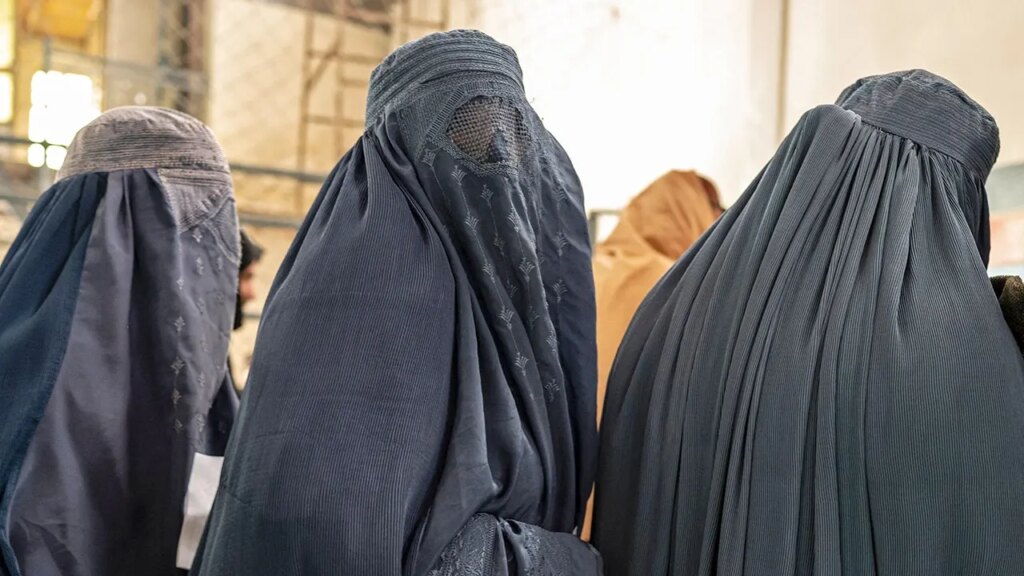
The Portuguese government has enacted a controversial law prohibiting individuals from covering their faces in public, a measure that many perceive as directly targeting Muslim women. The law, which has been referred to as the “burqa law,” imposes significant fines for non-compliance, ranging from 150 to 3,000 euros. While the legislation outlines specific exceptions for health, work, or religious purposes, critics argue it undermines personal freedoms and disproportionately affects specific communities.
| Article Subheadings |
|---|
| 1) Overview of the New Law |
| 2) Specific Provisions and Exemptions |
| 3) Government Justifications |
| 4) Public Reactions and Criticism |
| 5) Broader Implications for Society |
Overview of the New Law
On December 7, 2023, the Portuguese parliament finalized the implementation of the new law often referred to as the “burqa law.” This legislation has drawn attention for its broad implications, particularly concerning civil liberties and human rights. It strictly prohibits any person from covering their face in public spaces, a move largely perceived to target the Muslim community, specifically women who wear face coverings as part of their cultural or religious practices.
The law was passed with substantial parliamentary support, highlighting a shift in political attitudes toward visibility and identity in public spaces. Lawmakers presented the measure as essential for creating a transparent society, where individuals can be readily identified to ensure security and social trust. However, the measure has ignited a fierce debate across Portugal about its impact on cultural diversity and individual freedoms.
Specific Provisions and Exemptions
The new legislation includes several provisions that outline specific circumstances under which face coverings may still be permitted. Exemptions apply in cases of health-related needs, such as masks for medical purposes or as protection against adverse weather conditions. Additionally, individuals may retain the right to wear face coverings while participating in religious practices, during professional activities, or when aboard aircraft.
Violations of this law can lead to hefty fines ranging from 150 to 3,000 euros. These amounts reflect a significant monetary penalty that could dissuade individuals from wearing traditional garments or protective face coverings. Critics express concern that these penalties create an environment of fear and discrimination against certain populations, particularly Muslim women, who may feel pressured to conform to new expectations of visibility in public settings.
Government Justifications
In support of the law, officials have emphasized the necessity of face visibility as a fundamental aspect of social integration and trust within the community. According to the Portuguese President, António José Seguro, having an uncovered face is a key element of social trust and a critical feature of Portuguese cultural identity. “The uncovered face constitutes a structuring dimension of social trust,” noted the President during a press conference regarding the law’s implications.
Further, the government argues that the legislation aligns with previous rulings by the European Court of Human Rights, which has consistently advocated for policies that prioritize security and social cohesion. Officials have articulated that face covering, particularly when compulsory for women, threatens the values of equality and parity that underpin democratic societies in Europe.
Public Reactions and Criticism
Institutional support for the law has met with significant backlash from various human rights organizations and civil liberty advocates. Critics argue that the legislation represents an infringement on individual rights and a targeted attack on religious expression. Many Muslim women and community leaders have raised alarms over the potential marginalization of those who choose to wear traditional garments.
Protests have erupted in major cities across Portugal, with demonstrators expressing their discontent with what they perceive as institutionalized discrimination.
“This law will only serve to alienate and stigmatize those who wish to express their identity through clothing,”
stated a spokesperson for a civil rights group. The government’s justification based on security and societal trust has been interpreted by some as a thinly veiled attempt to suppress cultural diversity and enforce a singular societal vision.
Broader Implications for Society
The enactment of this law raises significant questions regarding the broader implications it may have on Portuguese society and its multicultural landscape. Critics contend that such policies could foster a climate of intolerance, prompting further exclusion of minority groups and affecting the country’s reputation for openness and inclusivity. As Portugal grapples with this new reality, the long-term effects on social cohesion remain uncertain.
Observers have noted that this situation could influence discussions within other European nations contemplating similar measures. As more countries wrestle with the balance between security, integration, and individual rights, the Portuguese experience may serve as a cautionary tale about the potential consequences of imposing restrictive laws on personal freedoms.
| No. | Key Points |
|---|---|
| 1 | The new law, labeled the “burqa law,” prohibits covering faces in public, with notable exceptions. |
| 2 | Fines for non-compliance range from 150 to 3,000 euros. |
| 3 | The government justifies the law as necessary for social trust and integration. |
| 4 | Critics argue it discriminates against Muslim women and undermines individual rights. |
| 5 | The law could set precedents affecting multicultural societies in Europe. |
Summary
The enactment of the “burqa law” in Portugal has sparked significant debate around issues of religious freedom, societal trust, and the limitations of individual rights. While the government maintains that the law is essential for fostering identification and safety within society, many critics view it as a discriminatory measure that disproportionately affects minority communities. As Portugal navigates the implications of this new legislation, the situation may serve as a pivotal moment in a wider European discourse regarding the interplay between cultural identity and public policy.
Frequently Asked Questions
Question: What is the “burqa law” in Portugal?
The “burqa law” is a new legislation enacted by the Portuguese government banning individuals from covering their faces in public spaces, primarily seen as targeting Muslim women.
Question: Are there any exemptions to this law?
Yes, the law includes exemptions for health-related reasons, religious practices, and other professional or weather-related needs.
Question: What penalties are associated with violating the “burqa law”?
Those who violate the “burqa law” may face fines ranging from 150 to 3,000 euros depending on the severity of the infraction.