
Military prosecutors will proceed toward a June 2028 trial for Khalid Sheikh Mohammed and three alleged co-conspirators without using statements he made at Guantanamo Bay. The government has decided not to appeal a military judge’s ruling suppressing those statements, citing the need to avoid another potentially lengthy delay. The ruling found that Mohammed’s statements were obtained under severe coercion and without access to an attorney.
The decision removes a central piece of evidence from the prosecution’s planned case but preserves the trial date set for the long-running proceedings. The case concerns the Sept. 11, 2001, attacks that killed nearly 3,000 people, while victims’ families continue to await a conclusion after years of litigation.
| Article Subheadings | |
|---|---|
| 1) | Prosecutors protect the 2028 trial schedule |
| 2) | Military judge suppresses Guantanamo statements |
| 3) | Four defendants remain scheduled for trial |
| 4) | Earlier plea agreement added to legal delays |
| 5) | Families continue seeking answers and disclosures |
Prosecutors protect the 2028 trial schedule
The prosecution team chose not to appeal the suppression ruling because an appellate proceeding could take years and threaten the June 5, 2028, trial date. The decision was communicated in a letter from the prosecution team’s liaison to victims. It came shortly before the 25th anniversary of the attacks, adding urgency to efforts to prevent further postponement.
The planned trial will take place at the military commission proceedings connected to the Guantanamo Bay detention facility in Cuba. Prosecutors will now have to present their case without the statements they had expected to use, while attempting to preserve a schedule already affected by extensive pretrial litigation.
“An appeal could jeopardize the hard-earned June 5, 2028, trial date.”
Military judge suppresses Guantanamo statements
The suppressed evidence consists of statements Khalid Sheikh Mohammed made in 2007 at Guantanamo Bay. Prosecutors had intended to rely on a confession and related statements provided to investigators, including the FBI. The military judge ruled that the statements could not be used at trial because of the circumstances in which they were obtained.
Lt. Col. Michael Schrama, who set the trial date before ruling on the confession, cited severe coercion and said Mohammed did not have an opportunity to consult with an attorney. The finding creates a significant evidentiary obstacle for prosecutors, who must now build the case through other admissible evidence.
Four defendants remain scheduled for trial
The June 2028 proceedings are expected to involve Mohammed and three alleged co-conspirators: Walid bin Attash, Mustafa al-Hawsawi, and Ammar al-Baluchi. Mohammed has been held at Guantanamo Bay since 2003, and the defendants’ cases have remained in pretrial proceedings for many years.
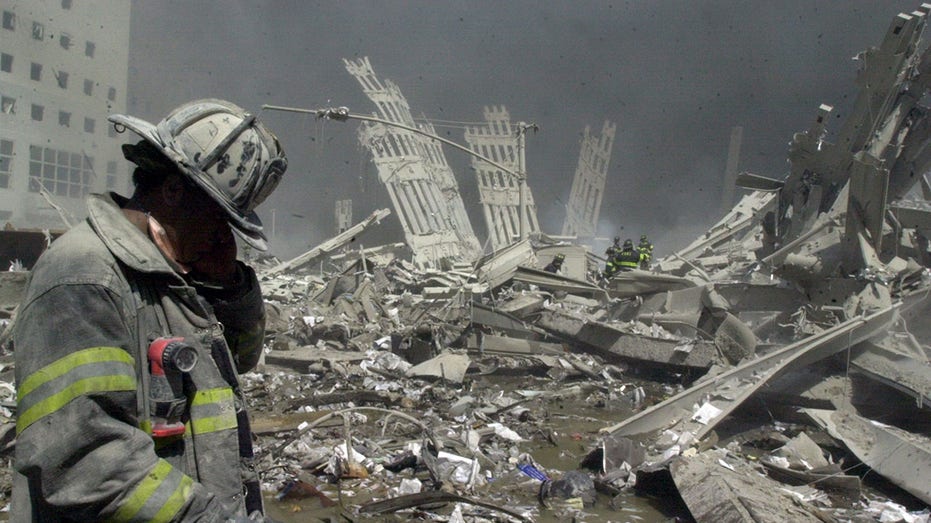
The accused are alleged to have played roles in the Sept. 11 attacks, in which hijacked commercial aircraft struck the World Trade Center and the Pentagon, while another plane crashed in Pennsylvania. The prosecution’s decision allows the proceedings to move toward trial without waiting for an appellate court to resolve the confession issue.
Earlier plea agreement added to legal delays
Mohammed and two co-defendants reached a plea agreement with the Biden administration in 2024. The agreement would have spared them the death penalty, but it was later revoked after public opposition. The reversal produced additional litigation and contributed to the prolonged timetable surrounding the case.
With the appeal now abandoned, prosecutors are prioritizing a fixed trial date over further attempts to restore the excluded statements. The approach reflects the government’s concern that another round of legal review could extend a process that has already lasted more than two decades.
Families continue seeking answers and disclosures
Families of the victims have repeatedly pressed for progress in the military commission cases and for greater disclosure about the attacks. They have also asked the administration to declassify documents concerning Saudi Arabia’s alleged role in the plot. Those requests remain separate from the decision not to appeal the confession ruling.
The suppression decision and the abandoned appeal leave the families facing another complex stage in the proceedings. A trial in 2028 would provide an opportunity for the government to present its remaining evidence, but the case will proceed without a confession that prosecutors had initially expected to be central.
| Number | Key Point |
|---|---|
| 1 | Prosecutors will not appeal the ruling suppressing Mohammed’s 2007 statements. |
| 2 | The decision is intended to preserve the June 5, 2028, trial date. |
| 3 | The military judge cited severe coercion and the lack of access to counsel. |
| 4 | Four defendants remain scheduled to face trial in the 9/11 case. |
Summary
The government has accepted the loss of a key confession in order to avoid further appellate delays in the 9/11 military commission case. The decision leaves the prosecution with fewer planned evidentiary tools but keeps the June 2028 trial date in place. The proceedings remain a major unresolved legal matter for the victims’ families and the defendants.
Frequently Asked Questions
Why did prosecutors abandon the appeal?
They concluded that an appeal could take years and jeopardize the June 5, 2028, trial date.
Why were Mohammed’s statements suppressed?
The military judge found that the statements were obtained under severe coercion and that Mohammed did not have an opportunity to consult with an attorney.
Who is scheduled to stand trial?
The scheduled defendants are Khalid Sheikh Mohammed, Walid bin Attash, Mustafa al-Hawsawi, and Ammar al-Baluchi.