
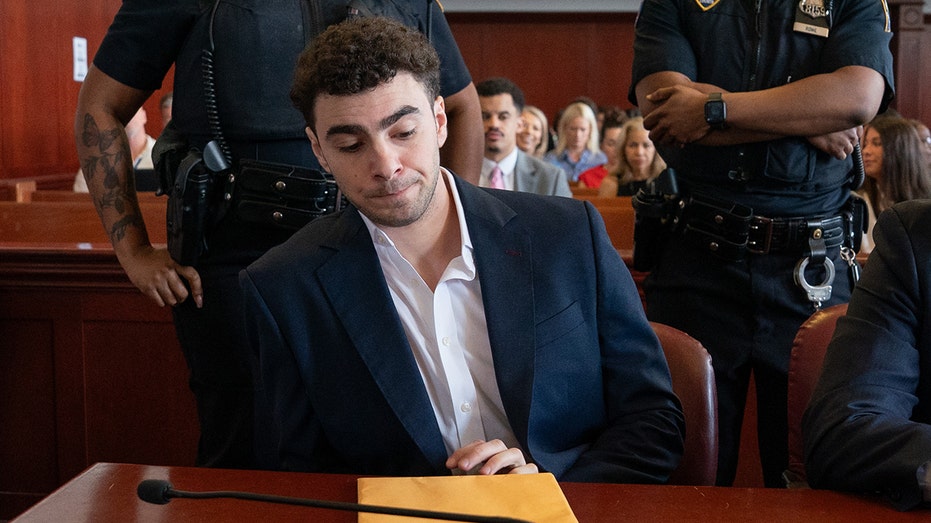
Luigi Mangione’s defense team and Manhattan prosecutors are disputing how media access will be managed during his upcoming murder trial. In a filing Monday, prosecutors denied having any role in creating the court’s media plan or selecting journalists. They asked Judge Gregory Carro to remind the defense of its ethical obligations after lawyers challenged the process. Mangione is charged with murder and terrorism-related offenses in the December 2024 killing of UnitedHealthcare CEO Brian Thompson and has pleaded not guilty.
| 1) | Prosecutors challenge the defense account |
| 2) | Defense raises constitutional objections |
| 3) | Media access concerns focus on courtroom capacity |
| 4) | Prosecutors seek an ethics reminder |
| 5) | The case and next requested steps |
Prosecutors challenge the defense account
The Manhattan District Attorney’s Office filed its response Monday, August 3, 2026, in Manhattan Criminal Court. Senior Trial Counsel Joel J. Seidemann told Judge Gregory Carro that the defense had incorrectly linked prosecutors to the media access plan for the trial. The plan was developed by the New York State Office of Court Administration, according to the filing, and prosecutors said their office had no role in choosing which reporters would attend.
The dispute followed a defense filing submitted Friday. Prosecutors said the defense’s description could mislead the court and the public about who is responsible for access decisions. The prosecution characterized the accusation as an effort to undermine confidence in the proceedings.
“The District Attorney’s Office had no role in developing the Office of Court Administration’s media access plan for this trial, and will have no role in selecting which news reporters attend the trial,” Seidemann wrote.
Defense raises constitutional objections
Defense attorneys Karen Friedman Agnifilo, Marc Agnifilo and Jacob Kaplan argued that the limits on media access could amount to a partial closure of the trial. Their Friday filing cited the First, Sixth and 14th Amendments, asserting that restrictions could interfere with the public nature of the proceedings and Mangione’s constitutional rights.
The lawyers objected to the absence of an overflow courtroom, limits on coverage of jury selection and a process they described as allowing only a select group of reporters to attend. They also asked the court to broadcast the trial live or explain why a live broadcast would not be permitted. Their filing sought a public hearing about the access plan and greater disclosure about its operation.
Media access concerns focus on courtroom capacity
The defense said it had been informed that only 68 journalists would receive general access to the proceedings. The lawyers further claimed that the selection process had effectively been outsourced to a private attorney representing several legacy media organizations.
The defense asked the court to identify the journalists selected to cover jury selection and the wider trial, explain how those reporters were chosen and detail efforts to obtain an overflow courtroom. These requests center on how members of the public and press will observe a high-profile state prosecution in Manhattan when courtroom space is limited.
Prosecutors seek an ethics reminder
The Manhattan District Attorney’s Office asked Judge Gregory Carro to remind Mangione’s attorneys of their professional duties under New York’s Rules of Professional Conduct. Prosecutors cited rules prohibiting lawyers from knowingly making false statements to a court or to third parties.
In the filing, Seidemann described the defense accusation as baseless and said it appeared intended to spread misinformation about the case and delegitimize the proceedings. The prosecution’s request does not resolve the underlying access questions, but asks the judge to address the way the defense presented its allegations.
The case and next requested steps
Luigi Mangione is accused in New York state court of fatally shooting Brian Thompson outside a Manhattan hotel on December 4, 2024. The case includes murder and terrorism-related charges. Mangione has pleaded not guilty and has appeared at pretrial proceedings in Manhattan during 2025 and 2026.
The court must now consider the competing filings concerning media access, courtroom capacity, jury selection coverage and live broadcasting. Prosecutors also want the court to correct what they call inaccurate statements about their involvement. The defense’s attorneys and Mangione’s spokesperson were contacted for comment, but no response was included in the filing-related account.
| Number | Key Point |
|---|---|
| 1 | Prosecutors deny involvement in the media access plan or reporter selection. |
| 2 | The defense says access restrictions could violate constitutional public-trial rights. |
| 3 | The defense cited a limit of 68 journalists with general access. |
| 4 | Prosecutors asked for a reminder about ethical duties concerning court statements. |
| 5 | Mangione faces murder and terrorism-related charges and has pleaded not guilty. |
Summary
The dispute places the administration of media access at the center of pretrial litigation in Luigi Mangione’s Manhattan case. Prosecutors reject the defense’s account of their role and are asking the judge to address the alleged misstatements, while the defense continues to seek broader access, an overflow courtroom and a live broadcast. The court’s decisions will determine how the public and media observe the proceedings.
Frequently Asked Questions
What did Manhattan prosecutors deny?
They denied helping develop the New York State Office of Court Administration’s media access plan or selecting reporters for the trial.
What changes does the defense want?
The defense requested a public hearing, information about journalist selection, details about an overflow courtroom and either a live broadcast or an explanation for rejecting one.
What charges does Luigi Mangione face?
Luigi Mangione faces murder and terrorism-related charges in connection with the December 4, 2024, fatal shooting of Brian Thompson outside a Manhattan hotel. He has pleaded not guilty.