
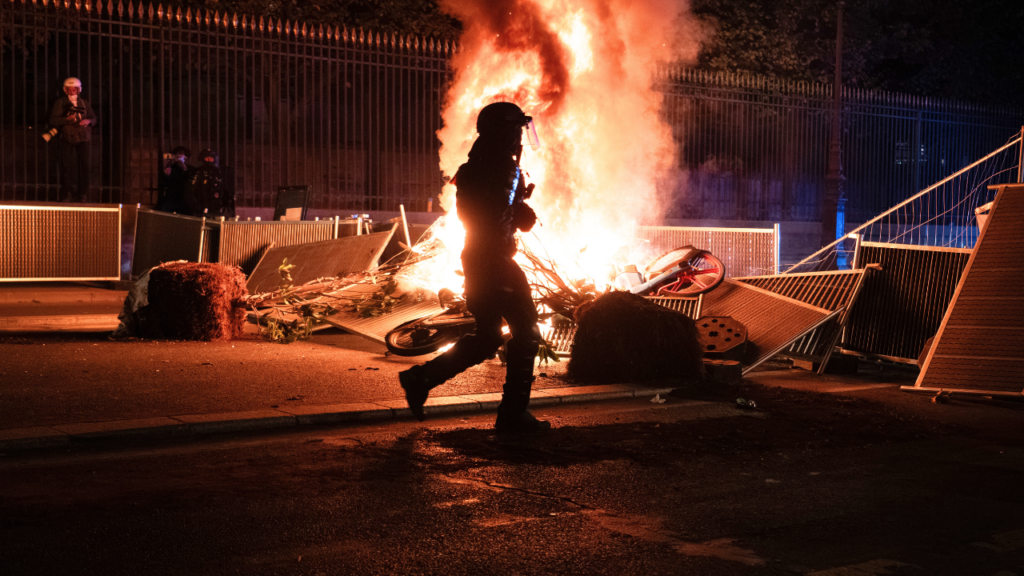
Paris experienced a tumultuous weekend, awakening to scenes of destruction in the aftermath of violent protests that took place throughout the city and other regions in France. The unrest sparked from widespread demonstrations against rising living costs and deteriorating school conditions, resulting in clashes between protesters and police. The violence led to significant property damage, with reports of over 1,800 arrests made nationwide, highlighting the severity of the situation as it unfolded across the country.
| Article Subheadings |
|---|
| 1) The Outburst of Violence: Understanding the Protests |
| 2) Impact on Paris: The Aftermath of Unrest |
| 3) Limoges: Cultural Heritage Damaged |
| 4) Political Response: Macron’s Call for Calm |
| 5) International Perspectives: Reactions from World Leaders |
The Outburst of Violence: Understanding the Protests
The protests that erupted across France began as peaceful demonstrations but escalated into intense confrontations between protesters and law enforcement. These protests focused on critical socio-economic issues, including surging living costs that have greatly affected the average French citizen. As hundreds of thousands marched through various cities, tensions began to rise with the involvement of masked individuals, who were observed engaging in violent confrontations with police. Eyewitnesses reported that clashes were organized and included looting of local businesses, resulting in widespread chaos.
The demonstrations were not solely confined to urban areas but extended to rural locations, symbolizing a nationwide dissent against government policies. The social atmosphere was charged with frustration over economic inequalities, dwindling public services, and discontent with the government’s handling of inflation and cost-of-living increases.
Impact on Paris: The Aftermath of Unrest
In Paris, violent outbreaks resulted in extensive damage to property and a heightened police presence. Shattered storefronts, torched vehicles, and tense standoffs between police and protesters were commonplace. The authorities reported that approximately 855 arrests occurred in the Paris region alone. Law enforcement faced significant challenges as they attempted to maintain order, often resulting in clashes that further fueled the unrest.
Despite the government’s attempts to maintain public safety, police and local businesses were overwhelmed during peak hours of unrest, leading to a sense of chaos that permeated various neighborhoods. The once-vibrant streets of Paris transformed into a battleground, prompting concerns about the long-term implications of such civil strife on the city’s reputation as a cultural and tourist hub.
Limoges: Cultural Heritage Damaged
The protests were not exclusively a Parisian phenomenon; significant unrest also unfolded in Limoges, where the city’s historic town hall—constructed in 1883—was heavily damaged. Fire swept through the renowned landmark, leading to the collapse of its roof, with local officials labeling this event as a catastrophe for cultural heritage. Current Mayor, Maurice Barate, expressed profound grief over the loss, emphasizing the town hall’s significance as a designated historic site since 1975.
Residents and local historians expressed outrage and sorrow at the devastating impact of the riots on a building that symbolized community heritage. The fires and destruction underscored the broader implications of the unrest, affecting not just the physical landscape but also the cultural identity and historical narrative of Limoges.
Political Response: Macron’s Call for Calm
In response to the wave of unrest, French President Emmanuel Macron urged for calm in the lead-up to the protests, advocating for the right to protest to be exercised with respect for public and private property. However, as the situation escalated, Macron’s presence at a concert event drew criticism from nationals and observers alike, who perceived it as a disconnect from the gravity of the ongoing crisis.
The president’s choice to attend a concert amid the protests sparked outrage, with many expressing concerns about his commitment to address the issues that fueled the unrest. Macron later reiterated his call for dialogue and respect, emphasizing that the government was ready to engage with protest leaders to discuss viable solutions to the public’s grievances.
International Perspectives: Reactions from World Leaders
As the protests were reported globally, reactions from world leaders included criticism and calls for intervention. Former President Donald Trump took to social media to blame immigration for the turbulence, citing it as a factor complicating France’s societal stability. His comments echoed sentiments heard from various international observers who interpreted these events as indicative of deeper socio-political fractures within Europe.
Global diplomatic channels were abuzz with discussions on the implications of the riots, as allies expressed concern for the safety and well-being of French citizens. The unrest raised questions about how similar issues might unfurl across Europe, particularly in countries grappling with economic challenges and civil unrest.
| No. | Key Points |
|---|---|
| 1 | Paris and other cities across France were impacted by significant protests against rising living costs. |
| 2 | The protests involved violent clashes, leading to high numbers of arrests and significant property damage. |
| 3 | The Limoges town hall was severely damaged during the riots, which raised concerns about cultural heritage loss. |
| 4 | President Macron faced criticism for his attendance at a concert during the riots, highlighting a perceived disconnect between leadership and citizens’ concerns. |
| 5 | International reactions included calls for accountability and discussions regarding socio-political stability in France and beyond. |
Summary
The unrest in Paris and across France illuminates the rising tensions within the country surrounding socioeconomic disparities and governance. With significant arrests and property damage, the demonstrations reflect a population grappling with economic challenges and discontent in governance. The loss of cultural landmarks and the complex political backdrop underscore the potential for continued unrest if dialogue and resolution are not addressed promptly.
Frequently Asked Questions
Question: What sparked the protests in France?
The protests were primarily sparked by rising living costs and deteriorating conditions in schools, igniting frustrations that led to widespread demonstrations throughout the country.
Question: How has the unrest affected Paris?
The unrest has led to extensive property damage in Paris, with numerous arrests made and a significant police presence to manage the escalating violence during the protests.
Question: What are the implications of the damage to cultural heritage sites?
The damage to cultural heritage sites, like the Limoges town hall, signifies the broader impact of civil unrest on community identity and historical preservation, prompting concerns regarding the loss of cultural heritage.