
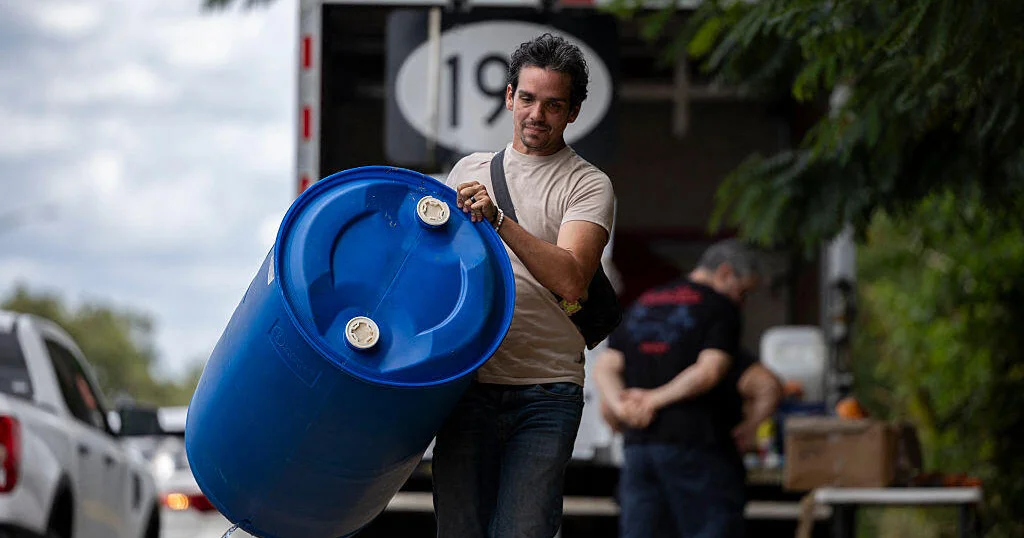
Residents in Puerto Rico’s capital, San Juan, are grappling with significant water shortages as a new rationing measure took effect recently, affecting over 180,000 accounts in the area. This move comes in response to severe drought conditions compounded by longstanding infrastructure issues on the island. Many locals are struggling daily to secure enough water as government officials remain uncertain about when the restriction might end.
| Article Subheadings |
|---|
| 1) Background of Water Crisis in Puerto Rico |
| 2) Details of the Rationing Measures |
| 3) Impact on Residents and Communities |
| 4) Government Response and Future Outlook |
| 5) Historical Context of Water Rationing |
Background of Water Crisis in Puerto Rico
The water crisis in Puerto Rico is a culmination of multiple factors, including severe drought conditions, deteriorating infrastructure, and insufficient investment over the years. As of July, the region experienced its driest month in over a century, compelling officials to recognize the critical state of the water supply. According to the U.S. Drought Monitor, nearly 36% of Puerto Rico is currently facing a severe drought, while another 32% is experiencing moderate drought. The governor of Puerto Rico, along with local meteorological agencies, has indicated that extensive rainfall would be needed to alleviate the current crisis.
Details of the Rationing Measures
On Friday, the government implemented a water rationing strategy affecting more than 180,000 customer accounts across San Juan and its neighboring municipalities. Customers have been organized into two groups, which will take turns enduring a complete water outage for at least 48 hours. Government officials have warned that in some cases, these outages could extend to 72 hours. Widespread reports from residents indicate a chaotic race to gather water before the rationing commenced, with many struggling to fill containers from available sources, including tanker trucks and natural springs.
Impact on Residents and Communities
The impact of water rationing on residents has been profound. Many families, especially those with limited financial resources, have resorted to purchasing bottled water, putting an additional strain on their budgets. In particular, elderly residents are heavily dependent on family and neighbors to transport water to them, aggravating the challenges they face in their daily lives. Numerous accounts indicate that Puerto Ricans have documented as many as 118 days of water outages in the lead-up to these rationing measures, underscoring the severity of the situation prior to the official government intervention.
Government Response and Future Outlook
Government officials have acknowledged the persistent water problems but largely attribute the immediate crisis to the prevailing weather conditions. There has been recognition of the systemic issues that have led to the current drought, including aging infrastructure and insufficient maintenance over the years. However, there have been no clear indications from the government as to when residents can expect normalized water supply or what measures will be taken to address the underlying issues. Local meteorologists have warned that it could take multiple tropical systems and significant winter precipitation to fully recover from the ongoing drought crisis.
Historical Context of Water Rationing
Puerto Rico has a history of implementing water rationing measures due to both natural and infrastructural challenges. Previous rationing efforts were noted in 2015 and 2020 when households received reduced water supply every third day. Residents are understandably frustrated, as they see this current crisis as a continuation of failures in addressing long-term water management issues. The government’s reliance on reactionary measures, rather than proactive solutions, has generated skepticism about its ability to effectively manage the water system in the future.
| No. | Key Points |
|---|---|
| 1 | Over 180,000 accounts affected by water rationing in San Juan. |
| 2 | July recorded the driest conditions in over 120 years. |
| 3 | Residents have faced intermittent outages for months prior to rationing. |
| 4 | Government attributes crisis primarily to severe drought conditions. |
| 5 | Historical rationing measures occurred in both 2015 and 2020. |
Summary
The water rationing measures enforced in Puerto Rico represent an urgent response to a deepening crisis exacerbated by long-term infrastructural neglect and extreme weather conditions. As residents navigate the challenges of securing adequate water supply, the government faces mounting pressure to provide a sustainable solution that addresses both the immediate and underlying issues. The unfolding situation remains troubling, calling for urgent action and strategic planning to prevent future crises.
Frequently Asked Questions
Question: What has led to the current water crisis in Puerto Rico?
The water crisis arises from severe drought conditions combined with aging infrastructure and insufficient maintenance over the years.
Question: How many residents are affected by the water rationing measures?
Over 180,000 customer accounts in San Juan and surrounding municipalities are impacted by the water rationing.
Question: Has Puerto Rico experienced previous water rationing situations?
Yes, similar measures were implemented in Puerto Rico in 2015 and 2020 during times of severe water shortage.