
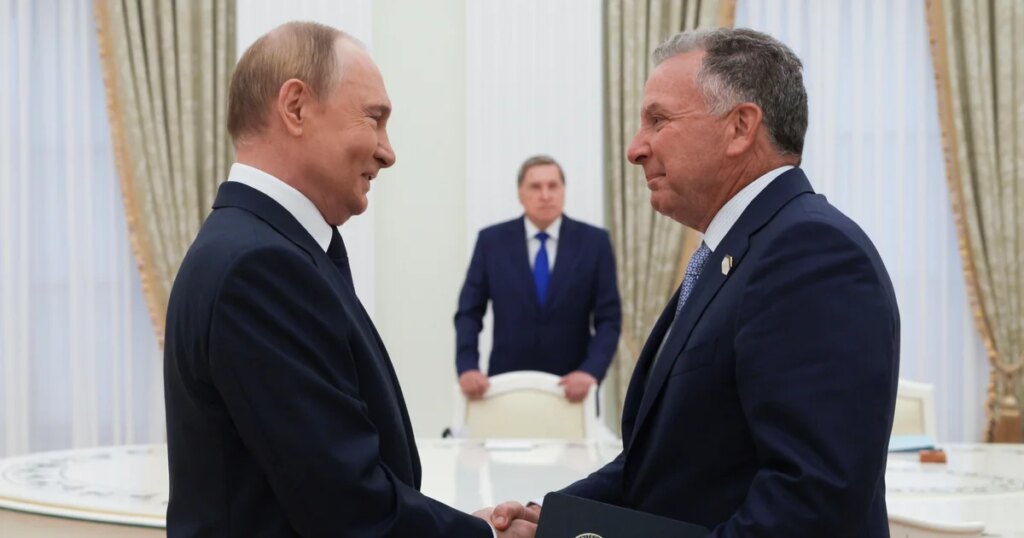
Recent diplomatic efforts to mediate the conflict in Ukraine have gained momentum following a significant meeting in Moscow. U.S. special envoy Steve Witkoff and President Donald Trump‘s son-in-law, Jared Kushner, engaged in extensive discussions with Russian President Vladimir Putin and his aides. The talks, which lasted approximately five hours, yielded a mix of constructive dialogue and notable challenges as both parties continue to navigate complex territorial disputes.
While the U.S. has proposed a new peace plan aimed at ending the conflict, key issues remain unresolved, particularly concerning territorial compromises. Attribution of points to different aspects of the plan reveals ongoing negotiations that suggest a willingness to engage but underscore the fragility of progress. As the situation evolves, both Washington and Moscow await further signals from each side to determine the next steps in achieving a peaceful resolution.
| Article Subheadings |
|---|
| 1) The Moscow Meeting: Details and Participants |
| 2) U.S.-Russian Diplomacy: Goals and Expectations |
| 3) Territory and Compromise: The Central Issues |
| 4) Reactions from Ukraine: Position of President Zelenskyy |
| 5) Future Implications: The Road Ahead |
The Moscow Meeting: Details and Participants
The pivotal discussions in Moscow unfolded between U.S. officials, including special envoy Steve Witkoff and Jared Kushner, and high-ranking Russian officials, notably President Vladimir Putin and foreign policy adviser Yuri Ushakov. This meeting, which took place on a recent Tuesday, represented a key moment in international diplomacy as both sides sought to explore pathways toward peace amidst an ongoing conflict that has deeply affected Ukraine and its sovereignty.
During the roughly five-hour meeting, both sides shared perspectives and updates on the latest developments concerning the conflict. This gathering followed notable previous talks between U.S. and Ukrainian officials held in Florida, signifying a concerted diplomatic effort involving multiple stakeholders in the region. The dialogues were characterized as “constructive” by Ushakov, though he added that significant work remains ahead in determining a peaceful compromise.
U.S.-Russian Diplomacy: Goals and Expectations
The primary aim of the U.S. delegation was to advance discussions surrounding the ongoing war in Ukraine and seek a viable resolution to the conflict. A multi-faceted U.S.-backed peace proposal was initially introduced, which has since undergone scrutiny and revisions to address the concerns expressed by Ukrainian and European leaders. The evolving proposal has taken various forms as officials on both sides navigate complex historical and political landscapes.
Key elements of the U.S. strategy were focused on reducing hostilities and establishing a foundation for dialogue. However, officials acknowledged that a concrete compromise regarding territorial matters essential to both U.S. and Russian interests has yet to be reached. With both nations demonstrating an eagerness to explore resolutions, the discussions underscored the importance of maintaining open lines of communication in pursuit of a collaborative approach to peace.
Territory and Compromise: The Central Issues
A significant hurdle in the ongoing negotiations pertains to territorial disputes, particularly concerning regions in Ukraine affected by the conflict. As noted by Ushakov, the issue of territory remains “the most important” consideration for both parties. Tensions surrounding the ceding or control of territory established during the war have served as a focal point in discussions, with differing priorities arising from the contrasting stances of the U.S. and Russia.
The Russian perspective emphasizes the need to address core territorial issues to advance any peace agreement effectively. Meanwhile, the U.S. seeks to ensure that the sovereignty of Ukraine is respected, as this remains a crucial aspect of their diplomatic efforts. Competing narratives and proposals have created a complex scenario, with varying definitions of what constitutes acceptable compromises for both sides.
Reactions from Ukraine: Position of President Zelenskyy
In the wake of recent diplomatic engagements, Ukrainian President Volodymyr Zelenskyy has expressed cautious optimism, acknowledging the importance of U.S. involvement in facilitating the dialogue. Following a news conference, he indicated that the discussions held in both Geneva and Florida had led to revisions in the original peace proposal, which has now been condensed to 20 points. However, Zelenskyy remains vigilant, emphasizing that Ukraine will await “signals” from the U.S. before making any decisions regarding future meetings.
Zelenskyy’s willingness to engage signifies a potential path forward, underscoring Ukraine’s reliance on American support. The President articulated that a fair and equitable resolution would be paramount, and he is prepared to meet with Trump if the conditions align favorably. This balancing act highlights Ukraine’s strategic considerations in navigating between the demands of its allies and its desire to maintain sovereignty amidst ongoing tensions.
Future Implications: The Road Ahead
Looking ahead, the future of U.S.-Russian relations will largely depend on the outcomes of continued discussions and negotiations surrounding the Ukraine conflict. As indicated by reports, while some progress has been made, both parties acknowledge the complexities that lie ahead. The need for a mutually agreeable compromise remains crucial, yet the path towards a comprehensive peace deal appears fraught with challenges.
With both Moscow and Washington wary of premature declarations regarding an imminent agreement, the upcoming engagements will likely play a pivotal role in shaping the next steps in this protracted negotiation process. As spokespeople for both nations emphasize the importance of constructive dialogue, the balancing of national interests will play a crucial role in achieving lasting peace in the region.
| No. | Key Points |
|---|---|
| 1 | The meeting in Moscow involved key diplomatic figures from both the U.S. and Russia. |
| 2 | Significant challenges remain regarding territorial compromises in the peace proposal. |
| 3 | Ukrainian President Zelenskyy has expressed a willingness to meet with Trump contingent on favorable outcomes from diplomatic talks. |
| 4 | The peace proposal has undergone modifications due to critiques from various stakeholders. |
| 5 | Both sides await further signals to guide future interactions in the negotiation process. |
Summary
The diplomatic engagement between U.S. officials and their Russian counterparts represents a critical effort toward resolving the protracted conflict in Ukraine. While both sides have identified constructive pathways forward, key issues related to territorial disputes and mutual concessions continue to impede a substantive agreement. As the situation unfolds, maintaining open channels of communication will be essential for navigating the complexities of this geopolitical landscape.
Frequently Asked Questions
Question: What were the key outcomes of the Moscow meeting?
The Moscow meeting resulted in constructive discussions, although no concrete compromise on territorial issues was achieved. Both sides acknowledged that more work remains to be done to address these critical concerns.
Question: What is the stance of Ukrainian President Volodymyr Zelenskyy regarding the peace negotiations?
President Zelenskyy has expressed cautious optimism about the negotiations, indicating a preparedness to meet with President Trump, contingent upon receiving positive signals from the U.S. delegation.
Question: How has the U.S. peace proposal evolved?
The U.S. peace proposal, initially deemed favorable to Russia, has undergone modifications due to feedback from Ukrainian and European officials. It has been refined to focus on essential elements that respect Ukraine’s sovereignty while addressing concerns from Moscow.