
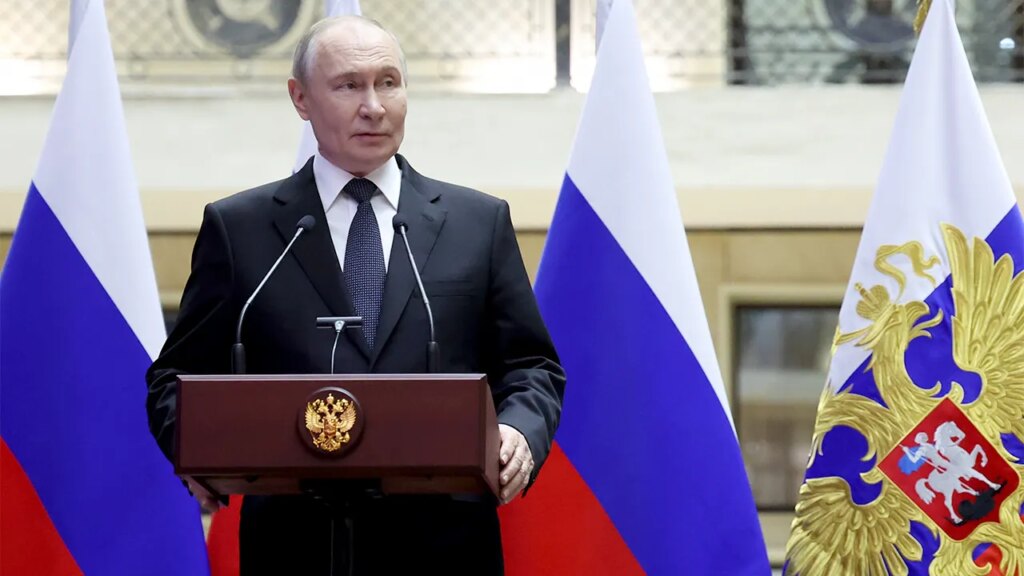
Russian President Vladimir Putin reaffirmed on Wednesday that Russia’s objectives in Ukraine remain unchanged, asserting that they will be met either through negotiations or, if needed, military means. Speaking at the annual board meeting of the country’s Defense Ministry, Putin underscored Russia’s ongoing military progress as the conflict enters its fourth year. His remarks signal not only a commitment to the Kremlin’s narrative surrounding the war but also a warning to opposing sides regarding their ongoing refusal to engage in what he terms “substantive dialogue.”
| Article Subheadings |
|---|
| 1) Russia’s Military Intentions and Goals |
| 2) Diplomatic Efforts and Opposition |
| 3) The Role of International Players |
| 4) Domestic and Global Responses |
| 5) Future Prospects and Peace Negotiations |
Russia’s Military Intentions and Goals
During his speech, President Putin emphasized that the objectives established for the “special military operation” would be achieved. He stated, “The goals of the special military operation will undoubtedly be achieved,” reinforcing the Kremlin’s rhetoric surrounding its full-scale invasion of Ukraine, which began in 2022. This declaration reflects the persistence of Russia’s military strategy amidst ongoing hardships and challenges faced on the battlefield.
Putin described Russia’s military achievements, claiming advancements in technology and strategy crucial for its ongoing operations. He indicated that any potential failure in diplomatic negotiations would lead Russia to further its military campaign. This inclination to achieve goals militarily, if necessary, highlights Russia’s unwavering stance, leading many analysts to speculate on the broader implications for regional stability and international relations.
Diplomatic Efforts and Opposition
A significant portion of Putin’s address was directed towards the absence of substantive dialogues with foreign governments, including those aligned with Ukraine. He expressed a preference for resolving the conflict through diplomatic means, provided that the opposing parties are willing to engage. However, with continued assertions of hostility from Western nations, he noted that Russia may have to rely on military might to achieve its aims.
Putin’s comments reflect a bleak view of the negotiating landscape. He criticized Kyiv and its allies for exacerbating hostilities, insinuating that the West is failing to take meaningful steps toward understanding or negotiations. The essence of his message was clear: if dialogue remains elusive, Russia is prepared to escalate military actions to reclaim what it considers its historic territories.
The Role of International Players
Putin’s remarks came at a time when discussions continued among international actors regarding peace resolutions. In a notable development, Ukrainian President Volodymyr Zelenskyy and his team recently held meetings in Berlin with U.S. diplomats Jared Kushner and Steve Witkoff. These gatherings aim to establish security guarantees for Ukraine, which remains under severe military threat from Russian forces.
At the same time, NATO Secretary General Mark Rutte expressed concerns about Russia potentially targeting NATO countries within the next five years. His warnings stressed the need for member states to enhance their defense capabilities. This backdrop places additional pressure on diplomatic channels, as security considerations loom large.
Domestic and Global Responses
The Russian leader’s comments were complemented by a broader critique of Western nations, particularly European governments. He accused them of collaborating with the United States to undermine Russian sovereignty and weaken its influence in the region. Such statements are indicative of long-standing tensions that have characterized East-West relations since the invasion began.
Putin’s use of language like “piglets” to refer to European leaders underscores the growing disdain he feels towards Western governance styles. This rhetoric serves not only as a propaganda tool to bolster domestic opinion but also as a way to rally support around his agenda against perceived external threats. By painting a picture of an encroaching enemy, he seeks to consolidate power internally.
Future Prospects and Peace Negotiations
Looking ahead, the pathway to peace remains fraught with challenges. Both Russian and American officials have been engaged in a flurry of diplomatic discussions, trying to bridge the divide created by the escalating conflict. Recent exchanges have included meetings in Moscow, where U.S. envoys presented new proposals for a peace arrangement.
These discussions have reflected a degree of caution, especially considering the backlash against the original peace draft that was viewed as disproportionately favorable to the Kremlin. With further negotiations set to unfold, the international community watches closely, anticipating whether Russia will relent in its military approach or if Putin’s ambitions will drive the conflict into a deeper quagmire.
| No. | Key Points |
|---|---|
| 1 | Putin reaffirmed Russia’s military goals remain unchanged in Ukraine. |
| 2 | He indicated that military actions may escalate if diplomatic efforts fail. |
| 3 | Diplomatic talks involving Ukraine and U.S. representatives are ongoing. |
| 4 | NATO officials express concern over potential military strategies by Russia against member states. |
| 5 | Future negotiations remain uncertain as tensions persist. |
Summary
Putin’s recent statements reflect a steadfast commitment to achieving Russia’s military objectives in Ukraine, with an openness to diplomacy that is complicated by entrenched positions from both sides. The ongoing geopolitical dynamics underscore concerns not only for Ukraine but also for Eastern Europe and NATO allies seeking to safeguard their territories. As diplomacy unfolds, the potential for de-escalation remains precarious, with both military and diplomatic tracks essential in shaping the future landscape of international relations.
Frequently Asked Questions
Question: What are Russia’s stated goals in Ukraine?
Russia seeks to achieve its military objectives in Ukraine, either through negotiations or increased military efforts if diplomatic talks fail.
Question: What did Putin say about the West’s response to the conflict?
Putin accused Western nations of collaborating to undermine Russia and exacerbate the conflict, describing their attempts as ultimately failing.
Question: How are international negotiations impacting the situation?
International negotiations are ongoing, involving key players like Ukraine and the U.S., aiming to establish security guarantees and potential pathways to peace.