
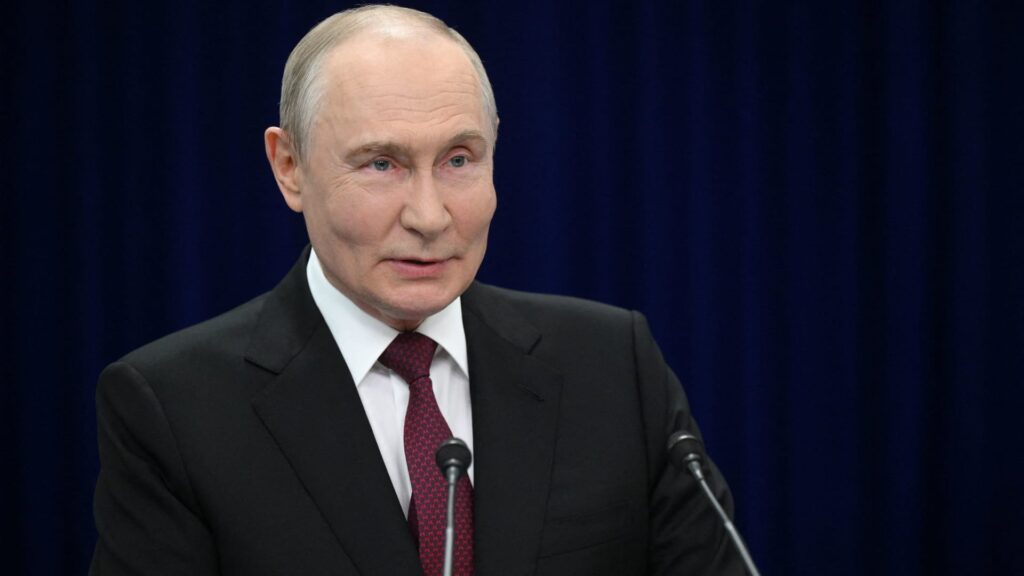
Russian President Vladimir Putin expressed cautious optimism for peace negotiations with Ukraine during remarks made at the Eastern Economic Forum in Vladivostok. Despite this acknowledgment, he condemned Ukraine’s warnings for airlines to avoid Russian airspace as “state terrorism,” a statement reflecting the ongoing tensions as diplomatic efforts struggle to move forward. Andrii Sybiha, Ukraine’s foreign minister, hinted at a potential shift in diplomatic engagement, while NATO officials sounded alarms about the increasing military threats posed by Russia.
| Article Subheadings |
|---|
| 1) Putin’s Remarks on Peace Prospects |
| 2) Ukraine’s Diplomatic Maneuvering |
| 3) International Responses to the Conflict |
| 4) NATO’s Warnings on Russian Aggression |
| 5) Current Military Operations and Airspace Concerns |
Putin’s Remarks on Peace Prospects
During a public appearance at the Eastern Economic Forum, President Vladimir Putin stated there is a “chance” for peace in Ukraine, while reaffirming that the resolution of the conflict ultimately lies with the involved parties, which he identifies as Russia and Ukraine. His comments were designed to project a sense of hope amidst a prolonged and ongoing conflict that has led to extensive casualties and displacement. However, Putin’s optimism is tempered by assertions that Ukraine’s warnings to airlines about avoiding Russian airspace amount to “state terrorism,” highlighting the complex and fraught nature of the current geopolitical landscape.
The President’s remarks come against the backdrop of failed peace talks that have persisted since the late 2010s, with both sides clearly divided on critical issues such as territorial boundaries, security guarantees, and Ukraine’s potential military affiliations with NATO and the EU. It underlines the ongoing struggle not only between the two nations but also the broader implications for international diplomacy as various countries attempt to mediate the conflict.
Ukraine’s Diplomatic Maneuvering
Ukrainian Foreign Minister Andrii Sybiha recently commented on the need for renewed diplomatic efforts, suggesting that there could be a “new dynamic” as other nations take a more active stance in mediation. His remarks follow Putin’s statements and reflect a cautious yet hopeful approach to re-engaging international partners in the pursuit of a resolution. The return of what he calls an “active phase of political and diplomatic engagement” indicates a willingness on Ukraine’s part to welcome discussions that could lead to de-escalation.
While these statements may signal a shift, the longstanding issues of trust and territorial integrity remain significant hurdles. Kyiv has continued to emphasize its “no concessions” stance on territorial disputes, especially in light of Russia’s annexation of Crimea and ongoing military presence in Eastern Ukraine. This positions the current diplomatic environment as one fraught with tension, where dialogue and negotiation are essential yet complicated by the realities on the ground.
International Responses to the Conflict
The international community has been closely monitoring the conflict and has expressed varying degrees of involvement. Notably, Indian Prime Minister Narendra Modi has been vocal in urging Russia to consider peace over perpetual warfare, recommending a path towards dialogue. His comments are indicative of India’s position as it navigates its relationships with both Russia and the West.
Also significant is the statement from a Chinese foreign ministry spokesperson, advocating that “dialogue and negotiation are the only viable solution to the Ukraine crisis.” This reaffirmation of diplomatic methods by a key global player like China can add a layer of pressure for both sides to engage and seek acceptable terms for peace, as President Volodymyr Zelenskyy of Ukraine has requested China’s involvement in mediating discussions that could bring stability to the region.
NATO’s Warnings on Russian Aggression
Amidst the ongoing rhetoric, NATO Secretary General Mark Rutte has called attention to Russia’s increasing aggressiveness, particularly with missile deployments and drone operations crossing into European airspace. Rutte’s comments emphasize a united front among NATO allies to prepare and protect member states against potential threats posed by Russia. The assertion that NATO is working around the clock to ensure the safety of its members is a clear indicator of the alliance’s commitment against perceived Russian expansionism.
The joint press conference where these comments were made, held alongside European Commission President Ursula von der Leyen, signifies a coordinated response among Western powers toward Russian actions. Rutte explicitly stated that any attempts by Russia to challenge NATO’s resolve would be met with strong opposition, reaffirming the need for solidarity among member states in light of ongoing tensions.
Current Military Operations and Airspace Concerns
As diplomatic exchanges fluctuate, President Zelenskyy has escalated warnings for airlines to avoid Russian airspace due to increasing drone operations over Russian territory. He articulated that the region has become “completely unsafe” with the growing frequency of drone strikes aimed at critical infrastructure, suggesting that Kyiv is expanding its operational capacity in response to military pressures from Russia.
Zelenskyy’s declaration has significant ramifications, especially for international air travel and logistics, as it could lead to a broader reshaping of flight paths and economic impacts on the region. In retaliation, Putin characterized these developments as indicative of state-sponsored threats, thereby sharpening accusations against Ukraine. This suggests a cycle of military aggression from both sides, further complicating any efforts for establishing long-term peace.
| No. | Key Points |
|---|---|
| 1 | Putin acknowledges a potential chance for peace with Ukraine amid the ongoing conflict. |
| 2 | Ukraine’s foreign minister calls for increased diplomatic efforts from international partners. |
| 3 | International leaders like Modi and a Chinese spokesperson emphasize dialogue as the path to peace. |
| 4 | NATO expresses concern over Russia’s growing aggressiveness and military activities. |
| 5 | Zelenskyy warns airlines of the dangers in Russian airspace due to ramped-up military operations. |
Summary
The recent remarks from President Vladimir Putin signal a complex interplay of hope and tension in the ongoing conflict with Ukraine. While diplomatic efforts are being reignited, the accusations exchanged between the two nations underscore the challenges that lie ahead. With significant international involvement and warnings from NATO, the situation remains fluid, with the prospect of peace dependent on a delicate balance of military actions and diplomatic negotiations.
Frequently Asked Questions
Question: What does Putin’s statement about peace imply?
Putin’s comment reflects a cautious optimism about the potential for negotiation, although it is overshadowed by ongoing military tensions and rhetoric from both sides.
Question: How is Ukraine responding to the conflict?
Ukraine is sharpening its military operations and calling for renewed international diplomatic engagement while asserting a no-concessions stance on territorial disputes.
Question: What are NATO’s concerns regarding Russia?
NATO is alarmed about Russia’s increasing military actions, including missile strikes and hybrid threats, which pose risks not only to Ukraine but also to NATO member states along the eastern flank.