
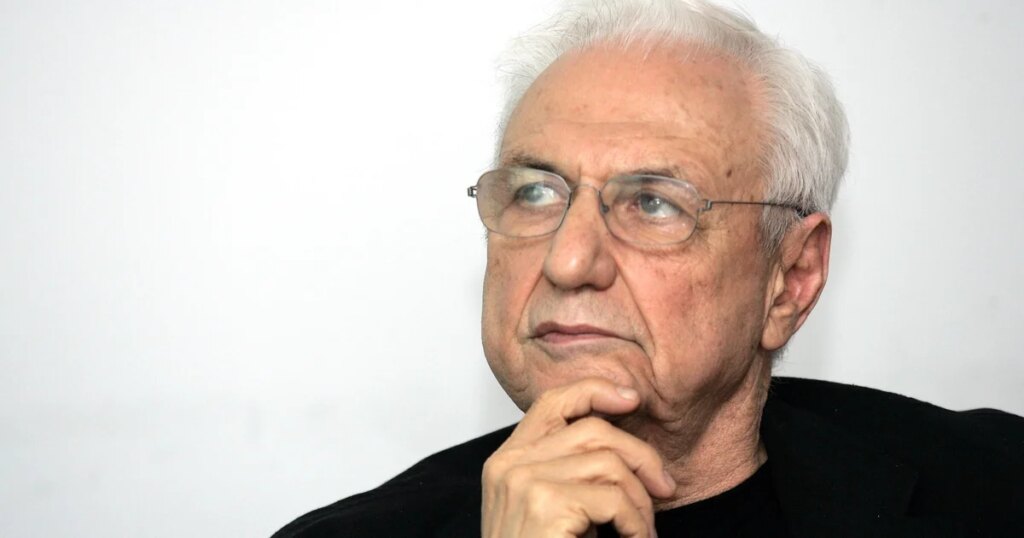
Frank Gehry, the legendary architect famed for his innovative designs, has passed away at the age of 96. Known for landmarks such as the Guggenheim Museum in Bilbao and the Walt Disney Concert Hall in Los Angeles, Gehry died at his home in Santa Monica after a brief illness. His extraordinary career not only redefined modern architecture but also earned him numerous prestigious awards, reflecting his lasting impact on the architectural landscape.
| Article Subheadings |
|---|
| 1) A Life of Architectural Innovation |
| 2) Signature Projects and Their Impact |
| 3) Awards and Recognition |
| 4) Public Perception and Criticism |
| 5) Legacy and Continuation of His Work |
A Life of Architectural Innovation
Born Ephraim Owen Goldberg on February 28, 1929, in Toronto, Canada, Gehry faced the challenges of being Jewish in North America. In 1947, he relocated to Los Angeles with his family and later changed his name at the suggestion of his first wife, due to concerns about antisemitism stifling his career. Despite his early love for drawing and model-building, it wasn’t until he was 20 that he considered architecture as a career, inspired by a college ceramics teacher who recognized his artistic potential. Gehry received a degree in architecture from the University of Southern California in 1954 and furthered his education with studies in urban planning at Harvard University.
Signature Projects and Their Impact
Throughout his career, Gehry designed a multitude of iconic buildings that showcased his unique style and vision. His masterpieces, like the Guggenheim Museum in Bilbao—widely regarded as a marvel of modern architecture—changed the dynamics of urban spaces. Similarly, the Walt Disney Concert Hall in Los Angeles is celebrated for its stunning exterior and exceptional acoustics, attracting visitors and locals alike. Other notable works include the DZ Bank building in Berlin and the innovative IAC Building in New York City, which has a beehive-like form, exemplifying his departure from traditional design aesthetics.
Awards and Recognition
Gehry’s contributions to architecture did not go unnoticed. He gained every major award in the field, including the prestigious Pritzker Architecture Prize, often described as the “Nobel Prize of Architecture.” Additional honors encompassed the Royal Institute of British Architects Gold Medal and the Americans for the Arts Lifetime Achievement Award. In 2008, he was named a Companion of the Order of Canada, marking a high point in his recognition as a prominent figure in his native country.
Public Perception and Criticism
While Gehry’s work garnered intense admiration, it also faced significant criticism. Detractors pointed out that his designs sometimes resembled clumsy, oversized sculptures rather than functional buildings. Some critics, including renowned art critic Hal Foster, described many of his later projects as “oppressive” and better suited for tourist attractions than practical use. Furthermore, members of former President Dwight D. Eisenhower’s family were opposed to Gehry’s design for an Eisenhower memorial, emphasizing a desire for simplicity over complexity in the proposed design. Gehry often took such criticisms in stride, occasionally using them for humor; for instance, he made an appearance in a 2005 episode of “The Simpsons,” where he humorously designed a fictional concert hall that was later repurposed into a prison.
Legacy and Continuation of His Work
Even as he approached his 90s, Gehry remained actively engaged in architecture. His influence extended to academia when he joined the faculty at the University of Southern California as a professor of architecture in 2011, imparting his knowledge to aspiring architects. Gehry’s distinct vision and creative innovations continue to inspire new generations of architects, ensuring that his legacy will endure long after his passing. His unique approach to architecture, characterized by playful forms and bold features, fundamentally altered how spaces are imagined and constructed, inspiring countless architects around the globe.
| No. | Key Points |
|---|---|
| 1 | Frank Gehry, renowned architect, passed away at the age of 96 after a brief illness. |
| 2 | Born in Toronto, Gehry faced early challenges due to his Jewish heritage before becoming a U.S. citizen. |
| 3 | His iconic buildings include the Guggenheim Museum in Bilbao and the Walt Disney Concert Hall in Los Angeles. |
| 4 | Received numerous awards, including the Pritzker Architecture Prize, for outstanding contributions to architecture. |
| 5 | Critics often challenged his work, labeling it as extravagant and merely tourist attractions rather than functional spaces. |
Summary
Frank Gehry’s passing marks the end of an era for modern architecture. His innovative and often controversial designs have redefined skylines around the world, leaving a lasting legacy that will continue to inspire future architects. His unique vision challenged conventional norms, solidifying his place as a transformative figure in the field. As urban landscapes evolve, the principles and designs he championed will be felt for generations to come.
Frequently Asked Questions
Question: What are some of Gehry’s most famous buildings?
Frank Gehry is notably recognized for designing the Guggenheim Museum in Bilbao, the Walt Disney Concert Hall in Los Angeles, the DZ Bank building in Berlin, and the IAC Building in New York City.
Question: What awards did Gehry receive during his career?
Throughout his illustrious career, Gehry received numerous accolades, including the Pritzker Architecture Prize, the Royal Institute of British Architects Gold Medal, and the Americans for the Arts Lifetime Achievement Award.
Question: How did Gehry respond to criticism about his work?
Despite facing criticism from various quarters, Gehry often exhibited a humorous attitude toward detractors. He played along with criticisms and even appeared in a 2005 episode of “The Simpsons,” emphasizing his ability to find humor in public perception.