
| Article Subheadings |
|---|
| 1) Overview of the Republican Nomination |
| 2) The Challenges Ahead |
| 3) Cordery’s Campaign Platform |
| 4) Financial Disparities |
| 5) Summary and Political Landscape |
Overview of the Republican Nomination
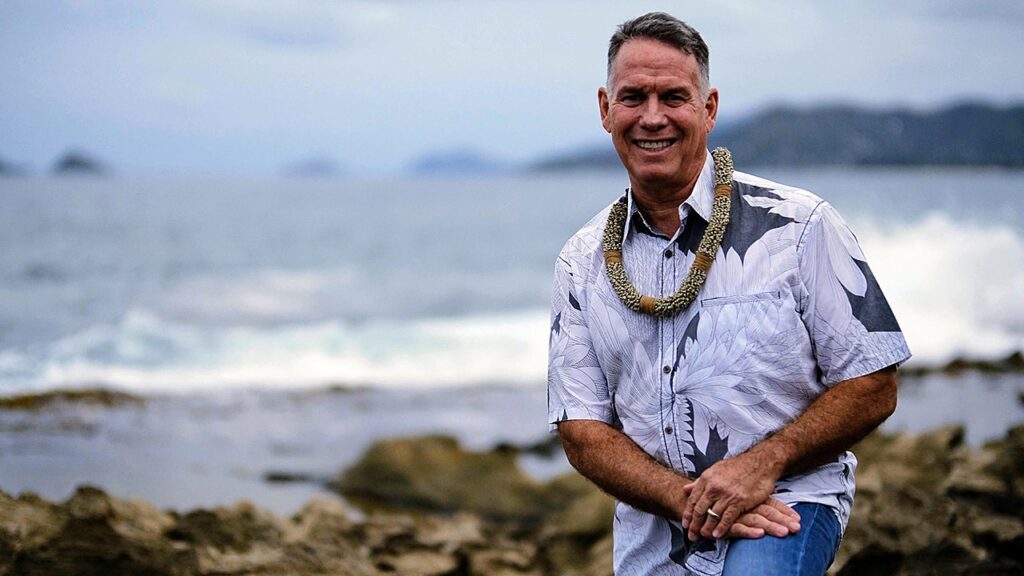
The recent Republican primary saw Gary Cordery emerge victorious over Ken Fujiyama, a business owner, securing his position as the Republican nominee for governor of Hawaii. Cordery, who operates a contracting firm, has laid out ambitious plans for his campaign. His victory in the primary is noteworthy, considering Hawaii’s long-standing trend of Democratic governance and the absence of a Republican governor since Linda Lingle left office in 2010. Democratic incumbents have maintained a strong foothold in Hawaii, making Cordery’s nomination a potential turning point in a state characterized by its lean towards the Democratic Party.
The Challenges Ahead
As Cordery prepares for the general election against the incumbent, Josh Green, he faces significant challenges. Hawaii’s political climate has favored Democrats for years, with voters having consistently re-elected Democratic leaders. With an approval rating of 56%, Green is a well-established figure whose popularity poses a formidable barrier for Cordery’s campaign. Additionally, Cordery has to contend with a lack of historical precedent for Republican candidates in the state, as the GOP has struggled to gain traction in Hawaii’s political arena over recent decades.
Cordery’s Campaign Platform
Cordery’s campaign centers on a platform designed to address Hawaii’s pressing issues, particularly the high cost of living. He emphasizes the need for systemic changes, including a proposal to add 15,000 homes to the market, targeted at working families and priced between $400,000 and $600,000. By utilizing state-owned land for housing development, Cordery aims to increase housing availability while also reforming the permitting processes to facilitate faster construction. This initiative is part of his broader commitment to creating opportunities and addressing the burdens faced by residents.
Cordery champions transparency and fiscal responsibility, proposing to eliminate the state’s General Excise Tax on essential goods like food and medicine. He also aims to freeze property taxes for retirees and ensure that taxpayer dollars are managed effectively. Cordery argues that Hawaii’s budget, which stands at $20.5 billion for a population of 1.4 million, indicates mismanagement compared to other states with similar populations, such as New Hampshire. He has expressed his intentions to order audits to identify and eliminate wasteful spending within state operations.
Financial Disparities
One of the significant challenges confronting Cordery’s campaign is the substantial financial gap between him and Governor Green. According to reports, Green has raised approximately $3.5 million for his re-election campaign, which significantly surpasses Cordery’s fundraising efforts of about $313,000. This financial disadvantage could impact Cordery’s ability to effectively reach potential voters through advertising and outreach initiatives, potentially limiting his visibility as the election approaches.
Cordery’s campaign team is aware of these financial constraints but is working to maximize resources efficiently. They aim to utilize grassroots methods and community engagement strategies to build support among constituents. Cordery’s personal connection to the community as a husband, father, and businessman may resonate with voters seeking a change and new leadership. This connection could play a critical role in his campaign strategy moving forward.
Summary and Political Landscape
In summary, Gary Cordery’s nomination as the Republican candidate for governor presents a fresh face in Hawaii’s political landscape. Despite facing an uphill battle against a popular incumbent and considerable financial constraints, Cordery remains confident in his campaign messaging. His focus on addressing the high cost of living and wasteful government expenditures could attract voters who are disillusioned with the status quo.
As the election date approaches, Cordery’s ability to mobilize support and articulate a compelling vision for Hawaii’s future will be essential. His campaign’s success will depend on resonating with the electorate and navigating the deeply entrenched political dynamics that have characterized Hawaii for years.
| No. | Key Points |
|---|---|
| 1 | Gary Cordery has won the Republican nomination for governor in Hawaii. |
| 2 | Cordery faces significant challenges, including a strong incumbent and historical Democratic dominance. |
| 3 | His campaign focuses on reducing the cost of living and increasing housing availability. |
| 4 | Cordery’s campaign resources are significantly lower than those of Governor Josh Green. |
| 5 | The outcome of the election will hinge on Cordery’s ability to connect with voters and address their concerns. |
Summary
In conclusion, Gary Cordery’s challenge as the Republican nominee for governor of Hawaii signifies a potential shift in the state’s political landscape. Emphasizing a platform focused on affordability and responsible governance, Cordery faces the daunting task of overcoming entrenched Democratic influence and financial disparities. As he prepares for the decisive election in November, his ability to effectively communicate his vision to the electorate will be crucial in determining the future direction of Hawaii’s leadership.
Frequently Asked Questions
Question: Who is Gary Cordery?
Gary Cordery is a businessman and the nominated Republican candidate for Governor of Hawaii.
Question: What are Cordery’s main campaign proposals?
Cordery’s main campaign proposals include increasing housing availability, reducing living costs, and ensuring fiscal responsibility in state governance.
Question: How does Cordery’s fundraising compare to that of Governor Green?
Cordery has raised approximately $313,000 for his campaign, while incumbent Governor Green has raised about $3.5 million, creating a substantial financial gap.