
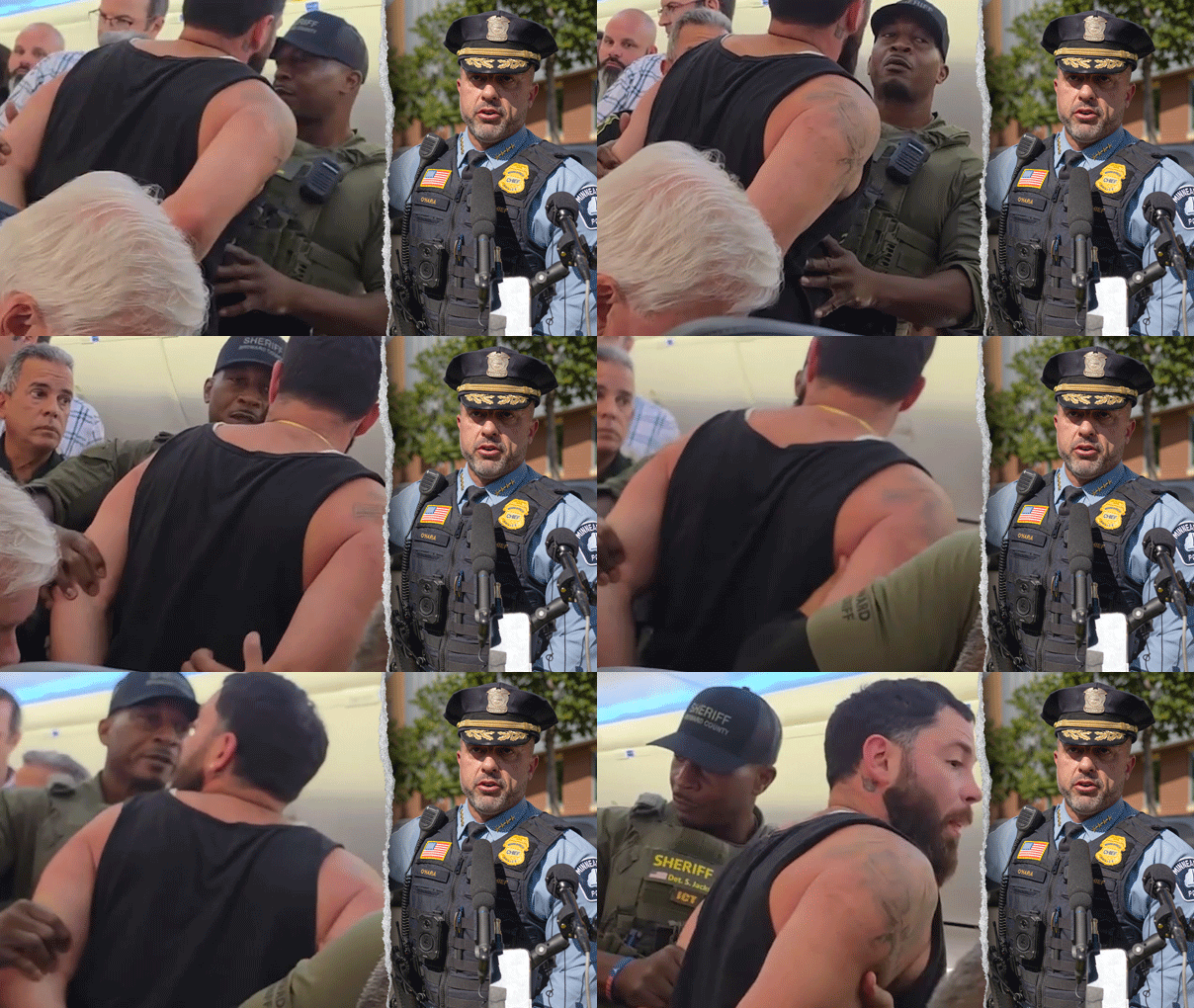
Retired Minneapolis Police Chief Brian O’Hara intervened during a serious disruption aboard United Airlines Flight 1364 on Thursday, a flight from Newark to Fort Lauderdale. While traveling with his wife, O’Hara witnessed an unruly passenger escalating tensions for nearly 45 minutes, ultimately leading to a physical confrontation. With the assistance of two off-duty sheriff’s deputies, O’Hara played a key role in safely restraining the individual, ensuring the situation did not worsen.
| Article Subheadings |
|---|
| 1) Flight Disruption Initiated by Unruly Passenger |
| 2) Emergency Response by Passengers |
| 3) Law Enforcement’s Involvement Post-Landing |
| 4) Reflections on Air Safety and Passenger Responsibility |
| 5) Importance of Training and Equipment in Airlines |
Flight Disruption Initiated by Unruly Passenger
On September 14, 2023, United Airlines Flight 1364 was flying from Newark, NJ, to Fort Lauderdale, FL. Among the passengers was Brian O’Hara, a retired police chief with extensive law enforcement experience. The flight began typically but quickly turned chaotic when a male passenger began to demonstrate increasingly aggressive behavior. According to O’Hara, the disruptive individual spent almost 45 minutes verbally berating the flight attendants. This agitation escalated after the crew denied his requests for more alcohol, a factor that reportedly fueled his aggressiveness.
The situation deteriorated further when the passenger began shouting profanities and made threatening statements toward both the crew and fellow passengers.
“It was infuriating to hear a man speak to these women who were just incredibly professional and trying to keep everybody safe,”
O’Hara remarked. His observations underscore the challenges faced by flight crews when dealing with such disruptive individuals in the confined setting of an aircraft.
Emergency Response by Passengers
As tensions reached a breaking point, the situation eventually culminated in a physical confrontation. At this moment, O’Hara, recognizing the potential danger, swiftly positioned himself to assist. Two other passengers, seated towards the back of the aircraft, also sprang into action, grabbing the unruly individual as he lunged toward the flight attendants. The three men were able to work together effectively, utilizing plastic flex cuffs to restrain the problematic passenger and ensure he would not pose a further threat during the flight.
Once secured, the airline crew was able to return to their seats, allowing the plane to prepare for its landing in Fort Lauderdale without further incident. O’Hara later learned that the two passengers who assisted him were, in fact, off-duty sheriff’s deputies from Bergen County in New Jersey. Their combined efforts undoubtedly contributed to averting a potentially dangerous escalation.
Law Enforcement’s Involvement Post-Landing
Upon landing, local law enforcement was ready and waiting for the flight’s arrival. Representatives from the Broward Sheriff’s Office boarded the aircraft to detain the unruly passenger, who was still restrained. United Airlines later issued a statement thanking both their crew and passengers who assisted in resolving the crisis, emphasizing the importance of collective action in ensuring safety onboard.
In their statement, United Airlines acknowledged the events, noting,
“Local law enforcement met United Flight 1364 upon its arrival to address an unruly passenger. We thank our crew and customers for assisting with the situation and helping ensure the safety of everyone onboard.”
This incident highlights the increasingly serious nature of confrontations aboard flights and the swift response required from authorities when such situations escalate.
Reflections on Air Safety and Passenger Responsibility
Reflecting on the incident, O’Hara stressed the readiness of bystanders to assist when they witness acts of aggression or violence. Notably, the incident serves as a reminder that the safety protocol onboard requires active participation from passengers as well. O’Hara expressed concern over the growing number of violent outbursts during flights, emphasizing that passengers must act decisively when faced with dangerous situations. His sentiment resonates with the impending 25th anniversary of September 11, which is a poignant reminder of the heightened vigilance necessary in today’s world.
Strongly advocating for passenger involvement in such situations, O’Hara stated,
“I would hope everybody in this country now knows that if things are escalating to the point where there’s going to be some kind of violence, I think every citizen that is able to has a duty to try and help to stop it.”
His commitment to encouraging action rather than passivity reflects a broader cultural imperative to protect one another in public settings.
Importance of Training and Equipment in Airlines
O’Hara’s experience also raised a vital issue within aviation security: the need for airlines to ensure that their crews are adequately trained and equipped to handle violent outbursts. He proposed that airlines should consider implementing protocols that include readily available restraints for turbulent passengers, alongside training in effective safety measures for crew members.
In his view, this could significantly bolster the safety of everyone involved in the flight, allowing for a more systematic approach to managing unruly behavior. He encouraged increased training, advocating for a comprehensive understanding of how to act in volatile situations. This proactive approach could minimize risks and ensure a more secure environment for both crewmembers and passengers alike.
| No. | Key Points |
|---|---|
| 1 | Retired police chief Brian O’Hara intervened in a midair crisis on United Flight 1364. |
| 2 | The incident involved an unruly passenger who became aggressive after being denied additional alcohol. |
| 3 | O’Hara and off-duty deputies successfully restrained the disruptive individual before landing. |
| 4 | The airline acknowledged the crew and passengers’ efforts in maintaining safety aboard the flight. |
| 5 | O’Hara advocates for better training and restraint measures for airline crews in response to violence. |
Summary
The incident aboard United Airlines Flight 1364 serves as a stark reminder of the potential dangers that lurk within confined spaces like aircraft. With an increase in disruptive behavior reported in recent years, the actions of retired police chief Brian O’Hara and the two deputies highlight not only the importance of vigilance among passengers but also the necessity for airlines to provide adequate training and resources to their crew. As such incidents continue to draw attention, the discourse around air safety measures remains critical for the future of air travel.
Frequently Asked Questions
Question: What prompted the passenger’s aggressive behavior?
The passenger became increasingly agitated after flight attendants refused to serve him additional alcohol, which contributed to his belligerence.
Question: How did the other passengers respond to the situation?
Two passengers, identified as off-duty sheriff’s deputies, intervened by restraining the unruly individual alongside O’Hara, using plastic flex cuffs to secure him until the flight landed.
Question: What measures are airlines taking to address midair disturbances?
Airlines are increasingly acknowledging the need for better training for their crew and may implement protocols that include providing restraints and safety training to handle incidents effectively.