
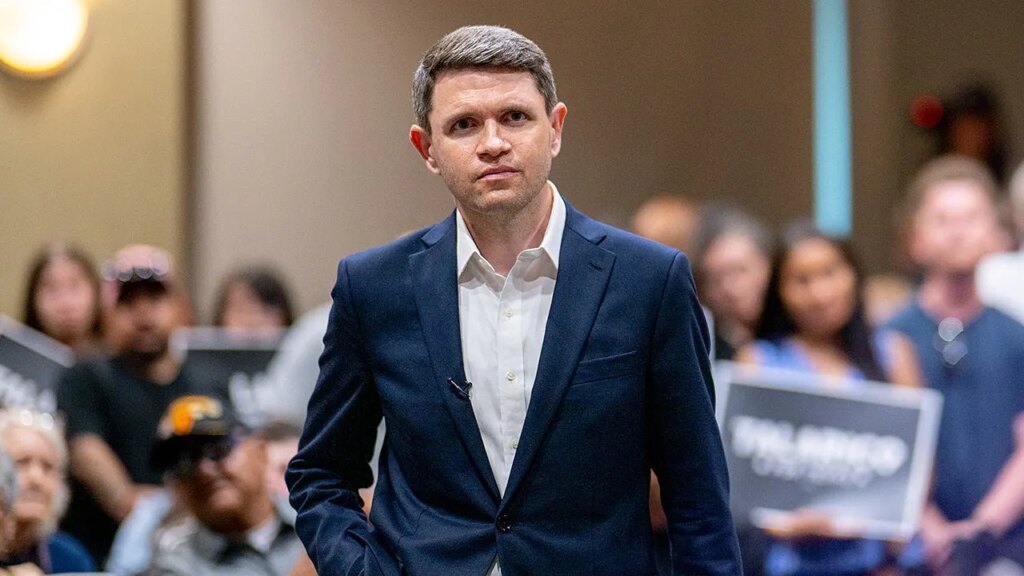
In the upcoming November elections, Texas Democratic Senate nominee James Talarico faces the daunting challenge of gaining traction among Republican voters in a predominantly conservative state. His campaign, which hopes to forge a bipartisan coalition, is encountering skepticism from Republican leaders who label his outreach as insincere. With both sides preparing for a crucial battle, Talarico’s prospects hang in the balance amid strong opposition from his rival, Texas Attorney General Ken Paxton, as the stakes of the race escalate significantly.
| Article Subheadings |
|---|
| 1) The Challenge of Bipartisanship |
| 2) Critiques from Republican Leaders |
| 3) Controversial Endorsements |
| 4) The Stakes of the Election |
| 5) The Path Forward for Talarico |
The Challenge of Bipartisanship
Navigating a course through the Texas political landscape is no small feat for James Talarico. He is vying for votes in a state that has been strongly aligned with the Republican Party for decades. As he attempts to position himself as a moderate alternative to Ken Paxton, Talarico has articulated a vision of coalition-building that aims to bring together an array of constituencies, including those disillusioned with traditional party lines. His campaign claims to want to “go everywhere and talk to everyone,” reflecting a calculated strategy that seeks to capitalize on divisions within the Republican base as well as attract independents and even some disaffected Republicans.
However, the roots of Texas’s political culture run deep, and transitioning voters from the GOP to a Democratic candidate remains a considerable hurdle. The state, known for its staunch conservatism, showcases a voting demographic that typically aligns around key issues. For Talarico, success hinges not only on his ability to convince voters of his Democratic values but also on assuaging the apprehensions that come with voting outside party lines.
Critiques from Republican Leaders
Talarico’s efforts to engage Republican voters have drawn sharp criticism from prominent Republican figures. Joe Gruters, the Republican National Committee Chairman, firmly dismissed Talarico’s outreach as “a pipe dream.” Gruters posits that attempts to cultivate a bipartisan coalition are fundamentally flawed, stating that the roots of Talarico’s supporters are embedded deeper in the Democratic Party, making any claims of crossover support dubious at best. He argues that leading figures backing Talarico are long-standing Democratic activists who have consistently supported Democratic candidates, undermining the credibility of Talarico’s assertions of acquiring Republican support.
“I just don’t believe it,” Gruters declared. “This is Kamala Harris’ ‘White Dudes for Kamala.’ It just doesn’t exist.”
As the election nears, Republicans are leveraging these criticisms to solidify their base, suggesting that Talarico’s attempts are disingenuous and likely to fail. By focusing on this narrative, Republican leaders hope to galvanize their supporters and frame the election as a clear dichotomy between traditional values and Talarico’s more progressive agenda.
Controversial Endorsements
The nature of endorsements in Talarico’s campaign has raised eyebrows, often serving as fodder for Republican criticism. Reports surfaced around one supporter, identified as Mindy McClure. She previously made contributions to various Democratic candidates and political organizations, contradicting her proclaimed status as a Republican supporter. Similarly, records indicated that another woman featured in Talarico’s outreach had participated more frequently in Democratic primaries than in Republican ones, fueling Republican claims that Talarico’s campaign relies on individuals with dubious crossover credibility.
The Talarico campaign has responded to these allegations by asserting that these individuals have no formal ties to the campaign and that their past political affiliations do not necessarily reflect their current stance. The campaign emphasized attempting to create a narrative of inclusiveness, although critics remain unconvinced that such strategies can effectively sway conservative voters who have historically been aligned with the Republican Party.
The Stakes of the Election
As the November election date approaches, the stakes could not be higher for both Talarico and Paxton. For Talarico, success in flipping Republican voters would mark a significant achievement, not only for his political career but also for the Democratic Party’s aspirations to challenge GOP dominance in Texas. The race has taken on heightened urgency as Republican leaders are rallying to maintain their foothold in a state where they have long been in command.
Paxton, on the other hand, is under pressure not only to secure his own candidacy but also to represent a broader Republican movement. Emphasizing traditional values and targeting Talarico directly, Paxton aims to depict him as out of touch with Texas sentiments. Republican leaders, including figures like Gruters, are adamant that maintaining their respective political strengths is essential for the GOP’s future viability.
The Path Forward for Talarico
With criticisms mounting and the electoral clock ticking down, Talarico must refine his strategy to engage potential voters effectively. Achieving a balanced narrative of inclusivity while proving that his campaign is genuinely representative of bipartisan interests will be crucial. His ability to define his candidacy in terms that resonate with the concerns of conservative voters, especially around contentious issues like women’s rights, immigration, and fiscal policies, could determine whether the ambitious coalition he seeks is achievable.
The upcoming weeks will be pivotal for Talarico as he works to galvanize support from diverse groups while combating the narrative his opponents have established. The road may be steep, but for Talarico, failure could signify a missed opportunity for the Democrats to make significant inroads in the state, while success might reshape Texas’s political landscape for years to come.
| No. | Key Points |
|---|---|
| 1 | James Talarico aims to attract Republican voters in a predominantly red Texas. |
| 2 | Republican leaders criticize Talarico’s outreach as disingenuous. |
| 3 | Controversial endorsements may undermine support for Talarico. |
| 4 | The upcoming election holds immense significance for both Talarico and Paxton. |
| 5 | Talarico must navigate criticisms to effectively engage potential voters. |
Summary
As the Texas Senate race intensifies, James Talarico is facing significant hurdles in garnering support among Republican voters. Despite his calls for bipartisan engagement, Republican officials like Joe Gruters are quick to challenge the sincerity of his claims, asserting that Talarico’s outreach lacks authenticity. With the November election approaching, both sides are gearing up for a decisive battle that could not only shape the futures of the candidates involved but also alter the political fabric of Texas.
Frequently Asked Questions
Question: What challenges does Talarico face in the upcoming elections?
Talarico’s primary challenge lies in winning over Republican voters in a strongly conservative state while overcoming skepticism regarding his bipartisan outreach efforts.
Question: What are Republican leaders saying about Talarico’s campaign?
Republican leaders, including Joe Gruters, have criticized Talarico’s efforts as inauthentic, suggesting that many individuals claiming to support him are actually long-time Democrats and activists.
Question: How significant is the November election for both candidates?
The November race is critical; for Talarico, it represents a chance to disrupt GOP dominance in Texas, while for Paxton, it is essential to uphold Republican representation in the state.