
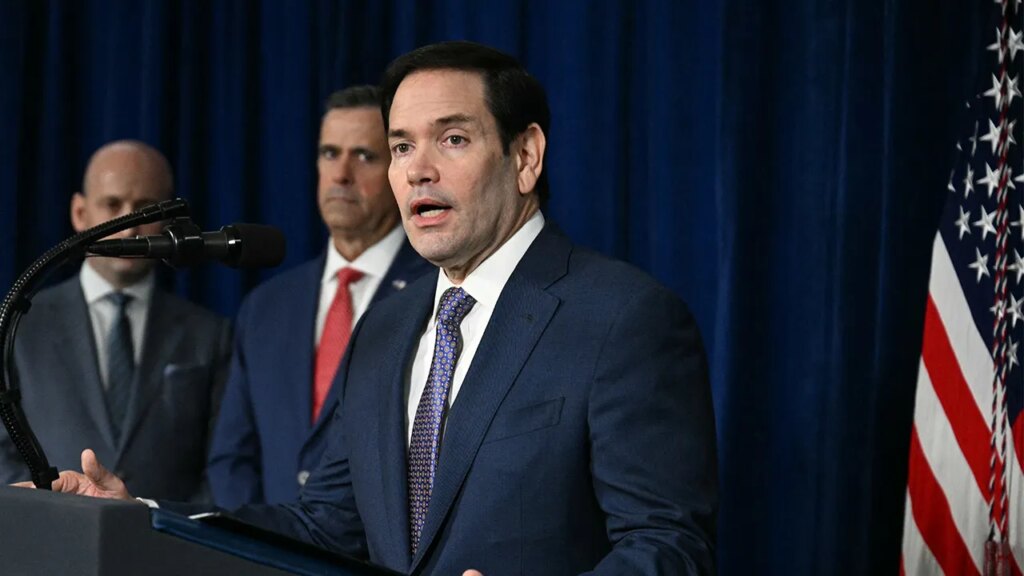
In a recent statement, U.S. Secretary of State Marco Rubio called upon Cubans to collaborate discreetly with the CIA to facilitate political change within the communist-run nation. This call comes as President Donald Trump hinted at the possibility of deploying U.S. ships near Cuba, potentially to advance a diplomatic initiative. The statements underscore a renewed approach to dealing with Cuba, focusing on strengthening U.S. efforts to support opposition against the existing regime.
| Article Subheadings |
|---|
| 1) Rubio’s Urgent Call to Cubans |
| 2) The Context Behind the Call |
| 3) Trump’s Vision for U.S.-Cuban Relations |
| 4) Historical Strains Between the U.S. and Cuba |
| 5) Future Implications of These Comments |
Rubio’s Urgent Call to Cubans
On Friday, Secretary of State Marco Rubio made an emphatic appeal for Cubans to support efforts for political change in their country. In a post shared on X, Rubio emphasized the pressing need for action in light of perceived governmental failures, stating, “To those who seek to create positive change in Cuba—now is the time.” He urged citizens to forge a discreet partnership with the CIA, alluding to a potential alliance that could facilitate transformation within Cuba’s political landscape.
This call to action is not just a political statement; it marks a strategic appeal to a populace that has faced decades of repression under a communist regime. By advocating for a connection with the CIA, Rubio appears to be encouraging Cubans to adopt a proactive stance against their government, notwithstanding the inherent risks involved.
However, the specifics of what such cooperation would entail were not elaborated by Rubio. His message resonated with those who have long been disillusioned by the regime’s corruption and failure to deliver on promises of prosperity.
The Context Behind the Call
Rubio’s appeal came amid a broader context of discontent within Cuba. Recent civilian uprisings and protests have highlighted public dissatisfaction with the government’s handling of economic and social issues. Many Cubans have expressed frustration with high levels of poverty, limited freedoms, and a lack of basic needs. Rubio’s statements can be seen as a response to this ongoing turmoil, aiming to galvanize support among dissidents.
The U.S. administration has previously positioned itself against the Cuban government, viewing it as an oppressive entity. Rubio, who is the son of Cuban immigrants, has always maintained a hardline stance against the regime, pushing for reforms and advocating for human rights. This recent call is a continuation of his long-standing commitment to the Cuban cause and his belief that the U.S. must play a role in helping Cubans pursue political freedoms.
Additionally, Trump noted that he would consider sending U.S. ships near the Cuban coast, which adds another layer to the already complex diplomatic situation. By fostering discussions on military presence, the administration could be signaling a willingness to increase pressure on Cuba should the situation continue to deteriorate.
Trump’s Vision for U.S.-Cuban Relations
President Donald Trump recently articulated a vision for U.S.-Cuban relations that suggests a robust military and diplomatic strategy. At a midterm rally in Fort Myers, Florida, Trump hinted that U.S. ships might stop near Cuba, potentially as a show of support for dissidents. He stated, “Don’t worry. We’ll take care of Cuba on our way back from Iran.” This mention of a military stop raises questions regarding Trump’s administration’s intent and possible military engagement in the region.
During the rally, Trump proposed sending Secretary of State Rubio to finalize negotiations with Cuba, suggesting he has confidence in Rubio’s capabilities to address the situation effectively. Despite his comments, details about the nature of these negotiations remain unclear. The president did not clarify whether this was part of a proposed military strategy or a diplomatic endeavor aimed at fostering dialogue with Cuban leaders.
As tensions persist, the administration’s assertive approach may influence the Cuban regime’s policy decisions, revealing the complexities inherent in U.S.-Cuba relations and the balancing act Washington must perform between intervention and diplomacy.
Historical Strains Between the U.S. and Cuba
Cuba has been a focal point of U.S. foreign policy for decades, deeply entrenched in the dynamics of the Cold War and subsequent geopolitical tensions. Since the Cuban Revolution in 1959, the U.S. has maintained an embargo against Cuba, seeking to pressure the regime into adopting democratic reforms. This long-standing policy has shaped the narratives and actions surrounding U.S.-Cuban relations.
The relationship has seen various administrations attempt to normalize relations, only to face backlash from hardliners who advocate for a stricter approach. Rubio’s call and Trump’s proposal hint at a shift back to a more aggressive U.S. stance that seeks not only to challenge the fundamental tenets of the Cuban government but also aims to support dissidents in their quest for freedom.
While groups within Cuba have been encouraged by U.S. support in recent years, the implications of such overt collaborations can be complex, often leading to heightened governmental repression against those involved.
Future Implications of These Comments
The implications of Rubio and Trump’s comments could significantly influence Cuba’s political climate moving forward. By encouraging Cubans to collaborate with the CIA, Rubio’s stance could lead to increased risk for those who choose to engage with U.S. intelligence efforts. Past experiences have shown that overt ties to the United States can be detrimental for dissidents, often leading to severe crackdowns from the Cuban government.
Moreover, Trump’s assertions regarding military intervention could escalate tensions, not just between the U.S. and Cuba, but potentially with other actors in the region who may view such military posturing as provocative. Following historical patterns, this could lead to a resurgence of hostilities within the region.
As the U.S. administration expresses its stance on Cuba, it will need to carefully navigate the path forward. Balancing support for dissidents with the risks of direct intervention will be crucial in shaping future U.S.-Cuban relations.
| No. | Key Points |
|---|---|
| 1 | Secretary Marco Rubio urged Cubans to cooperate with the CIA for political change. |
| 2 | Rubio’s message resonates amidst ongoing discontent with the Cuban regime. |
| 3 | President Donald Trump indicated the possibility of using U.S. military ships near Cuba. |
| 4 | Historical U.S.-Cuban relations have been marked by tensions since the Cold War. |
| 5 | Future U.S.-Cuban strategies could see increased risks for Cuban dissidents. |
Summary
The recent statements by Secretary Marco Rubio and President Donald Trump reveal a renewed commitment by the U.S. administration to support the Cuban people in their pursuit of democratic freedoms. This renewed approach, focused on political engagement and military presence, highlights the complexities of interventionist foreign policy and its potential implications for both the U.S. and Cuba. As the administration lays out its strategies, careful consideration of the risks involved for dissidents and the potential for escalation in tensions will be pivotal in shaping the future of U.S.-Cuban relations.
Frequently Asked Questions
Question: What type of cooperation is Rubio encouraging from Cubans?
Rubio is encouraging Cubans to collaborate discreetly with the CIA in efforts aimed at facilitating political change within the country.
Question: What is Trump’s proposal regarding military action near Cuba?
Trump hinted at the possibility of using U.S. military ships near Cuba, suggesting that they may stop off the coast to exert influence while discussing broader regional issues.
Question: How does this relate to historical relations between the U.S. and Cuba?
The push for engagement comes amidst a long history of strained U.S.-Cuban relations, influenced by decades of embargoes and diplomatic conflicts dating back to the Cuban Revolution in 1959.