
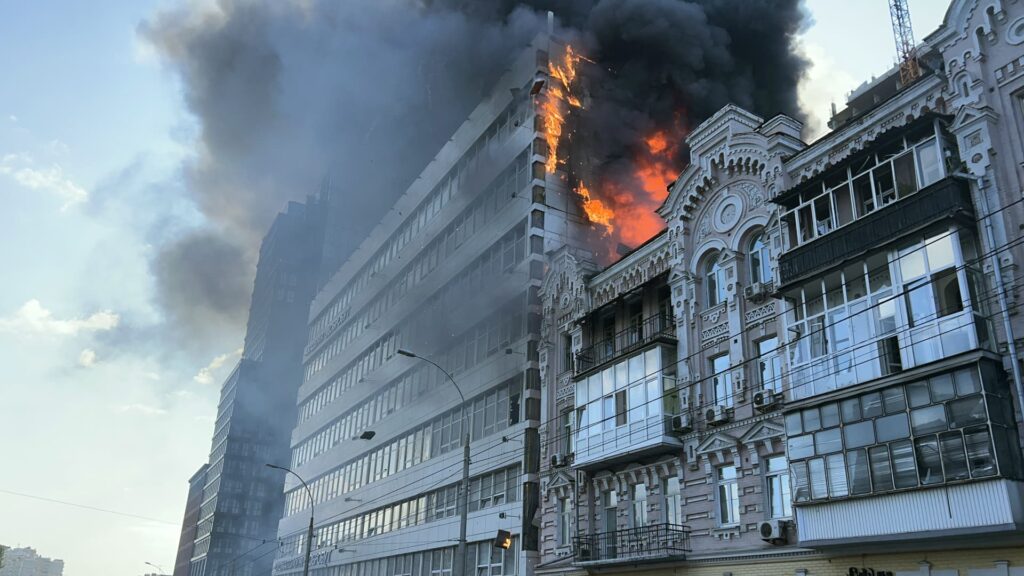
In a significant escalation of hostilities, Russian forces have intensified their attacks on Ukraine’s capital, Kyiv, as well as on its critical infrastructure, notably targeting data centers and communication networks. On September 23, 2026, the State Emergency Service of Ukraine (DSNS) reported attempts to extinguish fires initiated by drone strikes in the Solomianskyi district of Kyiv. As the situation worsens, Ukrainian officials express urgent concern over the ongoing bombardment, emphasizing the necessity of improving air defenses and maintaining communication networks amidst the conflict.
| Article Subheadings |
|---|
| 1) Intensified Attacks on Kyiv |
| 2) Data Infrastructure Under Siege |
| 3) The Role of NATO in Escalating Tensions |
| 4) Ukraine’s Military Response |
| 5) Broader Implications of the Conflict |
Intensified Attacks on Kyiv
On the night of September 22 to September 23, 2026, Russian forces launched a renewed assault on Kyiv, marking a significant turn in hostilities as both aerial and ground-based attacks were reported across the city. The Ukrainian air force confirmed that a combination of anti-ship and ballistic missiles, as well as jet-powered drones, were utilized in this offensive, creating a chaotic scene in the already tense environment of the capital. Despite the valiant efforts of Ukrainian air defense systems, many of these missiles and drones were able to penetrate the airspace, leading to widespread devastation.
The Ukrainian authorities have been on high alert and have mobilized their defensive mechanisms in anticipation of such attacks. Vital installations, including civilian areas, have become battlegrounds, endangering countless lives. As of the latest reports, firefighters belonging to the State Emergency Service were deployed to combat the fires caused by the drone strikes, underscoring the perilous state of affairs in the region.
Data Infrastructure Under Siege
One of the most alarming developments amid the escalation was the targeted strikes against crucial data centers and communication infrastructures, which are critical for maintaining connectivity and information flow within the country. Ukraine’s security forces reported that the Russian military had specifically targeted the Bi-mobile and Parkovy data centers, which serve as central nodes in Kyiv’s internet exchange system.
These attacks not only aim to degrade the technological capabilities of Ukraine but also seek to instill fear and disrupt the daily lives of its citizens. As officials from Ukraine observed, the assaults on communication networks represent an attempt by Russia to undermine societal resilience by creating a sense of instability and chaos. Reports from the Ukrainian government indicate a serious concern regarding the damages caused, along with an urgent need for repairing and securing these vital infrastructures.
The Role of NATO in Escalating Tensions
In the backdrop of this military escalation, NATO has articulated a strong denunciation of Russia’s aggressions, particularly in the context of nuclear threats. On September 22, NATO officials publicly addressed the situation, emphasizing their commitment to defending member nations against any potential military confrontations stemming from Russian actions. The alliance reiterated that its exercises and activities do not pose risks to Russia but are, rather, defensive measures aimed at maintaining regional stability.
NATO’s response came in response to a warning from the Russian Embassy in Belgium, accusing NATO of escalating tensions around Kaliningrad. The alliance’s stance suggests a notable escalation in diplomatic tensions, indicative of an increasingly polarized environment surrounding the ongoing conflict. As NATO remarks on Russia’s tactics, it’s clear both sides are gearing up for what may become an even more tumultuous period of confrontation.
Ukraine’s Military Response
In light of the recent aggressions, Ukraine has ramped up its own military strategies in retaliation. Reportedly, the country has begun targeting key Russian assets, particularly oil refineries and logistics hubs, as an effort to diminish Russia’s operational capabilities. The reported strikes against these facilities are part of Ukraine’s broader strategy to compel Russia to reconsider its continued assaults by raising the costs of warfare for the aggressor.
The intensity of these actions reflects Ukraine’s resolve to protect its sovereignty and the well-being of its citizens amidst the increasing backdrop of warfare. Military analysts point out that such strategic strikes might also serve a dual purpose: not only hampering Russian logistics but also strengthening morale within Ukrainian ranks and among civilians.
Broader Implications of the Conflict
The ramifications of the conflict extend beyond the immediate battlefield, affecting geopolitical dynamics throughout Europe and possibly the broader world. As tensions escalate and military confrontations continue, both regional security and global economic stability are brought into question. Nations are closely monitoring the situation, cautious of the potential spillover effects should the conflict spread or intensify.
Experts suggest that sustained military actions may lead to long-term consequences for international relations and economic stability in Europe. The ongoing aggression not only heightens the humanitarian crisis within Ukraine but also poses questions about the efficacy of diplomatic solutions in the face of persistent hostilities. Countries globally are faced with the challenge of navigating their responses in light of the current dynamics, highlighting the complicated and multifaceted nature of international relations in modern conflict.
| No. | Key Points |
|---|---|
| 1 | Russia intensified its military strikes on Kyiv, utilizing missiles and drones. |
| 2 | Ukraine’s data centers were specifically targeted, impacting communication infrastructures. |
| 3 | NATO condemned Russia’s actions and emphasized its defensive stance in Europe. |
| 4 | Ukraine has escalated its counterattacks against Russian logistical targets. |
| 5 | The regional and global implications of the conflict are significant, affecting international relations. |
Summary
The situation in Ukraine remains perilous as Russian military actions escalate against Kyiv and its vital infrastructures. With NATO reinforcing its stance and Ukraine responding aggressively, the potential for increased conflict is ever-present. This turmoil not only exacerbates the humanitarian crises but also poses significant risks to broader regional stability and international relations, compelling nations worldwide to navigate these complex dynamics carefully.
Frequently Asked Questions
Question: What are the main targets of Russia’s recent military attacks in Ukraine?
The main targets of Russia’s recent attacks include Kyiv, with a particular focus on data centers and communication infrastructures, aiming to disrupt Ukraine’s information flow and connectivity.
Question: How has NATO responded to Russia’s military actions?
NATO has condemned Russia’s actions as aggressive and emphasized that its own military exercises are defensive, highlighting concerns over regional stability and security.
Question: What military strategies is Ukraine employing in response to the Russian offensive?
In response to Russian aggressions, Ukraine has escalated its own military operations, targeting Russian oil refineries and logistics hubs to disrupt their operational capabilities and deter further assaults.