
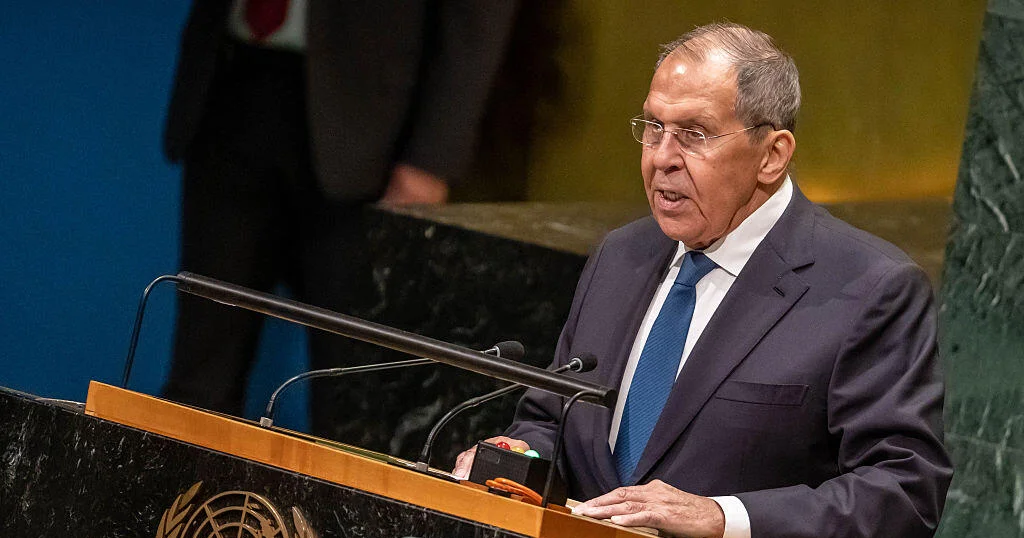
The ongoing conflict between Russia and Ukraine has reached a new level of tension as Russia’s Foreign Minister, Sergei Lavrov, accused European nations of sabotaging peace negotiations during his address at the United Nations General Assembly. Amid escalating attacks from both sides, the situation remains dire, with recent assaults resulting in civilian casualties in Ukraine and ongoing airstrikes targeting Russian facilities. This complex geopolitical scenario has drawn various international responses, with significant discussions revolving around the need for a ceasefire and long-term resolution.
| Article Subheadings |
|---|
| 1) Russia’s Accusations Against Europe |
| 2) Recent Developments in the Conflict |
| 3) U.S. Efforts and Reactions |
| 4) The Meeting Between Russia and Germany |
| 5) Call for Global Responses |
Russia’s Accusations Against Europe
In a fiery speech at the U.N. General Assembly, Sergei Lavrov, Russia’s Foreign Minister, launched a strong accusation against European nations for obstructing peace talks aimed at resolving the ongoing conflict in Ukraine. Lavrov asserted,
“Europe is doing everything it can to thwart peace talks in which the Trump administration is interested.”
This claim underlines the geopolitical tension surrounding the negotiations as Russia seeks to solidify its position in the conflict. He elaborated that the intended outcomes of Russia’s military operations would ultimately succeed, insisting that the threat to Russian security would be neutralized while asserting that normalcy would return to the region under Moscow’s influence.
The examination of the roles European nations play is critical in understanding the dynamics of this conflict. Lavrov’s statements, reflecting a narrative common in Russian rhetoric, suggest a belief that the West is actively impeding peace efforts. This has led to heightened diplomatic tensions as accusations are exchanged, complicating any potential breakthrough in negotiations.
Recent Developments in the Conflict
The conflict has seen a marked increase in violence recently, leading to profound humanitarian concerns. On a recent Saturday, Ukrainian officials reported that Russian aerial assaults resulted in the deaths of four civilians. At the same time, Ukraine has retaliated by executing drone attacks on Russian industrial sites, notably targeting oil refineries. These reciprocal attacks underscore the urgency for a ceasefire, highlighting the critical need for international intervention.
Both Moscow and Kyiv have intensified their military operations over the summer, which has been deemed the deadliest since the onset of the invasion in 2022. The situation calls for immediate international attention, as civilian populations are increasingly at risk. As fighting rages on without a clear sign of de-escalation or diplomatic resolution, the humanitarian toll mounts, prompting calls for action from various global leaders.
U.S. Efforts and Reactions
Despite ongoing efforts led by the United States aimed at brokering a lasting ceasefire and peace agreement, tangible results have remained elusive. Comments made by former President Donald Trump offer an insight into the U.S. perspective. At a recent event, Trump expressed a desire for Ukrainian President Volodymyr Zelenskyy to make peace with Russian President Vladimir Putin. He stated,
“I want him to settle with Putin, and I want Putin to settle with him.”
This statement reflects a broader sentiment among some U.S. officials advocating for a diplomatic resolution.
Zelenskyy, however, has recently articulated a grim outlook on the situation, asserting that Russian attacks are escalating daily. His perspective indicates a growing impatience with international interlocutors and a reiteration of the pressing need for concrete support to deter Russian aggression. The expectation that high-level negotiations could yield results is dimming, as battlefield realities increasingly dictate the terms of engagement.
The Meeting Between Russia and Germany
In a notable development, Lavrov met with German Foreign Minister Johann Wadephul, marking the first encounter between the two nations’ top diplomats since the war began. This meeting occurred against a backdrop of escalating tensions, including accusations from Germany that Russia orchestrated a failed drone attack on Leipzig airport, further straining diplomatic relations.
During his address to the U.N. Assembly, Wadephul emphasized the precarious nature of the situation, asserting that “Russia’s war targets the lives of millions of innocent people, the existence of the Ukrainian state and culture, and the European peace order.” This highlights the confluence of military aggression and the threat to broader regional stability, underscoring the importance of dialogue and negotiations to reverse the current trajectory of violence.
Call for Global Responses
The mounting aggression from Russia has prompted calls for stronger global responses. In light of recent escalations, Zelenskyy has urged the international community to elevate sanctions and political support for Ukraine. The Ukrainian president’s advocacy for a robust response reflects the urgency of the situation on the ground and the perilous implications if aggression continues unchecked.
Leaders across Europe have echoed these sentiments, emphasizing a collective responsibility to counter Russian actions before further destabilization occurs. The interplay of diplomacy, military readiness, and economic sanctions is crucial as the world navigates this complex crisis. Therefore, it is incumbent upon global leaders to devise comprehensive strategies that address both immediate and long-term challenges posed by the conflict in Ukraine.
| No. | Key Points |
|---|---|
| 1 | Russia accuses European nations of obstructing peace talks during the U.N. General Assembly. |
| 2 | Recent attacks from Russia killed civilians in Ukraine, while Ukraine retaliated with drone strikes. |
| 3 | U.S. efforts to mediate a ceasefire are ongoing but have yet to yield results. |
| 4 | Lavrov’s meeting with the German Foreign Minister highlights deteriorating Russia-Germany relations. |
| 5 | There is a growing call for stronger international responses to Russia’s continued aggression. |
Summary
The ongoing conflict in Ukraine exemplifies a critical juncture for international diplomacy as tensions between Russia and Ukraine mount. Accusations of obstructionism directed at European nations by Russian officials only serve to complicate peace efforts. As the humanitarian impact increases, the global community faces pressing questions about how best to respond to the shifting dynamics. A collaborative international response is essential not only to stabilize the region but also to uphold principles of sovereignty and peace for all nations involved.
Frequently Asked Questions
Question: What are the main accusations against Europe by Russia?
Russia accuses European nations of actively obstructing peace talks aimed at resolving the conflict in Ukraine, according to statements made by its Foreign Minister during a recent U.N. address.
Question: What recent military actions have occurred in the conflict?
Recent military escalations include Russian aerial attacks resulting in civilian casualties in Ukraine, alongside Ukrainian retaliatory drone strikes targeting Russian industrial facilities.
Question: What role is the United States playing in the conflict resolution?
The United States is attempting to mediate a ceasefire and peace agreement, although recent comments suggest that there are challenges in achieving a lasting diplomatic solution.