
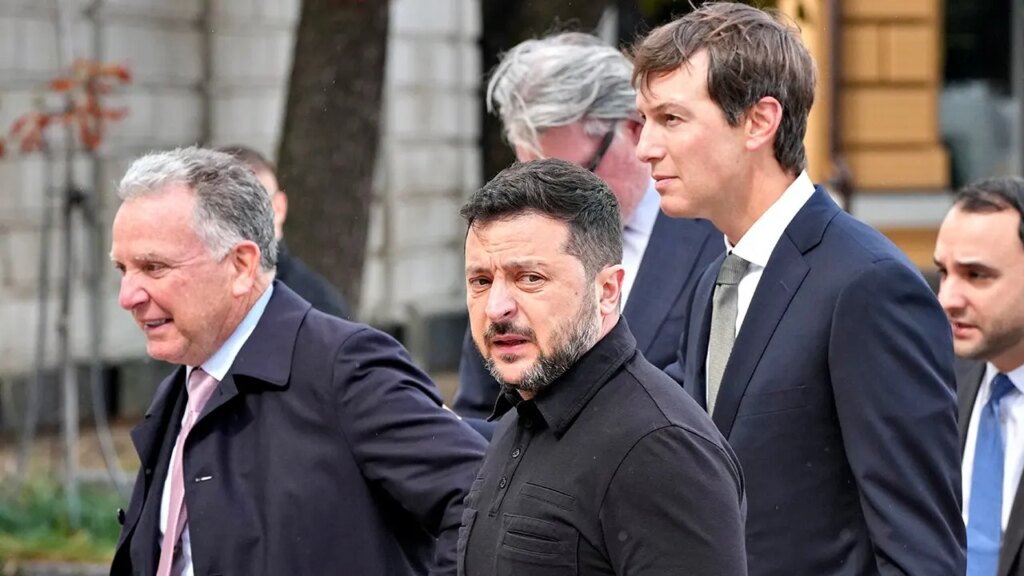
In a significant diplomatic move, U.S. special envoys Jared Kushner and Steve Witkoff concluded peace talks in Kyiv, Ukraine, ahead of ongoing hostilities with Russia. Their discussions came shortly before Russian forces launched ballistic and cruise missile attacks on the city, causing substantial damage and raising alarms among local residents. The talks are part of an effort to resurrect stalled negotiations aimed at halting the war that has been ongoing since February 2022, with both envoys indicating potential progress in establishing a ceasefire agreement.
| Article Subheadings |
|---|
| 1) Diplomatic Efforts in Kyiv |
| 2) Violence Resurfaces with Missile Strikes |
| 3) The Ceasefire Agreement |
| 4) Responses and Implications |
| 5) A Path Forward for Peace |
Diplomatic Efforts in Kyiv
On September 6, 2026, U.S. Special Envoys Jared Kushner and Steve Witkoff arrived in Kyiv with the mission of facilitating peace negotiations amid the ongoing conflict between Ukraine and Russia. The envoys met with Ukrainian President Volodymyr Zelenskyy and other officials to discuss avenues for ending hostilities that have caused significant suffering and destabilization in the region. These talks built on a prior meeting with Russian President Vladimir Putin in Moscow, revealing a commitment from both parties to explore potential resolutions. Jared Kushner emphasized the need for urgent action, stating,
“Substantive progress was made, including movement on scheduling additional trilateral talks.”
The escalating situation in Ukraine has attracted global attention, prompting calls for a renewed focus on diplomatic efforts to bring about a lasting ceasefire.
Violence Resurfaces with Missile Strikes
Shortly after the conclusion of talks in Kyiv, Russian forces executed a series of missile strikes targeting various locations within the city. These violent acts, described by Ukrainian officials as an “unprovoked attack,” involved ballistic and cruise missiles that struck residential areas, resulting in substantial damage and fires across vital infrastructure. Ukrainian authorities warned citizens to stay indoors as the situation escalated. Kyiv’s mayor, Vitali Klitschko, reported that several individuals became trapped in a residential building due to the strikes, underlining the human cost of renewed hostilities. This abrupt escalation in violence raised serious concerns about the feasibility of ongoing peace negotiations, as the attacks began just hours after the envoys had discussed potential pathways to peace with Ukrainian leaders.
The Ceasefire Agreement
Prior to the missile strikes, envoys Kushner and Witkoff had brokered a temporary ceasefire agreement between Ukraine and Russia, intended to allow for constructive dialogue and negotiations. The ceasefire, which lasted three days, was a significant diplomatic achievement as it created an environment where both sides could engage in dialogue without the immediate threat of violence. It came after months of stalled negotiations, signaling a potential shift in the dynamics of the conflict. However, the ceasefire ended abruptly, coinciding with the Russian missile strikes, raising questions about the reliability of such agreements in the face of escalating military actions. Critics have pointed to the lack of faith in diplomatic processes if such actions continue unabated, complicating efforts to reach a sustainable peace agreement.
Responses and Implications
In the wake of the missile attacks, reactions from global leaders and organizations have ranged from condemnation of Russia’s actions to renewed calls for negotiations. Ukrainian officials described the strikes as a clear violation of international norms, emphasizing the urgent need for a reevaluation of strategies to end the war. On the other hand, the Russian government has justified its military actions as necessary to secure its national interests. The stark contrast in narratives highlights the challenges faced by mediators like Kushner and Witkoff, who must navigate deeply entrenched positions on both sides. Additionally, the humanitarian impact of the conflict cannot be understated, with loss of life and displacement continuing to rise, illustrating the pressing need for effective diplomatic intervention.
A Path Forward for Peace
Despite the violent resurgence and the obstacles presented by the recent attacks, both Kushner and Witkoff remain committed to seeking a diplomatic resolution. Their meetings are part of a broader strategy by U.S. officials to engage with both Ukrainian and Russian leaders in the hopes of asserting influence through structured diplomacy. As announced after their talks, the envoys are planning further trilateral discussions to explore comprehensive solutions that address the core issues of the conflict. Experts believe that meaningful discussions that consider both nations’ security concerns will be essential for establishing a ceasefire that holds. Moving forward, the key will be whether both sides can prioritize dialogue over military conflict and end the cycle of violence that has impeded peace efforts for far too long.
| No. | Key Points |
|---|---|
| 1 | U.S. envoys Kushner and Witkoff concluded peace talks in Kyiv amidst ongoing conflict. |
| 2 | Russian missile strikes targeted Kyiv shortly after the envoys’ discussions, raising security concerns. |
| 3 | A temporary ceasefire agreement was reached prior to the missile strikes, highlighting a potential breakthrough. |
| 4 | Reactions to the attacks include global condemnation of Russia’s actions and calls for renewed negotiations. |
| 5 | Moving forward, U.S. officials are planning additional trilateral talks aimed at long-term peace solutions. |
Summary
The recent peace talks in Kyiv led by U.S. envoys Jared Kushner and Steve Witkoff crystallize the complex and fragile dynamics at play in the ongoing Russia-Ukraine conflict. As missile strikes disrupt any potential progress, the necessity for a durable framework for peace remains urgent. Both diplomatic efforts and military actions are set against the backdrop of a humanitarian crisis, marking a pivotal moment in international relations and conflict resolution strategies.
Frequently Asked Questions
Question: What was the purpose of the U.S. envoys’ visit to Ukraine?
The U.S. envoys, Jared Kushner and Steve Witkoff, aimed to facilitate peace negotiations between Ukraine and Russia and explore avenues to end the ongoing conflict that has persisted since February 2022.
Question: What was the significance of the temporary ceasefire?
The temporary ceasefire allowed for constructive dialogue between Ukraine and Russia, marking a significant moment in attempts to resolve the conflict; however, it ended abruptly due to renewed hostilities.
Question: How did the international community respond to the missile strikes in Kyiv?
Global leaders and organizations condemned the missile strikes as a violation of international norms, emphasizing the urgent need for a reevaluation of strategies to pursue peace in the region.