
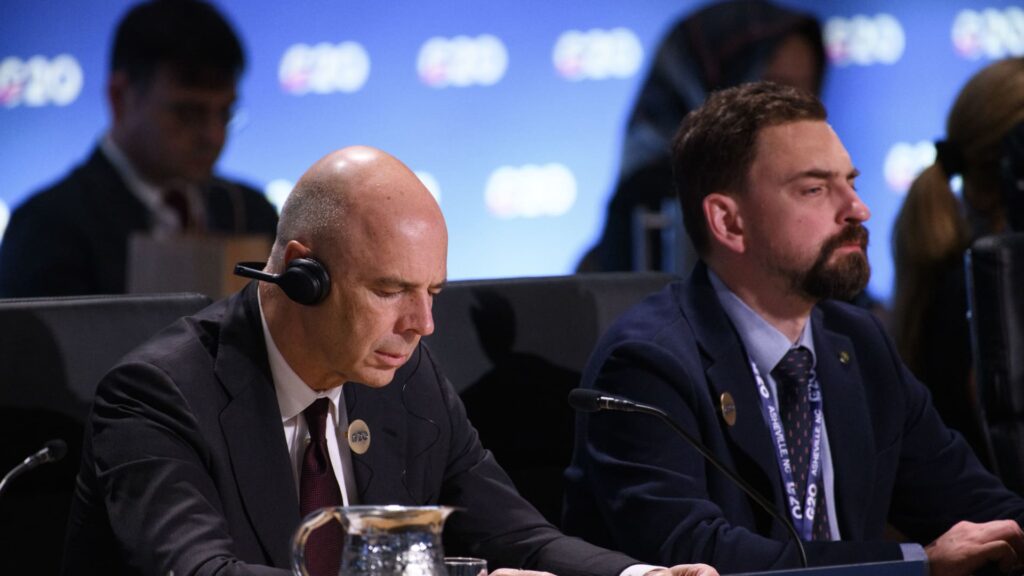
In a critical moment for international diplomacy, Russia’s Finance Minister, Anton Siluanov, made his second in-person appearance at a Group of 20 meeting since the 2022 invasion of Ukraine. Held in Bangkok, Thailand, the meeting brought together finance ministers and central bank governors amid growing tensions surrounding Russia’s ongoing conflict. The participation of Russian officials raises questions about the implications for U.S.-European relations, particularly as the U.S. has taken steps to ease sanctions that have isolated Russia from the global financial system.
| Article Subheadings |
|---|
| 1) Significance of Russia’s Participation |
| 2) Reactions from Global Leaders |
| 3) The Impact on U.S.-Europe Relations |
| 4) Ongoing Global Economic Challenges |
| 5) Next Steps for the G20 |
Significance of Russia’s Participation
The participation of Anton Siluanov in the G20 finance ministers and central bank governors’ meetings is significant in light of the ongoing fallout from Russia’s actions in Ukraine. This marked his return to an international stage where discussions surrounding global financial stability and economic coordination take place. Notably, his presence has become a barometer for measuring the effectiveness of the U.S. in managing its relationships with European allies while also attempting to engage with Russia. The tensions around Russia’s involvement highlight the challenges of cooperation amid conflict, raising critical questions about how far global leaders can go in softening their stances towards a nation that has faced substantial sanctions since the onset of the war.
Reactions from Global Leaders
The reactions from various leaders present at the meeting further illuminate the precarious diplomatic situation. German Finance Minister Lars Klingbeil made headlines when he confronted Siluanov directly about the war, asserting that Moscow must cease its aggression toward Ukraine. Klingbeil’s refusal to take a group photograph with the Russian delegation was symbolic of a broader consensus among European leaders that engaging Russia as a “normal member” of the G20 was unacceptable. After the meetings, he reiterated his position, stating unequivocally, “there will be no pretending that Russia is now returning as a normal member of the G20.” This reflects the prevailing sentiment among Western leaders that Russia’s actions cannot simply be overlooked in favor of business as usual.
The Impact on U.S.-Europe Relations
The U.S. has taken a somewhat different approach by welcoming Russian officials back to finance discussions. This decision poses a challenge for maintaining unity among European allies, who remain staunchly opposed to any semblance of normalization between Russia and the rest of the world until military hostilities cease. The Trump administration had previously introduced a temporary easing of sanctions related to Russian diesel imports, provoking strong reactions from Ukrainian President Volodymyr Zelenskyy and European leaders who warned against signals of tolerance toward Russia’s military endeavors. As the U.S. presidency in the G20 continues, the balancing act between supporting Ukraine and engaging in dialogue with Russia will be closely monitored by both allies and adversaries.
Ongoing Global Economic Challenges
The context of these discussions is laden with additional complexities concerning global economic stability. Australia’s Treasurer Jim Chalmers pointed to the continued disruptions in international shipping and trade, exacerbated by tensions in the Strait of Hormuz and noted that these issues are intricately linked to Russia’s actions in Ukraine. Furthermore, the absence of a joint communique at the conclusion of the meeting highlights the existing rifts among member countries on critical issues such as international trade and the ongoing conflict. The differing positions on economic resilience versus punitive measures against Russia illustrate that while some countries may lean toward dialogue, others remain firm in their opposition to any concessions.
Next Steps for the G20
Looking ahead, the G20 is set to convene again in Miami in December, where leaders will have the opportunity to further address these pressing issues. With significant global challenges such as the Middle East conflicts and rising public debt in advanced economies, leaders will need to strategize collectively on how to navigate the modern economic landscape while deciding how to handle relations with Russia. The meetings in Bangkok laid some groundwork for these discussions, but the ongoing divisions among key players suggest that achieving a unified approach will remain elusive.
| No. | Key Points |
|---|---|
| 1 | Russia’s finance minister made his second G20 appearance amid ongoing tensions due to the invasion of Ukraine. |
| 2 | European leaders, particularly from Germany, emphasize that Russia cannot be treated as a “normal member” of the G20. |
| 3 | U.S. actions toward Russia challenge the cohesion of its alliances with European nations. |
| 4 | Discussions during the meetings reflect deeper global economic challenges linked to political unrest. |
| 5 | The G20 is poised to reconvene to tackle ongoing issues of economic stability and international relations. |
Summary
The recent G20 finance ministers’ meeting in Bangkok underscores the intricate balance of international diplomacy as global leaders confront the ongoing ramifications of Russia’s invasion of Ukraine. With varied perspectives on how to engage with Russia, particularly from European allies, the meeting illustrated the complexities of maintaining a unified front in global economic discussions. The lack of a joint communique signifies persistent divisions among nations, setting the stage for future discussions in December, where leaders will have the opportunity to reassess and strategize on the evolving geopolitical landscape.
Frequently Asked Questions
Question: What is the role of the G20?
The G20 serves as a forum for the world’s major economies, facilitating discussions around global economic stability, trade, and financial markets.
Question: Why is Russia’s participation in the G20 controversial?
Russia’s participation is controversial due to its ongoing military actions in Ukraine, which have drawn widespread condemnation and resulted in numerous sanctions from various countries.
Question: What are the potential implications of easing sanctions on Russia?
Easing sanctions on Russia could undermine international pressure to end military aggression and could send conflicting signals to both allies and adversaries, thereby complicating diplomatic relations.