
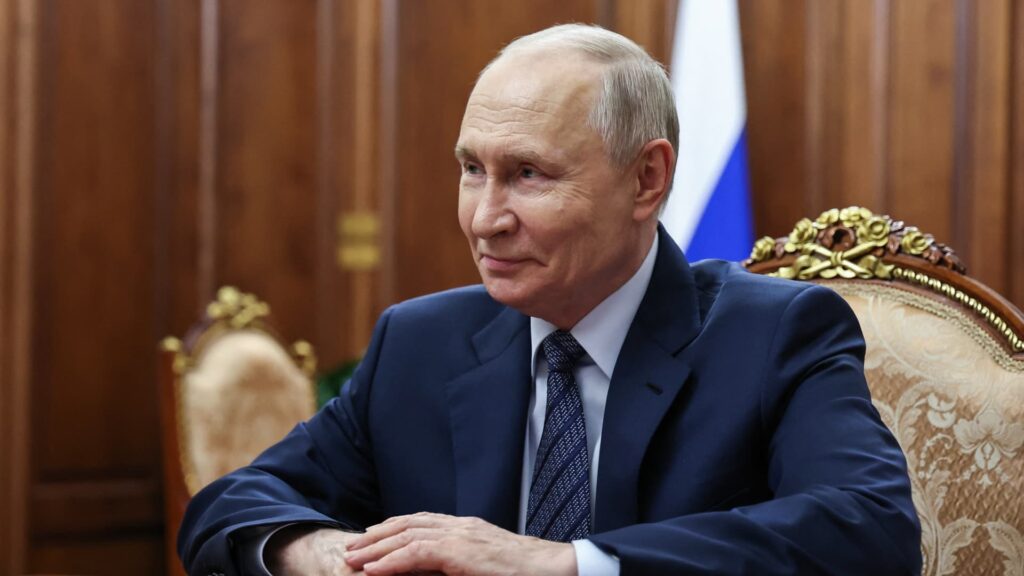
Russia has expressed its appreciation for an invitation extended by the U.S. government for President Vladimir Putin to attend the upcoming G20 summit set to take place in Florida later this year. While Russian officials have acknowledged the offer, they have yet to make a definitive decision on whether or not he will attend. The invitation has sparked considerable backlash in Europe, as countries grapple with the implications of engaging with a leader who has been widely condemned for aggressive military actions, particularly in Ukraine.
| Article Subheadings |
|---|
| 1) Russia’s Response to the U.S. Invitation |
| 2) International Reactions and Concerns |
| 3) Ukraine’s Stance Amid Rising Tensions |
| 4) Diplomatic Efforts and Challenges |
| 5) Implications for Global Relations |
Russia’s Response to the U.S. Invitation
Russian officials have noted their gratitude for the U.S. invitation extended to President Putin to attend the G20 summit scheduled for December in Miami. Kremlin spokesperson Dmitry Peskov stated that they view the offer as kind and worthy of serious consideration. He mentioned that discussions regarding the invitation would take place before any final decision is made. The cautious approach indicates that while Russia may appreciate the invitation, it is also aware of the complex geopolitical context and the potential repercussions of participating in the summit alongside leaders who have publicly denounced its actions in Ukraine.
International Reactions and Concerns
The invitation has raised significant concerns among European governments, with leaders expressing fears that it could be perceived as a validation of Russia’s aggressive policies. Donald Tusk, the Prime Minister of Poland, has articulated that this could encourage Russia to maintain its militaristic stance. Furthermore, Kaja Kallas, the European Union’s foreign policy chief, has underscored her perplexity regarding the U.S. approach, highlighting the mixed messages it sends to the global community about accountability and diplomatic engagement with authoritarian figures. The reactions underscore a broader apprehension that such overtures might undermine efforts to isolate Russia following its military incursion into Ukraine.
Ukraine’s Stance Amid Rising Tensions
As tensions continue to escalate, Ukraine has ramped up its military actions directed at Russian supply chains, specifically targeting oil refineries and logistics hubs. Ukrainian President Volodymyr Zelenskyy has publicly condemned Putin, characterizing him as “patient zero” in the proliferation of warfare and violence. He emphasized that a failure to reach a truce in the immediate future could lead to significant hardships during the harsh winter months ahead. Such military actions are not solely retaliatory but also intended as a strategic move to deter further Russian aggression and signal resilience amid ongoing conflict.
Diplomatic Efforts and Challenges
The pursuit of a diplomatic solution to the conflict has experienced significant setbacks, leading to stalled talks. While recent efforts have seen U.S. negotiators, such as Jared Kushner and Steve Witkoff, engage with Ukrainian leaders, the overarching focus of U.S. foreign policy has shifted towards other global conflicts, particularly in the Middle East. Kallas emphasized the need for a strategic discussion among EU leaders regarding the implications of inviting Putin to the G20 summit. She argued that normalizing relations with leaders instigating wars raises serious ethical concerns and risks exacerbating violence and instability worldwide.
Implications for Global Relations
The potential attendance of Putin at the G20 summit encapsulates the complexities of international relations in a time of heightened geopolitical tensions. The invitation from the U.S. is perceived by some as an attempt to create dialogue with adversarial nations, though critics argue it undermines the global stance against Russia’s actions in Ukraine. The broader implications of this engagement could affect future diplomatic relations, as it may signal to other nations that aggression can be met with acceptance rather than isolation. This situation demands careful attention to the underlying messages sent to both allies and adversaries by engaging with controversial leaders.
| No. | Key Points |
|---|---|
| 1 | Russia has acknowledged the U.S. invitation to President Putin for the upcoming G20 summit. |
| 2 | European leaders express concern that the invitation could encourage Russian aggression. |
| 3 | Ukraine intensifies military actions against Russian logistical operations amidst ongoing conflict. |
| 4 | Diplomatic initiatives face obstacles due to shifting focus within U.S. foreign policy. |
| 5 | The potential engagement with Putin at the G20 raises questions about the normalization of relations with aggressor states. |
Summary
The U.S. invitation to President Putin for the G20 summit, while seen as a diplomatic opportunity, has sparked significant controversy and raised critical questions about international relations and accountability. As leaders in Europe voice their apprehensions over the implications of such outreach amid ongoing aggression in Ukraine, the situation remains delicate. The shifting dynamics in diplomacy underscore the complexities involved in engaging with adversarial states, potentially redefining the landscape of future global negotiations.
Frequently Asked Questions
Question: Why did the U.S. invite Putin to the G20 summit?
The U.S. believes that inviting President Putin to the G20 summit presents an opportunity for dialogue not only between him and President Trump but also with other world leaders, fostering discussions that could lead to positive outcomes.
Question: What concerns have been raised by European leaders regarding the invitation?
European leaders, including Polish Prime Minister Donald Tusk, fear that the invitation may embolden Russia in its aggressive policies and undermine the collective efforts to hold the nation accountable for its actions in Ukraine.
Question: How is Ukraine responding to the current conflict and the invitation?
Ukraine has increased its military activities targeting Russian supply chains while simultaneously expressing concerns about the impacts of ongoing conflict, especially as winter approaches, and has also criticized the normalization of relations with Russia given its aggressive actions.