
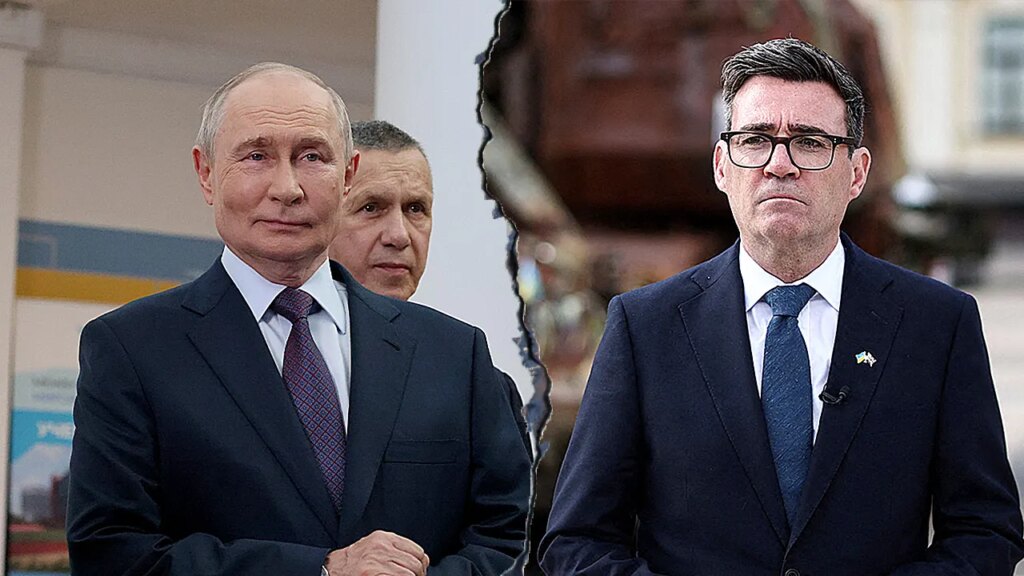
Tensions between Russia and the United Kingdom escalated this week as Russian officials issued warnings about potential military actions targeting British installations. The warnings follow accusations that Ukrainian forces, equipped with British-supplied Storm Shadow missiles, conducted strikes within Russian territory. This situation has raised concerns about the potential for further escalation and the implications for international relations and military strategies in the region.
| Article Subheadings |
|---|
| 1) Russia’s Warnings to the UK |
| 2) Allegations of Targeting Civilian Areas |
| 3) Britain’s Position and Response |
| 4) The Role of Military Equipment |
| 5) Implications for International Relations |
Russia’s Warnings to the UK
On Thursday, the Russian Foreign Ministry issued a stark warning to the United Kingdom, indicating that if British long-range cruise missiles were utilized against targets inside Russia, British military installations could become targets themselves. Maria Zakharova, a spokesperson for the ministry, stated that the British military was “one step away” from being legally implicated in what she described as warfare against civilians. She emphasized that any further military assistance to Ukraine from Britain could lead to “catastrophic consequences” and urged a reevaluation of the UK’s current strategy in the conflict.
This threat represents a significant escalation in rhetoric, reflecting Russia’s increasing frustration with Western support for Ukraine. Zakharova elaborated on the potential implications, stating that the use of British weapons by Ukraine could lead to direct attacks on British military assets, further complicating the already tense situation. This warning highlights the precarious balance of power and the risk of miscalculations that could spiral into larger conflicts.
Allegations of Targeting Civilian Areas
Tensions heightened following an incident reported by Russian state-controlled media, where Ukrainian forces allegedly struck a shopping center in Donetsk, a region under Russian control, using Storm Shadow missiles supplied by the UK. The attack reportedly injured several civilians, including children. The Russian government has characterized this act as an intentional targeting of civilians, which it claims constitutes terrorism. Moscow hinged its accusations on the premise that the provision of such advanced weaponry by Britain implicates it in the conflict at a deeper level.
In response to these events, Zakharova described the situation as a reflection of Ukraine’s disregard for civilian safety, a narrative that Russia has sought to promote in the international community. The Kremlin’s approach aims to rally international support against alleged war crimes while reinforcing its own military objectives. The incidents in Donetsk add to the mounting casualties and humanitarian crises reported in various conflict zones across Ukraine.
Britain’s Position and Response
In light of the escalating Russian threats, Britain’s government has reiterated its commitment to supporting Ukraine. British Prime Minister Andy Burnham visited Ukraine on August 24, on the nation’s Independence Day, and publicly condemned Russia’s threats as “outrageous.” He advocated for continued military support, emphasizing that the UK would not waver despite the risks. The UK Ministry of Defense affirmed that it stands “shoulder to shoulder” with Ukraine, underscoring the resolve of the British government to assist its ally in the face of Russian aggression.
Burnham’s visit also coincided with discussions about potentially revealing sensitive information regarding British components used in long-range missiles. Such discussions are critical as both Ukraine and France are working towards establishing assembly lines for these weapons within Ukrainian territory. The insistence on transparency about military support reflects UK’s broader strategy to bolster Ukraine’s defense capabilities while simultaneously addressing the complexities of international military assistance.
The Role of Military Equipment
The role of military equipment in the ongoing conflict cannot be understated. The SCALP missile system, a variant of the Storm Shadow missile used by Ukraine, can strike targets over 155 miles away, indicative of its long-range capabilities. These missile systems amplify the capabilities of Ukrainian forces and allow them to engage targets deep within Russian-held territories, creating strategic advantages in the face of the ongoing war.
The provision of such advanced weaponry exemplifies the shift in warfare dynamics, where drones and precision-guided munitions have redefined conventional military strategies. The UK’s export of these missiles to Ukraine highlights how Western nations are recalibrating defense policies in response to Russian aggression. Furthermore, it raises questions about the balance of military power in the region and the potential for a broader confrontation should hostilities escalate.
Implications for International Relations
The current situation represents a turning point in international relations, particularly concerning NATO and its response to Russia’s military strategy. Moscow’s warning about targeting British military assets sends a decisive signal that it considers this conflict not just a regional struggle, but a broader confrontation with Western powers. With Russia framing its military presence as a counter to Western ‘aggression,’ the rhetoric suggests a deepening of hostilities that could have regional and global implications.
Western nations, particularly those in NATO, are tasked with navigating a complex dichotomy between supporting Ukraine and avoiding direct conflict with Russia. The current landscape raises questions about the efficacy of diplomacy and whether additional military support will escalate the situation further. There are concerns that ongoing military engagements could culminate in a larger European conflict, necessitating careful strategic planning by NATO allies to avert a potential escalation.
| No. | Key Points |
|---|---|
| 1 | Russia issued a warning about potential strikes on British military targets if the UK continues to support Ukraine with long-range missiles. |
| 2 | Accusations against Ukraine for targeting a civilian area with British-supplied missiles have deepened tensions between Russia and the UK. |
| 3 | British leadership, including Prime Minister Burnham, affirmed continued military support for Ukraine amidst Russian threats. |
| 4 | The SCALP missile system enhances Ukraine’s military capabilities, enabling long-range strikes. |
| 5 | The situation complicates international relations as NATO countries deliberate on their next steps in response to Russian aggression. |
Summary
The evolving dynamics between Russia and the UK illustrate the complexities of international military support amid ongoing conflicts. As Russia issues stern warnings and England reassures its commitment to Ukraine, the prospect of wider conflict looms. The situation underscores the delicate balance required to navigate geopolitical tensions while promoting peace and stability in the region.
Frequently Asked Questions
Question: Why did Russia issue warnings to the UK?
Russia’s warnings stem from the perception that British-supplied missiles have been used against its territory, which it views as a direct provocation and potential justification for military retaliation.
Question: What incident escalated the tensions between Russia and Ukraine recently?
Tensions escalated following accusations that Ukraine struck a shopping center in Russian-controlled Donetsk using British-made Storm Shadow missiles, resulting in civilian injuries.
Question: How has the UK responded to Russia’s threats?
The UK has reaffirmed its commitment to support Ukraine militarily, with leaders condemning Russia’s warnings as outrageous and emphasizing the need for continued defense cooperation.