
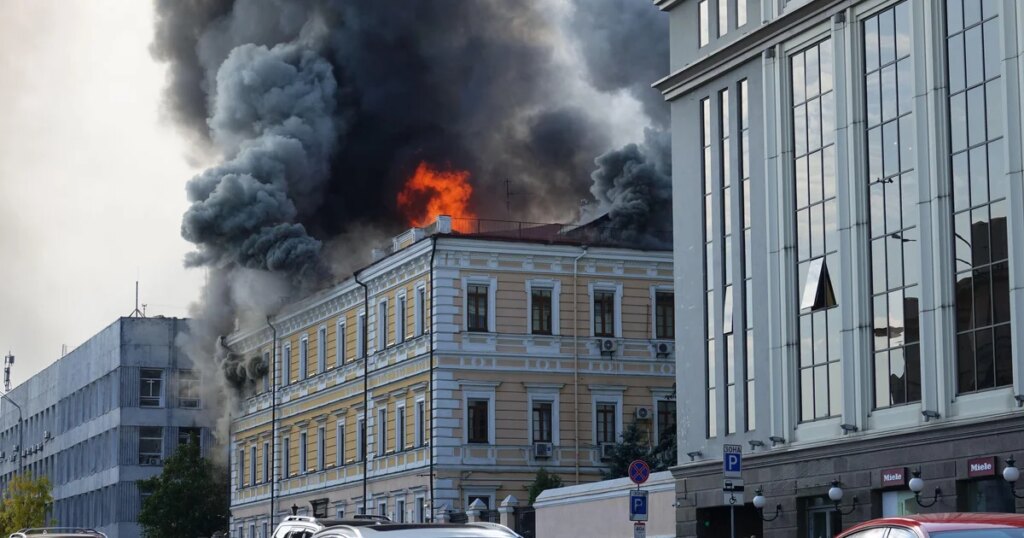
A devastating series of Russian airstrikes across Ukraine has resulted in at least seven fatalities and over 50 injuries, according to official reports. The intense bombardment targeted various civilian locations, including apartment buildings and the National Academy of Sciences of Ukraine in Kyiv, underlining the ongoing brutal ramifications of the war. This military action came on the heels of diplomatic discussions at the United Nations aimed at negotiating an end to the nearly five-year conflict, which has shown little sign of abating.
| Article Subheadings |
|---|
| 1) Overview of Recent Attacks in Ukraine |
| 2) The Impact on Civilians and Infrastructure |
| 3) Diplomatic Efforts and Military Response |
| 4) Changes on the Battlefield |
| 5) Looking Ahead: The Future of the Conflict |
Overview of Recent Attacks in Ukraine
On Monday, Russian forces intensified their aerial campaign, striking multiple key locations within Ukraine, including residential areas and government buildings. Reports indicate that at least seven individuals lost their lives and over 50 were injured in these assaults. The offensive is part of a larger pattern of frequent drone and missile attacks aimed at undermining Ukraine’s capabilities. Notably, the National Academy of Sciences of Ukraine, situated in the capital, Kyiv, was severely affected, showcasing Russia’s strategy of targeting culturally significant landmarks in addition to military sites.
In the previous week, U.N. discussions seeking to advance peace negotiations suggested a temporary glimmer of hope; however, Monday’s attacks have thrown those efforts into disarray. Kremlin spokesperson, Dmitry Peskov, remarked on the slim prospects for rapid progress towards a peace agreement, citing ongoing Ukrainian military activities as a major stumbling block. He stated,
“Ukraine will have to pay a price for the actions that have taken place in recent months.”
The Impact on Civilians and Infrastructure
The recent bombardments have had a devastating effect on civilian life in Ukraine. In the Kyiv region, Russian drone strikes resulted in the deaths of four individuals and injuries to at least eight others. A specific incident in the Shevchenkivskyi district of Kyiv directly claimed the life of a woman as it hit the National Academy of Sciences. In a separate alarming attack, an office center in Dnipro was also struck during working hours, leading to three fatalities.
In addition to human casualties, the attacks have severely damaged critical infrastructure. Reports indicate that a nine-story apartment complex in Kharkiv was struck, injuring dozens, including children. The Russian military claims these strikes are aimed at military objectives, specifically targeting data centers and fuel supply stations, but the civilian toll underscores the indiscriminate nature of the assaults, which frequently disrupt daily life and instill widespread fear among the population.
Diplomatic Efforts and Military Response
Despite ongoing diplomatic efforts at international forums like the United Nations, the situation remains tense. Russian Foreign Minister Sergey Lavrov made inflammatory comments suggesting that Europe and its allies are obstructing peace negotiations that the Kremlin claims to pursue. Amid political tensions, the recent hostilities illustrate the broader geopolitical struggle that not only involves Ukraine but also implicates nations across Europe and NATO.
In terms of military response, Ukraine has implemented a new offensive named Operation Vivaldi along the extensive front lines. They reported modest territorial gains aimed at breaking entrenched Russian positions that have remained unchanged for over a year. As part of these efforts, Ukrainian forces have applied inventive measures, including repurposing old armored vehicles into explosive-laden drones to breach fortified areas held by Russian troops. Notably, Ukrainian President Volodymyr Zelenskyy has stated that it’s crucial to target Russian military infrastructure to impede ongoing threats.
Changes on the Battlefield
The current state of the battlefield has not changed significantly since last year, primarily due to the presence of drones that hamper troop movements. Nonetheless, Ukraine’s Third Army Corps has reported some success, reclaiming approximately 68 square miles of territory. These gains occur in the Donetsk region, where Russia has been attempting to make strategic advances without success.
Furthermore, Russian officials claimed successful operations on their end, asserting they captured several villages. Still, these assertions remain unverified amidst a complex and fluid conflict. Ukraine’s drone capabilities have increasingly targeted Russian supply lines and military assets, which could impact Russia’s operational effectiveness on the front lines.
Looking Ahead: The Future of the Conflict
As the military and diplomatic dimensions evolve, the situation remains dire for civilians caught in the crossfire. The ongoing attacks foreshadow a protracted conflict with significant humanitarian consequences. International observers are left questioning the efficacy of diplomatic interventions as military strategies on both sides evolve and adapt to the realities on the ground.
With each passing day, the landscape of the conflict changes. The sustained airstrikes and counter-offensives underscore a grim reality—the potential for a peaceful resolution appears more elusive amid escalating violence. International pressure for peace and humanitarian relief, alongside a need for accountability, continues to grow as the conflict continues unabated, suggesting significant global ramifications.
| No. | Key Points |
|---|---|
| 1 | Recent Russian airstrikes in Ukraine resulted in at least seven deaths and over 50 injuries. |
| 2 | Strikes targeted civilian infrastructure, including the National Academy of Sciences in Kyiv. |
| 3 | Kremlin spokesperson commented on Ukraine needing to pay a price for its recent military actions. |
| 4 | Ukraine launched Operation Vivaldi, achieving some territorial gains against entrenched Russian forces. |
| 5 | Diplomatic efforts for peace remain challenging amid ongoing military offensives and strategic maneuvers. |
Summary
The escalating violence in Ukraine highlights not only the human cost of this ongoing conflict but also the complex interplay of military strategy and international diplomacy. As Russian airstrikes continue to target civilian areas, the prospects for swift negotiations appear dim. The situation demands urgent attention from the global community to address the tragic consequences impacting innocent lives and to seek pathways towards lasting peace.
Frequently Asked Questions
Question: What is the current state of civilian casualties in Ukraine due to the recent attacks?
As a result of the recent airstrikes, casualties have included at least seven fatalities and more than 50 injuries, highlighting the significant danger to civilian life.
Question: How has the military response of Ukraine evolved in recent months?
Ukraine has launched Operation Vivaldi, aiming to reclaim territory and adapt military tactics, including repurposing older equipment into drone-like weapons to strike Russian fortifications.
Question: What are the diplomatic efforts being made regarding the conflict in Ukraine?
Diplomatic discussions, particularly at the United Nations, have sought to find avenues for peace, but recent escalations have complicated these efforts, raising concerns about their effectiveness.