
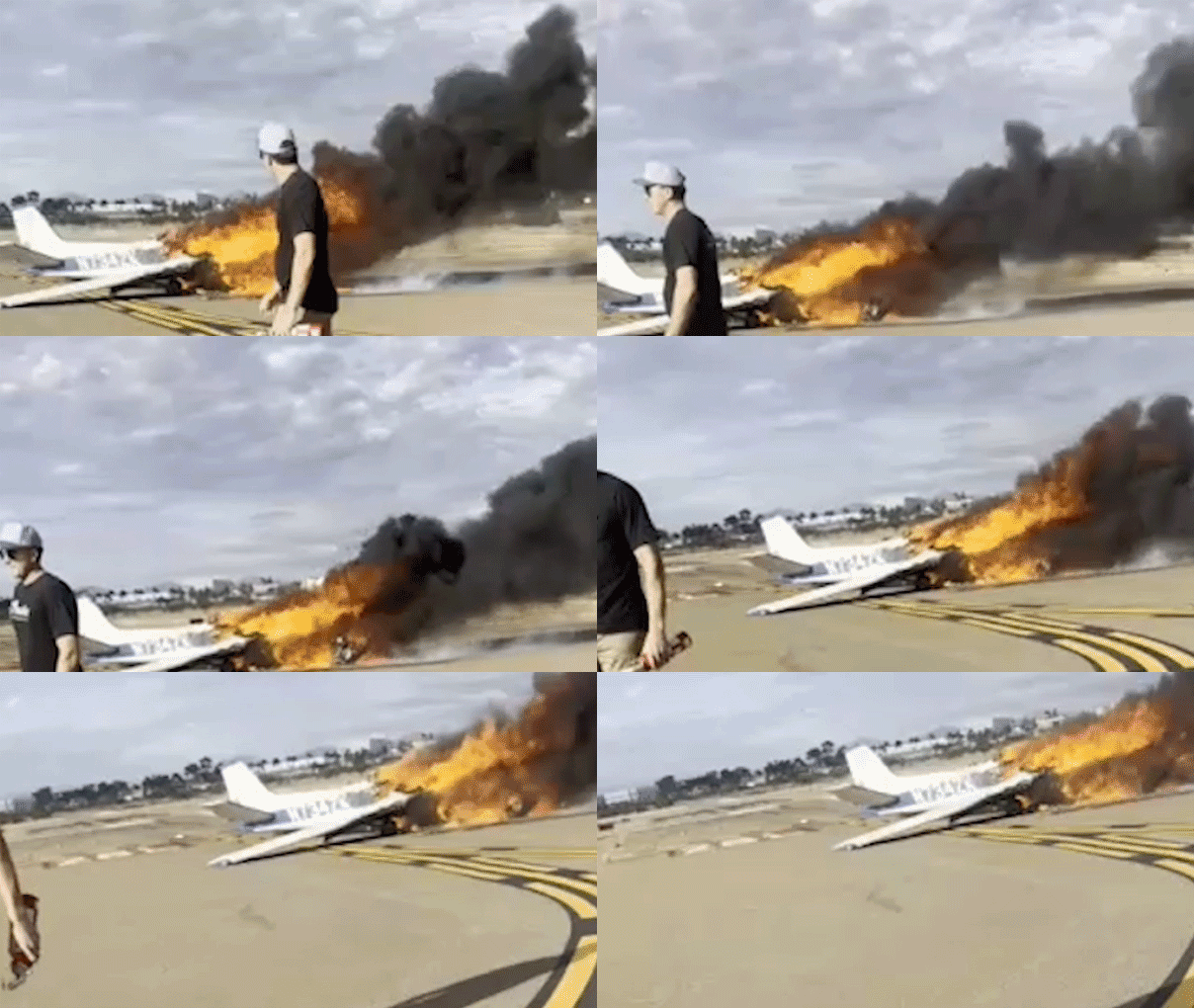
Two people died when a Cessna 172 crashed at Montgomery-Gibbs Executive Airport in San Diego, California, on September 7, 2026. The aircraft crashed during a landing attempt and a post-impact fire produced a large plume of thick, black smoke. Federal investigators are examining the circumstances of the crash, including reports that the aircraft’s left wing dipped before it appeared to stall and spin into the ground.
More than 30 San Diego Fire-Rescue Department personnel responded to the scene. The aircraft was heavily damaged, preventing responders from immediately removing the victims while crews worked to extinguish the flames.
| 1) | Crash during a landing attempt |
| 2) | Fire and emergency response at the airport |
| 3) | Preliminary findings about the aircraft’s movement |
| 4) | Federal investigation and next steps |
| 5) | What remains unknown about the victims and cause |
Crash during a landing attempt
The crash occurred at about 5:15 p.m. local time on Monday, September 7, at Montgomery-Gibbs Executive Airport in San Diego. The aircraft was a Cessna 172 carrying two people, both of whom died. Preliminary information from the Federal Aviation Administration said the plane crashed while landing.
The National Transportation Safety Board said the aircraft impacted terrain on airport property during a go-around. A go-around is an aborted landing approach in which a pilot returns the aircraft to an altitude and configuration for another attempt. Investigators will determine why the landing was discontinued and what happened during the maneuver.
Fire and emergency response at the airport
A post-impact fire followed the crash, sending thick, black smoke above the wreckage. Video from the scene showed the aircraft engulfed in flames and heavily damaged. Fire crews focused first on controlling the fire because the condition of the wreck made it impossible to immediately extract the victims.
More than 30 San Diego Fire-Rescue Department personnel responded. Brian Raines, a department public information officer cited in local coverage, said the aircraft was heavily damaged and that responders had to concentrate on extinguishing the flames. Candace Hadley, another department public information officer, expressed sympathy for the victims’ families.
“Our hearts and thoughts go out to the crash victims’ families.”
Preliminary findings about the aircraft’s movement
An FAA preliminary notice indicated that the aircraft’s left wing dipped before the plane appeared to stall and spin into the ground. That information is preliminary and does not establish the final cause of the crash.
The NTSB’s account places the impact during a go-around on airport property. Investigators will compare the preliminary flight information with the wreckage, witness accounts, airport records and any available operational data to determine the sequence of events.
Federal investigation and next steps
The NTSB is leading the investigation, with the FAA assisting. An NTSB investigator was expected to travel to the scene on Tuesday, September 8. The initial work includes documenting the crash site, examining the damaged Cessna and collecting evidence relevant to the aircraft’s condition and flight.
After the on-site examination, the aircraft is expected to be moved to a secure facility for further evaluation. The agencies have not announced a final explanation for the crash, and additional updates will depend on the continuing investigation.
What remains unknown about the victims and cause
Authorities confirmed that two people were aboard the Cessna 172 and that both died, but the available preliminary information did not identify them publicly. Officials also have not established whether a mechanical problem, flight condition, pilot decision or another factor caused the aircraft to lose control.
The circumstances surrounding the attempted landing remain under review. A final determination will require investigators to reconstruct the aircraft’s movement, assess the wreckage and evaluate all relevant evidence before assigning a probable cause.
| No. | Key Point |
|---|---|
| 1 | Two people died in the September 7 crash. |
| 2 | The Cessna 172 crashed during a go-around at Montgomery-Gibbs Executive Airport. |
| 3 | A post-impact fire caused heavy damage and produced thick smoke. |
| 4 | Preliminary information said the left wing dipped before an apparent stall and spin. |
| 5 | The NTSB is leading the investigation, with the FAA assisting. |
Summary
The fatal San Diego crash involved a Cessna 172 that struck terrain during a go-around at Montgomery-Gibbs Executive Airport. Emergency crews extinguished the resulting fire, while federal investigators began documenting the wreckage and examining the circumstances of the attempted landing. The cause and the identities of the two victims had not been publicly established in the preliminary information available.
Frequently Asked Questions
When did the San Diego plane crash occur?
The crash occurred at about 5:15 p.m. local time on Monday, September 7, 2026.
Where did the crash happen?
The Cessna 172 crashed on airport property at Montgomery-Gibbs Executive Airport in San Diego, California.
Who is investigating the crash?
The National Transportation Safety Board is leading the investigation, with the Federal Aviation Administration assisting.
What caused the aircraft to crash?
A final cause has not been determined. Preliminary information indicated that the left wing dipped and the aircraft appeared to stall and spin during a go-around.