
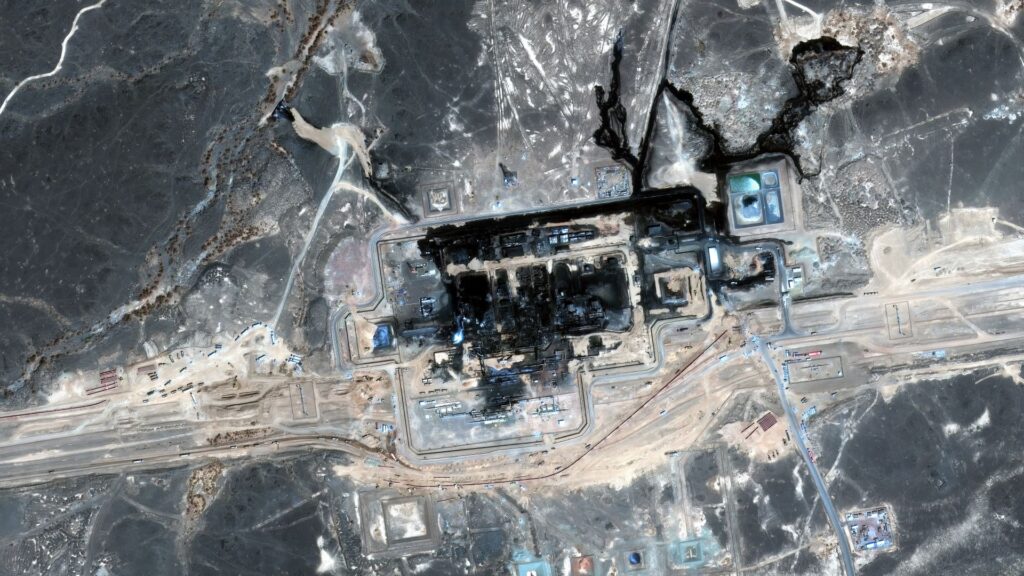
Recent drone attacks targeting Saudi Arabia’s East-West pipeline have led to significant damage and an immediate closure of the crucial oil transport system. Satellite imagery reveals extensive fire damage and blackened areas surrounding the pipeline station, underscoring the strategic importance of this network. The attacks, executed by drones launched from Iraq, have heightened concerns over energy security and global oil prices as the region experiences escalating tensions involving Iran and its proxy groups.
| Article Subheadings |
|---|
| 1) Overview of the Attack |
| 2) Significance of the East-West Pipeline |
| 3) Regional Implications of the Drone Strikes |
| 4) Global Oil Market Reactions |
| 5) Future Projections and Concerns |
Overview of the Attack
On September 11, 2026, a series of drone attacks targeted the East-West pipeline in Saudi Arabia, leading to the temporary suspension of the oil transport system. Satellite images released by Vantor highlighted the extent of the fire damage and the charred landscape surrounding the pumping station. The attacks resulted in injuries to several individuals, emphasizing the human cost of escalating military confrontations in the region. The strikes originated from Iraq, where tensions between militants and the Saudi government have been on the rise.
Saudi Arabia’s decision to close the approximately 750-mile pipeline, known as Petroline, was a precautionary measure initiated against the escalating threats posed by these drone assaults. The government is collaborating with security forces across the region to enhance defenses against future attacks. The closure of the pipeline not only disrupts oil transport but also raises concerns regarding the economic stability of a nation heavily reliant on its crude oil exports.
Significance of the East-West Pipeline
The East-West pipeline is a vital artery for Saudi Arabia, facilitating the transport of crude oil from the oil-rich region of Abqaiq to the Yanbu port on the Red Sea. This strategic infrastructure is crucial for shifting shipments away from the politically sensitive Strait of Hormuz, where military conflicts have historically posed threats to maritime shipping routes. Following recent expansions, the pipeline boasts a designed capacity of 7 million barrels per day, reflecting its importance to the kingdom’s oil production strategy.
Saudi Arabia’s reliance on the East-West pipeline grew in parallel with escalating tensions with Iran, making the protection of this infrastructure paramount. Recent drone strikes by Yemen’s Iran-backed Houthis serve as a stark reminder of the vulnerabilities associated with such critical networks. As the geopolitical landscape continues to shift, the military protection of vital oil infrastructure becomes increasingly essential for ensuring national and economic security.
Regional Implications of the Drone Strikes
The drone attacks on the East-West pipeline not only disrupt Saudi oil exports but also signify a broader trend of increasing hostilities in the Middle East, particularly involving Iran and its allied groups. The Houthis have intensified their campaign against Saudi targets, suggesting coordinated military efforts fueled by regional tensions. These attacks may further destabilize the region, as military engagements could escalate and impact neighboring countries.
Significantly, the Houthis’ advances toward control over strategic maritime choke points, such as the Bab el-Mandeb Strait, pose substantial risks to global shipping lanes and energy markets. Many analysts argue that if the Houthis continue their aggressive tactics, the potential for broader conflicts could jeopardize international trade and escalate energy costs, creating a ripple effect felt globally.
Global Oil Market Reactions
The aftermath of the drone strikes has already been felt in international oil markets, as uncertainty about supply leads to fluctuations in crude prices. Following the attacks, Brent crude futures surged by 3.3%, reaching $108.02 per barrel, continuing a trend of rising prices that had seen a more than 20% increase in the preceding month. Similarly, U.S. West Texas Intermediate crude saw a nearly 3% increase, hitting $102.98, signifying concerns about potential future supply disruptions.
As oil prices climb, many experts warn of the potential for inflationary pressures worldwide, given that energy costs influence the prices of goods and services. Markets will continue to react sensitively to developments in Saudi Arabia, as escalated conflict could lead to further disruptions in supply chains and increased energy scarcity. The current dynamics signify the volatility linked to geopolitical tensions, with oil markets poised for further turbulence as this situation evolves.
Future Projections and Concerns
As the region navigates the tensions stemming from military escalations, analysts are closely monitoring the implications for both local and global energy markets. The sustained threats posed by drone attacks suggest that future assaults on critical oil infrastructure are conceivable, raising alarms for Saudi Arabia and its allies. The kingdom may need to bolster military defenses around its energy facilities to mitigate ongoing risks.
Moreover, there is a growing recognition that the geopolitical landscape will require strategic maneuvering by Saudi officials, necessitating new alliances and negotiations to counterbalance Iranian influence in the region. Policymakers will have to consider these developments in their planning, ensuring that energy security remains a top priority amid an unpredictable security environment.
| No. | Key Points |
|---|---|
| 1 | Drone attacks on Saudi’s East-West pipeline led to its temporary closure. |
| 2 | The East-West pipeline is critical for transporting Saudi oil, avoiding the Strait of Hormuz. |
| 3 | Increased tensions in the Middle East could destabilize regional security and impact oil supply. |
| 4 | Oil prices have reacted sharply to supply concerns, with Brent and WTI rising significantly. |
| 5 | Future military strategies may be required to protect energy infrastructure from ongoing threats. |
Summary
The recent drone attacks on Saudi Arabia’s East-West pipeline have sparked significant concerns over energy security in the region and the global oil market. The closure of this vital artery for crude oil transport highlights the ongoing risks posed by regional conflicts, particularly those involving Iran-backed militant groups. As oil prices react to supply uncertainties, the broader geopolitical implications underline the need for enhanced security measures and cautious diplomatic strategies to navigate the evolving landscape.
Frequently Asked Questions
Question: What happened during the drone attack on the East-West pipeline in Saudi Arabia?
The drone attacks resulted in temporary closure of the pipeline, which is essential for transporting crude oil across the country, causing significant fire damage and injuries.
Question: Why is the East-West pipeline significant for Saudi Arabia?
It serves as a critical transport route for oil exports, allowing the country to bypass the politically volatile Strait of Hormuz, thereby protecting its energy supplies from regional conflicts.
Question: How have global oil prices reacted to the incidents in Saudi Arabia?
Global oil prices have surged in response to the heightened risk and potential supply disruptions caused by the drone attacks, leading to a significant increase in benchmarks like Brent crude and West Texas Intermediate.