
The ongoing conflict in the Middle East continues to evoke strong reactions worldwide, and recent comments made by New York City Mayor Zohran Mamdani have sparked significant controversy. Following the tragic attack on Israel on October 7, 2023, which resulted in numerous casualties and hostages, Mayor Mamdani’s statement focused primarily on the plight of Palestinians rather than the immediate events surrounding the attacks. This has led to criticism from various political figures, with notable silence from key Democratic leaders in Congress, further compounding the tension surrounding the already fraught discourse on Middle Eastern politics.
| Article Subheadings |
|---|
| 1) Overview of Mayor Mamdani’s Statements |
| 2) Political Reactions and Backlash |
| 3) The Jewish Community’s Perspective |
| 4) Statements from Democratic Leaders |
| 5) Implications for Future U.S. Policy |
Overview of Mayor Mamdani’s Statements
On October 7, 2023, the world witnessed a significant attack on Israel, primarily orchestrated by Hamas, which left over 1,100 Israelis dead and more than 250 taken hostage. Amidst this backdrop, Mayor Zohran Mamdani made remarks that sparked heated debate. His comments, delivered on social media platform X, not only referred to the immediate violence inflicted on Israel but also highlighted the ongoing humanitarian crisis in Gaza. He stated, “The suffering did not begin nor end that day. It instead continued through the Israeli government’s devastating, ongoing genocide in Gaza.” According to Mayor Mamdani, the conflict has resulted in the deaths of more than 74,000 Palestinians, including over 21,000 children, while mentioning that more than 1,400 Palestinians had been killed since a supposed ceasefire was announced.
Political Reactions and Backlash
Mamdani’s remarks quickly drew ire from various quarters, with at least one prominent figure, Representative Dan Goldman, publicly condemning the mayor’s statements. Goldman characterized Mamdani’s comments as “reprehensible” and accused him of distorting the reality surrounding the traumatic events of October 7. He accused the mayor of making disputed allegations that could further inflame tensions and sentiments among both Jewish and non-Jewish communities. The political environment surrounding these comments has been particularly charged, given the timing and significance of the anniversary of the attack, raising questions about the role of elected officials in navigating sensitive issues such as these.
The Jewish Community’s Perspective
New York City is home to a substantial Jewish population, with approximately 1 million Jewish residents according to a 2023 study by the UJA-Federation of New York. However, Mamdani notably failed to acknowledge the grief and pain experienced by this community in the wake of the October 7 attacks. This omission speaks volumes about the ongoing tensions between different communities within the city and reflects broader societal rifts regarding the Israeli-Palestinian conflict. Many in the Jewish community voiced their displeasure over Mamdani’s lack of sensitivity to their suffering, especially as they reflect on one of the deadliest days in modern Jewish history.
Statements from Democratic Leaders
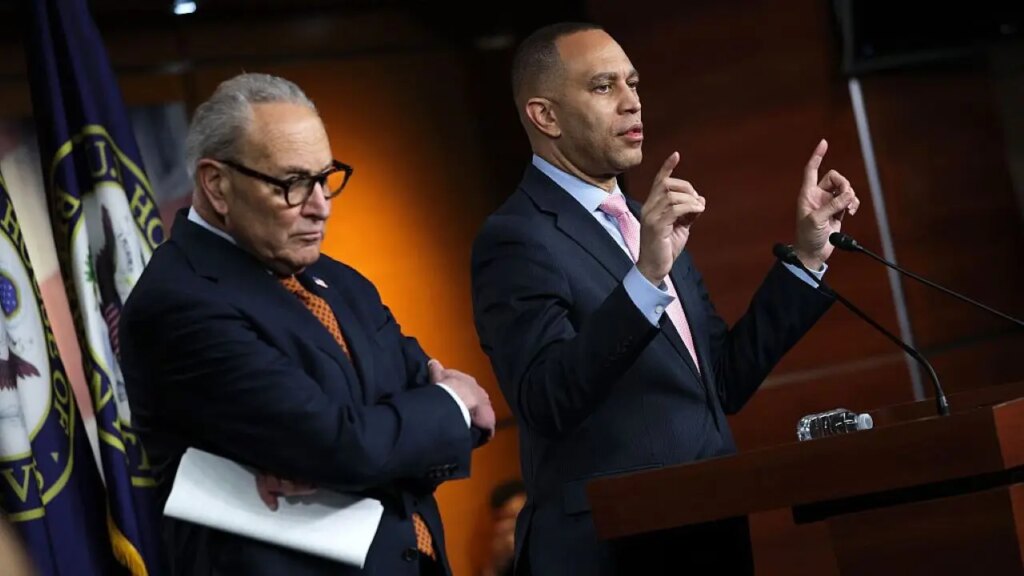
While turmoil ensued over Mamdani’s comments, notable figures such as Senate Minority Leader Chuck Schumer and House Minority Leader Hakeem Jeffries remained silent on the issue. Schumer, who is Jewish, remarked on the severity of the attacks in his own statements by labeling October 7 as the “single deadliest day in Jewish history since the Holocaust.” He emphasized the need for a balanced approach, reiterating the commitment to both the security of Israel and the welfare of Palestinians. Meanwhile, Jeffries acknowledged the ongoing suffering in the Middle East, stating that “the horrific death of Palestinian civilians” must never be allowed to occur again. However, both leaders’ more subdued tone stands in stark contrast to the passionate expressions from Mamdani and Goldman, indicating the complexity of navigating Jewish and Palestinian narratives within a single political framework.
Implications for Future U.S. Policy
The ongoing discourse sparked by Mamdani’s remarks raises significant questions around U.S. foreign policy concerning Israel and Palestine. Many Democratic leaders, including Jeffries, discussed the need for a fundamental shift in American policy toward the creation of a Palestinian state. “To end the vicious cycle of bloodshed,” he stated, “we must commit to the creation of an independent Palestinian state to provide dignity, respect and self-determination for the Palestinian people.” This sentiment reflects a growing divide within the Democratic Party, as some members call for increased accountability from Israel while others remain staunchly supportive of traditional alliances. Potential reforms in U.S. foreign policy could shape not only future relations with Israel but also impact dialogue in the international context surrounding the Israeli-Palestinian conflict.
| No. | Key Points |
|---|---|
| 1 | Mayor Mamdani focused on the Palestinian plight in his commentary about the October 7 attacks. |
| 2 | Criticism of Mamdani’s remarks came from various political figures, notably Dan Goldman. |
| 3 | The response from the Jewish community indicates increased sensitivity to political discourses surrounding their experiences. |
| 4 | Key Democratic leaders, including Chuck Schumer and Hakeem Jeffries, offered more conservative viewpoints in their statements. |
| 5 | This controversy may impact future U.S. policy toward Israel and Palestine. |
Summary
The backlash against Mayor Zohran Mamdani highlights the complexity and sensitivity of discussions surrounding the Israeli-Palestinian conflict, particularly within diverse communities like New York City. While Mamdani’s comments illustrate a perspective focused on Palestinian suffering, many see a failure to balance recognition of the Jewish community’s trauma. The silence from prominent Democratic leaders also underscores the intricacies involved in navigating this multifaceted political landscape. As discussions about U.S. policy in the Middle East evolve, the response to these incidents may set a precedent for future interactions and involve re-evaluating America’s role in fostering peace in the region.
Frequently Asked Questions
Question: Why did Mayor Mamdani’s comments provoke so much controversy?
His comments primarily emphasized the suffering of Palestinians while downplaying the immediate impact of the October 7 attacks on Israel, leading to accusations of insensitivity toward the Jewish community’s trauma.
Question: What was the reaction from the Jewish community regarding Mamdani’s statements?
Many members of the Jewish community expressed dissatisfaction and hurt over Mamdani’s comments, feeling that he failed to recognize their suffering during a time of significant loss.
Question: How might this situation affect U.S. foreign policy in the Middle East?
The controversy has opened up discussions around a potential shift in U.S. foreign policy, particularly regarding support for Palestinian statehood and addressing the humanitarian crisis in Gaza.