
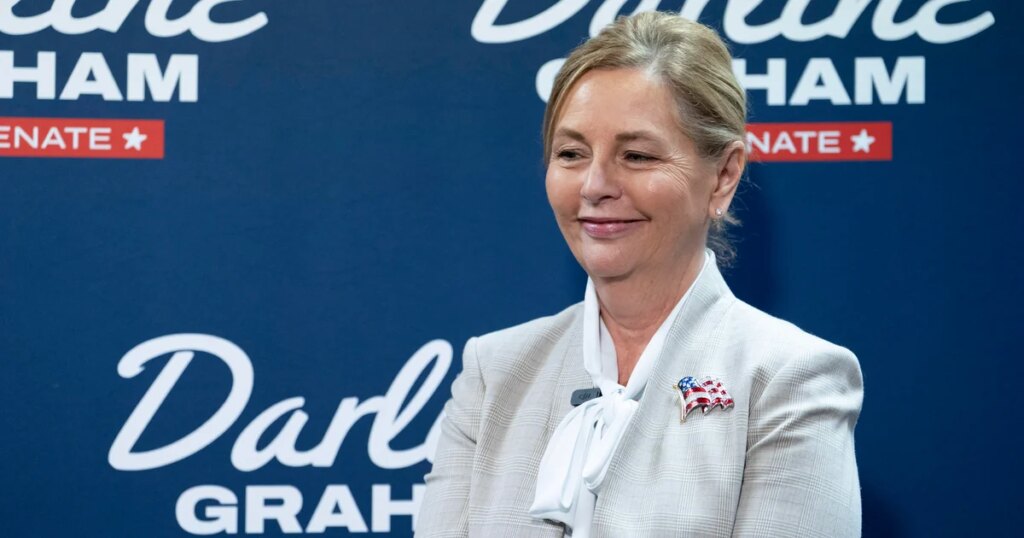
In a significant political event, Darline Graham emerged victorious in the Republican Senate runoff in South Carolina, defeating fellow party member Ralph Norman. This election follows the untimely death of her brother, former Senator Lindsey Graham, who previously held the seat and was seeking reelection. The race has garnered considerable attention, particularly due to the involvement of former President Donald Trump, who actively campaigned for Darline Graham in her bid to secure a full term as senator.
| Article Subheadings |
|---|
| 1) Background on the Special Election |
| 2) The Runoff Race Dynamics |
| 3) Trump’s Influence on the Election |
| 4) Implications of the Victory |
| 5) Future Election Prospects |
Background on the Special Election
The special election was called following the unexpected passing of Lindsey Graham, who served as a prominent figure in South Carolina politics for four terms. Graham died last month, prompting immediate speculation regarding his successor. South Carolina Governor Henry McMaster swiftly appointed Darline Graham to fill her brother’s seat temporarily, ensuring representation until the newly elected senator assumes office. Voters have since faced the critical decision of selecting a candidate to serve a full six-year term, with the special primary held on August 11.
In the initial primary election, results indicated a competitive race where Darline Graham garnered nearly 33% of the vote, while Ralph Norman followed closely with almost 25%. Since neither candidate obtained the necessary majority of 50%, a runoff election became essential, setting the stage for heightened political engagement and campaigning in the run-up to the final vote.
The Runoff Race Dynamics
As the runoff approached, the dynamics of the race revealed contrasting campaigns and approaches to leadership. Darline Graham, despite her relatively limited political experience, positioned herself as a pragmatic leader, emphasizing her problem-solving abilities. Citing her extensive career history with the South Carolina Commission for the Blind as evidence of her dedication and commitment to service, she asserted her readiness to continue her brother’s legacy while crafting her own political identity.
In contrast, Ralph Norman, a real estate developer and current House representative, adopted a more traditional conservative narrative, labeling Graham as an “unknown candidate.” At 73 years old, he drew on his legislative experience and emphasized a clear distinction between his qualifications and those of his opponent. The candidates’ contrasting styles came to a head during the campaign debates, notably when Darline Graham faced scrutiny for her limited knowledge on specific national security issues, a topic that is sensitive and critical for voters.
Trump’s Influence on the Election
Former President Donald Trump played a pivotal role in shaping the outcomes of the runoff. His endorsement of Darline Graham proved to be a significant factor in her campaign strategy, as he actively participated in rallies and provided logistical and financial support. Reports indicate that Trump’s political action committee contributed over $800,000 towards outreach efforts targeting South Carolina voters, further solidifying his backing of her candidacy.
During a campaign event, Trump expressed deep personal support for Graham by highlighting her strong familial bond with her brother, asserting, “I think Lindsey respected Darline more than any other person he knows, including me.” This endorsement resonated particularly well among Republican voters, who have historically aligned with Trump’s influence in South Carolina, a state he won by 18 points in the previous election cycle. The former president’s high visibility and rally presence undoubtedly enhanced Graham’s appeal to the electorate.
Implications of the Victory
The successful outcome for Darline Graham not only fulfills her immediate ambition to secure the Senate seat but also represents a continuation of Republican control in South Carolina. The victory sets the stage for her upcoming challenge against Dr. Annie Andrews, the Democratic nominee who emerged from her own primary earlier this summer. Observers anticipate a competitive contest; however, historical trends suggest a substantial advantage for Graham as South Carolina voters have not elected a Democrat to the Senate in over two decades.
In her victory speech, Graham expressed gratitude to her supporters and acknowledged the critical role Trump’s backing played in her success. She stated, “Our victory would not have been possible without you, and we are truly grateful.” The sentiment reflects a communal acknowledgment of the broader support network her candidacy received during a key political moment.
Future Election Prospects
Looking ahead, the upcoming general election in November will test Darline Graham’s ability to attract a broader coalition of voters beyond the Republican base. The evolving political landscape in South Carolina, combined with her commitment to addressing constituents’ concerns, will be scrutinized as she charts her path forward. Given her familial ties and shared public service experience, Graham aims to leverage her brother’s legacy while presenting herself as a capable and relatable candidate who can successfully advocate for her state in the Senate.
As the race unfolds, it will be essential for both campaign teams to engage effectively with voters, addressing pressing issues that dominate public discourse and shaping the future of South Carolina’s political representation.
| No. | Key Points |
|---|---|
| 1 | Darline Graham won the South Carolina Republican Senate runoff to fill the seat of her late brother, Lindsey Graham. |
| 2 | Former President Trump endorsed Graham and played a significant role in her campaign strategy. |
| 3 | Graham’s victory sets a stage for a November contest against the Democratic nominee Annie Andrews. |
| 4 | Both candidates in the runoff presented contrasting visions for South Carolina’s future, focusing on experience and approach to governance. |
| 5 | South Carolina’s political history suggests a strong likelihood of maintaining Republican control in the Senate seat. |
Summary
The victory of Darline Graham in the Republican Senate runoff marks a pivotal moment for both her political future and South Carolina’s representation in the Senate. The dynamics of this election highlight the indelible influence of legacy, party support, and endorsers, particularly the former president, who played a crucial role in shaping voter perceptions. As Graham prepares for the general election against Dr. Annie Andrews, the political landscape will be closely monitored as South Carolinians engage with the candidates and the issues that resonate most.
Frequently Asked Questions
Question: Who succeeded Senator Lindsey Graham after his death?
After the passing of Senator Lindsey Graham, his sister, Darline Graham, was appointed by Governor Henry McMaster to serve out the remainder of his Senate term.
Question: What role did Donald Trump play in Darline Graham’s campaign?
Former President Donald Trump endorsed Darline Graham and significantly influenced her campaign by hosting rallies and providing financial backing through his political action committee.
Question: What are the implications of Graham’s runoff victory?
Darline Graham’s victory in the runoff solidifies her position for the upcoming general election, and it suggests a continuation of Republican control in the South Carolina Senate seat, given the state’s historical voting patterns.