
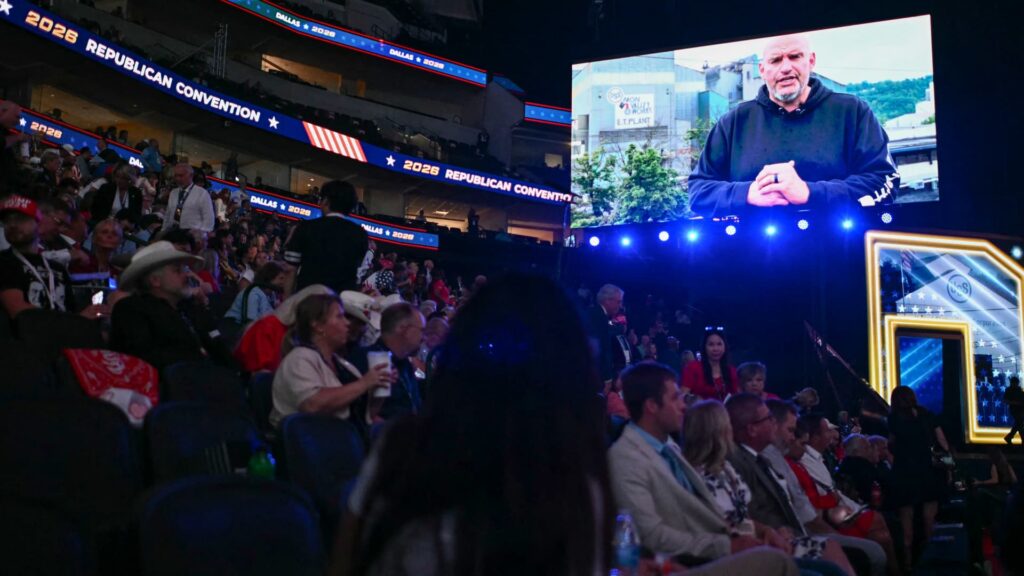
In a surprising turn of events, Democratic Senator John Fetterman of Pennsylvania made a notable appearance at the Republican National Midterm Convention held on September 9, 2026. During a video address, Fetterman identified himself as a “common sense Democrat,” emphasizing his willingness to collaborate with Republicans on critical issues like the steel industry. His unexpected participation in an event traditionally aligned with the GOP throws light on his evolving political stance and the implications it has for his party loyalty as he approaches his campaign for re-election in 2028.
| Article Subheadings |
|---|
| 1) Fetterman’s Unexpected Appearance at GOP Event |
| 2) The Political Landscape: A Shift in Alliances |
| 3) Public Perception and Approval Ratings |
| 4) Fetterman’s Criticism of the Democratic Party |
| 5) Future Implications for Fetterman’s Political Career |
Fetterman’s Unexpected Appearance at GOP Event
On September 9, 2026, Senator John Fetterman delivered a surprising video message during the Republican National Midterm Convention in Dallas, Texas, often referred to as “Trumpapalooza.” The event primarily celebrated the endeavors of former President Donald Trump, making Fetterman’s presence particularly noteworthy. The senator opened by affirming his Democratic affiliation while simultaneously critiquing the more extreme elements within his party and declaring his commitment to “common sense” values. This display of defiance towards typical party lines has caught the attention of political analysts and constituents alike.
Fetterman’s address was not merely a token gesture but a clear strategic move aimed at bridging divides, particularly in the context of Pennsylvania’s economic reliance on the steel industry. Speaking from U.S. Steel’s Edgar Thomson plant, his message underscored his intention to collaborate with Republicans like Dave McCormick, the state’s other senator. Fetterman stressed the importance of defending the “steel way of life” in Pennsylvania, a stance likely aimed at appealing to a broader audience during turbulent political times.
The Political Landscape: A Shift in Alliances
Fetterman’s recent actions signal a significant shift in the political landscape. Since taking office in 2023, he has positioned himself uniquely within a predominantly Democratic administration, frequently aligning himself with Republican ideals in specific areas, particularly regarding economic concerns in Pennsylvania. This realignment raises questions about his allegiance to the Democratic Party, especially with his growing rapport with Republican figures such as McCormick.
This unexpected behavior, once unthinkable for a sitting Democratic senator, may reflect a broader attempt to navigate an increasingly polarized political environment. His outreach could also be a calculated risk aimed at gathering support from moderates and conservatives, as he positions himself as accessible and willing to cooperate beyond party lines. As the 2028 election nears, Fetterman’s approach may serve as a template for other politicians seeking to maintain or regain favor amidst dissent and division.
Public Perception and Approval Ratings
Public opinion surrounding John Fetterman has shown signs of volatility since his election. Polls conducted recently indicate a significant drop in approval ratings among Democratic voters, who feel increasingly alienated from his actions and affiliations. Meanwhile, his standing within Republican circles appears to be increasing, as evidenced by his invited participation at the GOP event.
While many Democrats criticize Fetterman for his approach, citing a lack of loyalty to Democratic values, others point to his ability to appeal to a broader audience as a potential strength. This dichotomy highlights the ongoing struggle within the party to maintain unity while addressing pressing issues, particularly in battleground states like Pennsylvania, where economic considerations often outweigh strict party allegiance.
With increasing engagement from conservative media and a continuous presence on platforms typically ignored by Democrats, Fetterman is reshaping how Democratic politicians might interact with and approach the Republican base. This trend raises concerns regarding the future coherence of the Democratic Party and how it aims to navigate the political challenges ahead.
Fetterman’s Criticism of the Democratic Party
Throughout his tenure, Fetterman has not shied away from critiquing the Democratic Party. His remarks during the GOP convention resonate with a broader sentiment among some constituents who feel that the party is straying from centrist principles. Fetterman has positioned himself as a voice for those who rejects both extreme leftist ideology and traditional Democratic positions, which he views as increasingly out of touch with the American populace.
Moreover, Fetterman’s rebuttal of a recent Wall Street Journal article discussing his propensity to embrace conservative media narratives sheds light on his growing estrangement from traditional Democratic leaders. He dismissed the piece as “lies” and “smears,” yet this defensive posture reflects the pressure he faces from both sides of the aisle—criticism from the left and skepticism from the right. This critique may counteract his attempts at building bipartisan relationships and could hinder his political ambitions heading into the next election cycle.
Future Implications for Fetterman’s Political Career
The implications of John Fetterman’s recent actions extend far beyond his appearance at the Republican convention. As he continues to carve out a unique political identity that emphasizes moderation and bipartisanship, he risks alienating core Democratic voters who expect adherence to party principles. The 2028 election cycle looms large, with critical decisions ahead regarding his political strategies and networking efforts.
Fetterman’s trajectory will undoubtedly be difficult to predict as he balances the demands of his constituents while navigating the complex dynamics of party loyalty versus political pragmatism. His ability to remain relevant may hinge on ongoing collaborations with Republican leaders like Dave McCormick as well as his willingness to address domestic concerns that resonate with Pennsylvania voters. Ultimately, Fetterman’s actions may shape not only his political future but also the evolving narrative around party affiliation and cooperation in an increasingly divided nation.
| No. | Key Points |
|---|---|
| 1 | Senator Fetterman appeared unexpectedly at a Republican event, emphasizing bipartisanship. |
| 2 | His comments challenged extreme political views within both parties. |
| 3 | Fetterman’s approval ratings among Democrats have declined while rising within the GOP. |
| 4 | He has publicly criticized the Democratic Party and asserted his independence. |
| 5 | Fetterman’s future political ambitions may be impacted by his current strategies. |
Summary
The unexpected actions of Senator John Fetterman serve as a pivotal moment in his political career, highlighting his willingness to engage in cross-party cooperation. However, this approach also raises pressing questions regarding his alignment with the Democratic Party and his future electoral prospects. As he navigates through the tensions of party loyalty and public perception, Fetterman’s political landscape will continue to evolve, potentially reshaping conversations around affiliation, bipartisanship, and effective governance in today’s polarized climate.
Frequently Asked Questions
Question: Why did Fetterman attend the Republican National Midterm Convention?
Senator John Fetterman attended the Republican National Midterm Convention to present a message of bipartisanship and common sense values, addressing key issues like the steel industry that are vital to Pennsylvania.
Question: What has been the response from Democrats regarding Fetterman’s actions?
Reactions from Democrats have been mixed, with some expressing concern over his growing closeness to Republicans, while others appreciate his willingness to engage with a broader political spectrum.
Question: How have Fetterman’s approval ratings changed since his election?
Fetterman’s approval ratings among Democrats have declined since taking office, while his approval has increased among Republican constituents, indicating a significant shift in public perception.