
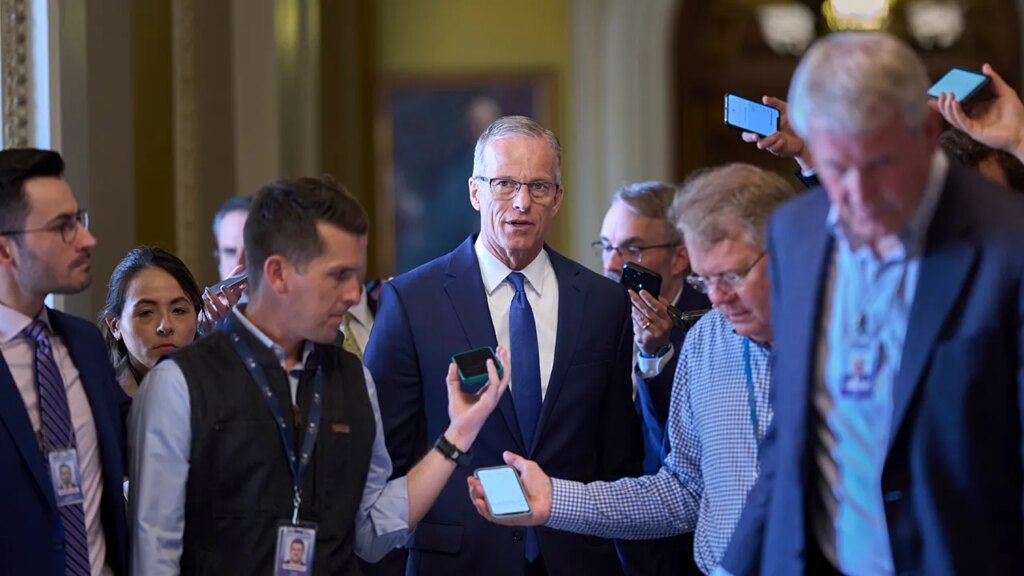
As summer wanes, the U.S. Senate faces a critical moment with bipartisan lawmakers racing against the clock to prevent a government shutdown. Lawmakers are working on an interim spending bill, with the new fiscal year beginning October 1, to ensure government operations continue smoothly. This urgency is echoed by Senate leaders, as they aim to navigate complex political landscapes and looming deadlines, with implications that stretch far beyond the Capitol.
| Article Subheadings |
|---|
| 1) Understanding the Government Shutdown |
| 2) The House’s Role in Funding |
| 3) Current Legislative Priorities of the Senate |
| 4) Challenges Facing Senate Leaders |
| 5) The Future of Legislative Initiatives |
Understanding the Government Shutdown
A government shutdown occurs when Congress and the President fail to enact the required appropriations bills needed to fund government operations. This situation escalates when contentious political disagreements stall necessary legislation, leading to halted services and delayed payments for federal employees. The last shutdown witnessed lasted 43 days, underscoring the urgency behind current legislative efforts to avoid repeating this turmoil. Lawmakers like Senator Chuck Grassley have emphasized the importance of swiftly passing an interim spending bill to keep the government operational.
The House’s Role in Funding
The role of the House of Representatives is critical in shaping legislative outcomes that affect government funding. In July, the House approved a temporary funding bill, enabling federal operations to continue through December 4. However, the cooperation and eventual approval from the Senate are essential to ensure these measures take effect. The ongoing negotiations showcase a concerted bipartisan effort, with both sides recognizing the necessity of cooperation to circumvent the pitfalls of a potential government shutdown.
Current Legislative Priorities of the Senate
Officials have outlined various legislative priorities that the Senate must address in the coming days. Among these is a bill to impose sanctions on Russia in response to international tensions. Additionally, confirming Todd Blanche as Attorney General remains a significant focus for Senate Republicans, who face intra-party divisions over supporting partisan initiatives like the SAVE America Act. While Senate Majority Leader John Thune has expressed ambitions of crossing significant legislative thresholds, the reality of achieving consensus on prioritizing initiatives remains challenging. The thirst for substantial legislative achievements is palpable, as a multitude of vital issues awaits resolution.
Challenges Facing Senate Leaders
The Senate is simultaneously grappling with several pressing issues while leaders strive to maintain clarity on their legislative agenda. Frustrations have emerged among senators who express confusion over the leadership’s strategy. For instance, Senator John Kennedy articulated dissatisfaction post-luncheon, indicating uncertainty regarding forthcoming legislative discussions. The differing priorities concerning the SAFE America Act also exacerbate tensions, creating questions regarding party unity and the political ramifications of failing to act decisively. Leaders like Thune face pressure both from colleagues and external observers, adding layers to their responsibilities in this high-stakes environment.
The Future of Legislative Initiatives
The legislative landscape is fraught with uncertainty, particularly concerning the future of initiatives such as the SAVE America Act, which aims to enhance electoral integrity. Despite calls for prompt action from party loyalists, the prevailing sentiment among leaders indicates a reluctance to pursue this contentious legislation in the immediate future. Instead, considerations to prioritize funding and essential confirmations may reshape the landscape for GOP initiatives. Observers question the sustainability of promises made to constituents and whether legislators can deliver substantial outcomes without risking a damaging split within the party.
| No. | Key Points |
|---|---|
| 1 | Bipartisan efforts are focused on preventing a government shutdown as the October 1 deadline approaches. |
| 2 | The House has approved a temporary funding bill, awaiting Senate cooperation. |
| 3 | Senate leaders face pressure to prioritize essential legislation while managing internal divisions. |
| 4 | Challenges in achieving consensus on legislative priorities may hinder progress. |
| 5 | The upcoming legislative schedule remains uncertain, with lawmakers wishing to resolve pressing issues efficiently. |
Summary
As the Senate confronts the imminent risk of a government shutdown amid a heated political climate, efforts to reach a bipartisan agreement are critical. The willingness of lawmakers to collaborate across party lines for timely funding will significantly influence public sentiment and political stability. With elections on the horizon, the stakes are even higher for legislators as they navigate a complex web of legislative priorities, aiming to meet the demands of their constituents while working to avoid extensive government disruption.
Frequently Asked Questions
Question: What causes a government shutdown?
A government shutdown occurs when Congress and the President fail to pass the necessary appropriations bills to fund government operations, resulting in halted services and delayed employee payments.
Question: What is the SAVE America Act?
The SAVE America Act is a proposed piece of legislation aimed at enhancing voter integrity by requiring proof of citizenship to vote. It also includes various election security measures.
Question: Why is bipartisan cooperation crucial at this time?
Bipartisan cooperation is essential to ensure that necessary funding measures pass swiftly, preventing disruptions in government services that could negatively impact the public and signal legislative dysfunction to constituents.