
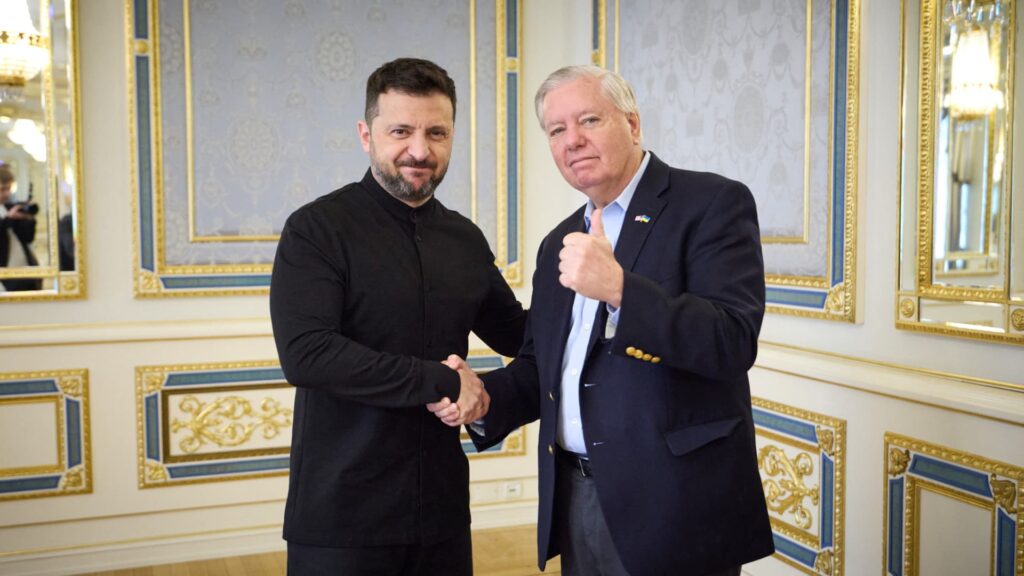
In a significant development amidst ongoing tensions, the U.S. Senate has passed a bill imposing stringent tariffs and sanctions targeting nations purchasing Russian crude oil and gas. The legislation comes in response to escalating hostilities associated with Russia’s invasion of Ukraine. Key figures such as Senator Lindsey Graham and Senator Richard Blumenthal have rallied for support, while concerns over presidential authority and the implications of the tariffs have sparked debate among lawmakers.
| Article Subheadings |
|---|
| 1) Overview of the Legislation |
| 2) Key Supporters and Their Statements |
| 3) Opposition Voices |
| 4) Implications for U.S. Foreign Policy |
| 5) Next Steps and Future Considerations |
Overview of the Legislation
The recently passed bill aims to impose tariffs as high as 100% on countries that rank among the top five purchasers of Russian oil and gas, namely, China and India. This legislation has been framed as a necessary step in response to the financial underpinnings of Russia’s military actions, with significant oil revenue being essential to funding these operations. In addition to tariffs, the legislation includes stringent sanctions aimed at key Russian leaders, including President Vladimir Putin, oligarchs, and financial institutions.
The proposal also extends an existing set of sanctions targeting Iran, adding pressure to its weapons and energy sectors at the request of former President Donald Trump. This multifaceted approach highlights the U.S. commitment to disrupt the financial networks that enable aggression against Ukraine.
Key Supporters and Their Statements
In the wake of the bill’s passage, Senator Richard Blumenthal commented on the ongoing bipartisan efforts against Russian aggression. Notably, he underscored the collaborative work he undertook with Lindsey Graham prior to Graham’s untimely passing. Blumenthal stated to the press, “These sledgehammer sanctions and tariffs will stop all who are complicit in this murderous, criminal war of aggression against a brave free people.” This statement encapsulates the overarching sentiment among supporters who perceive the sanctions as an essential tool in defending Ukrainian sovereignty.
However, Blumenthal’s remarks come in the context of pressures both domestic and international, as the U.S. seeks a balance between strong action and preserving strategic alliances. The sanctions are more than symbolic; they are intended to apply real economic pressure on Russia, which may have repercussions on global oil markets.
Opposition Voices
Not everyone is in favor of the new legislation. Senator Mazie Hirono from Hawaii articulated her concerns about the bill, emphasizing that while she supports punitive measures against Russia, the legislation would grant extensive tariff authority to President Trump. “It provides too much room for him to do things that are unpredictable and that actually harms the situation,” she articulated, pointing out that the ramifications of such powers could complicate international relations rather than simplify them.
This sentiment is echoed by other legislators such as Gregory Meeks and Don Beyer, who have similarly raised alarms about the scope of authority that would be conferred on the President. Their joint statement reflects a growing concern that existing legal frameworks already provide sufficient latitude for imposing sanctions on Russia and other nations should the President choose to act.
Implications for U.S. Foreign Policy
This legislation represents a pivotal moment for U.S. foreign policy, particularly concerning its stance on autocratic regimes and global energy dependence. By targeting the energy sector, the U.S. aims to cripple the financial capabilities of Russia, which has increasingly relied on oil revenue amidst international isolation. Some experts argue that these sanctions could also send a message to other nations about the potential costs of aggressive military actions, thereby shaping future diplomatic engagements.
However, the complexity of global interdependencies must be acknowledged. As countries like China and India continue to engage in trade with Russia, there may be unintended consequences that could exacerbate geopolitical tensions. Achieving a balance between assertive sanctions and maintaining robust international relations will be a formidable challenge for U.S. lawmakers in the coming months.
Next Steps and Future Considerations
As the bill moves toward finalization in the House of Representatives, discussions are set to intensify around the practical impacts of the proposed tariffs and sanctions. House Speaker Mike Johnson will face pressures both from party members and opposition alike, especially as the legislative body is closely divided. It remains to be seen how much pushback he may encounter from lawmakers who share concerns about the expansive powers given to the President.
In light of this evolving landscape, analysts will be monitoring the response from Russia and its allies. Any retaliatory measures, whether in terms of resource availability or geopolitical maneuvers, could have significant implications for global energy prices and security concerns. The path forward may also necessitate discussing multilateral approaches to sanctions in order to bolster their effectiveness, engaging alliances such as NATO and the EU.
| No. | Key Points |
|---|---|
| 1 | The U.S. Senate has passed a bill imposing up to 100% tariffs on nations purchasing Russian oil and gas. |
| 2 | Key supporters include Senator Richard Blumenthal, who highlights the urgent need for action against Russian aggression. |
| 3 | Opposition voices, such as Senator Mazie Hirono, express concerns regarding presidential authority provided by the bill. |
| 4 | The legislation has significant implications for U.S. foreign policy and global energy security. |
| 5 | The future of the bill in the House of Representatives will determine the extent of its implementation and impact. |
Summary
The passage of this bill represents a critical juncture in U.S. foreign policy regarding Russia. As the debate over the implications of the tariffs and presidential authority continues to unfold, the stakes remain high for both Ukraine and the global community. The world watches closely as the U.S. grapples with the complexities of economic sanctions and diplomatic relations. The ongoing discourse may ultimately shape not only U.S. responses but also the international approach toward autocracy and aggression.
Frequently Asked Questions
Question: What are the main provisions of the new legislation?
The legislation imposes tariffs of up to 100% on countries that are major purchasers of Russian oil and gas, alongside sanctions targeting key Russian leaders and financial institutions.
Question: Who are the key supporters of the bill?
Senators Lindsey Graham and Richard Blumenthal are notable proponents, advocating for the urgency of measures to counter Russian aggression.
Question: What concerns have been raised about the bill?
Opposition from some lawmakers, including Senator Mazie Hirono, centers around the extensive tariff authority granted to the President and its potential implications for U.S. foreign policy.